|
VOOZH | about |
|
VOOZH | about |
We use cookies to improve your experience on our site. By using our site, you are agreeing to the collection and use of data as described in our Privacy Policy.
Cookie Settings×Table of contents
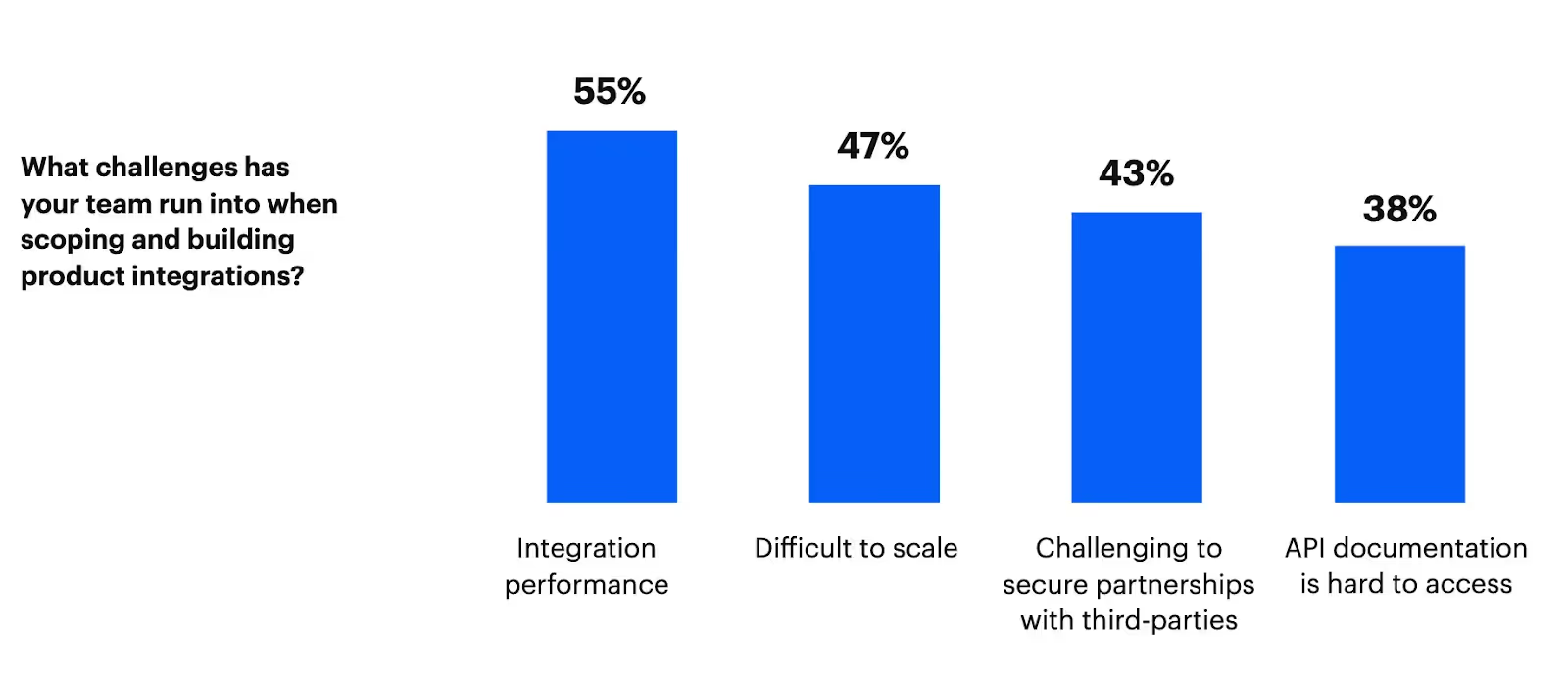
When we surveyed hundreds of product managers and engineers as part of our State of Product Integrations report, we learned that organizations are running into several challenges during the integration development and maintenance phases.
When building integrations, here are the top issues companies face:
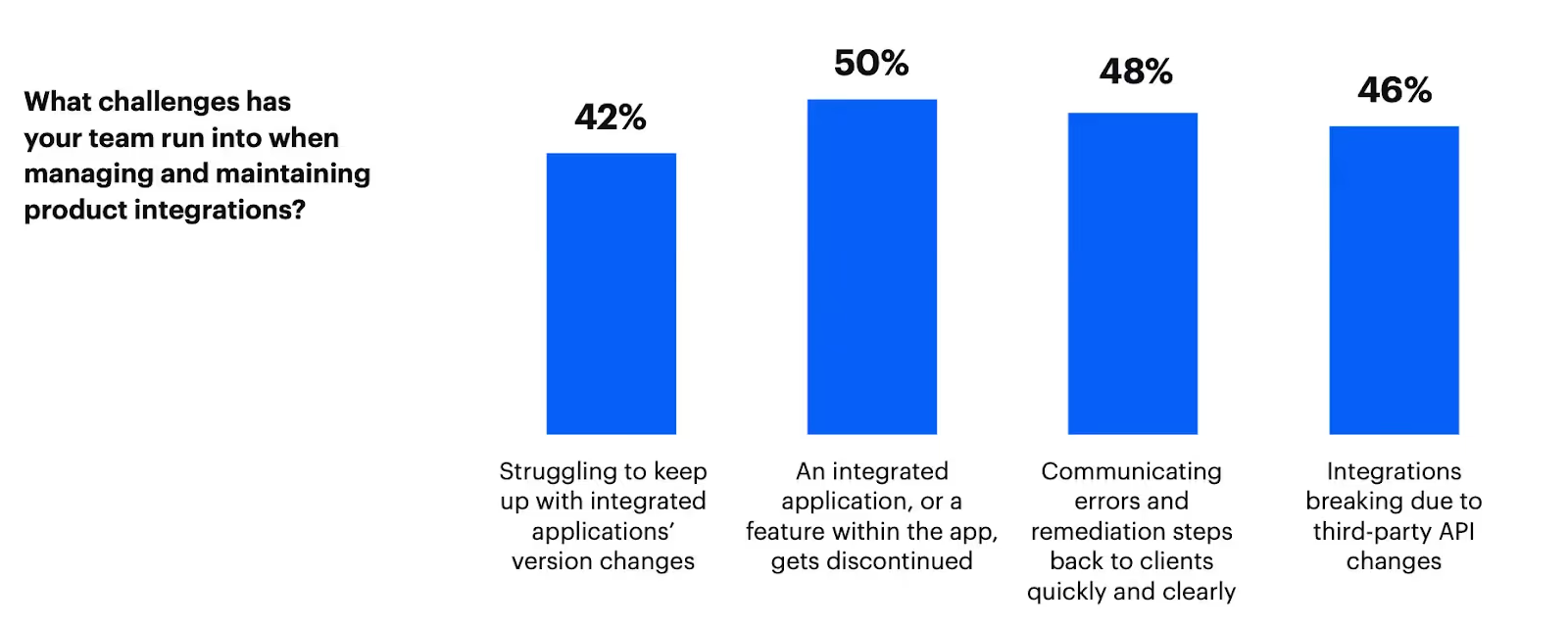
And here are the top challenges when maintaining integrations:
We’ll cover each of these challenges and what you can do to address them.
Related: A guide to software integration
Building reliable software integrations is far from a given, as your integrations can break for a number of reasons; an API response can come back in an unexpected format, an API can change in a backwards-incompatible way, and so on.
Being able to diagnose and address the root cause of any integration issue is technically complex and requires expertise on a given API, which can lead the integration to remain broken for an extended period.
As your team scales its software integrations, it can be hard to monitor individual integrations.
Unfortunately, monitoring at the individual level is, in many cases, essential as without it, you can’t proactively identify and account for critical issues—like an integrated application/feature getting deprecated—on time.
In the case of product integrations, many of the integration errors can be on your clients’ side (e.g. bad API key) and require their involvement.
Being able to identify this error and the specific set of steps that the client can take to resolve it takes time. Moreover, the engineer who identifies the issue and the remediation steps needs to communicate this information to the customer success manager (who’d then share this with the affected client), extending the time it takes to resolve the issue even further.
Related: Common API integration challenges
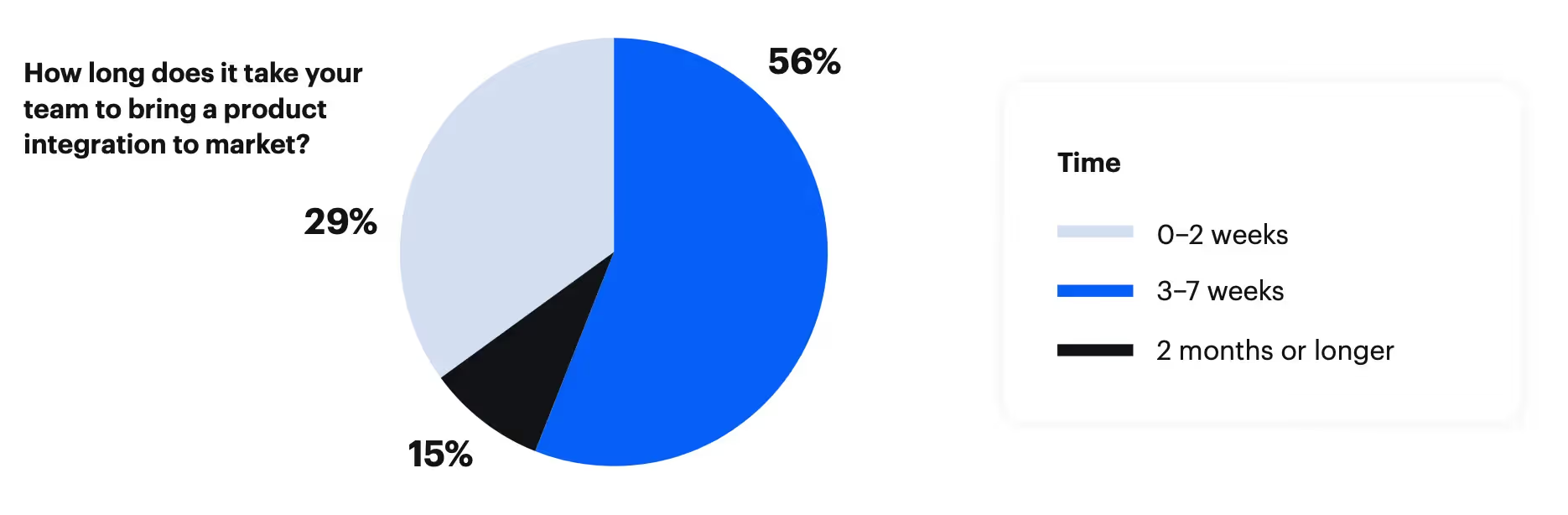
The process of building and maintaining just a single integration can be extremely complex, tedious, and lengthy; for instance, building just a single integration can take a whole team of engineers several weeks, if not months.
Considering that you’ll likely need to implement and maintain dozens, and, eventually, hundreds of integrations over time, you’ll inevitably end up with a significant backlog of integrations and a high share of engineers who are overburdened with integration-related tasks.
As mentioned earlier, it can be extremely difficult, if not impossible, to closely follow individual 3rd-party APIs as you scale.
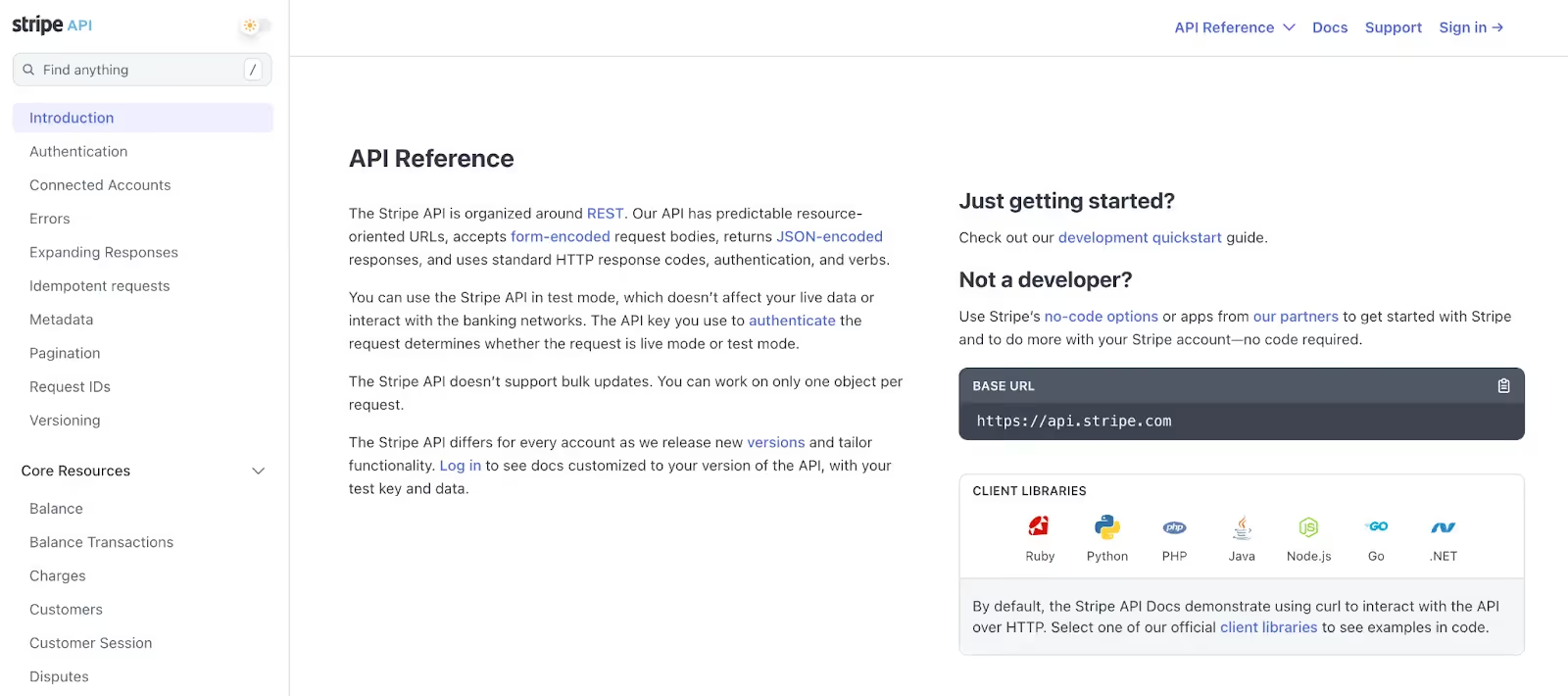
Third-party API documentation is also often difficult to navigate, outdated, or simply absent. So even if you have resources available to keep tabs on every 3rd-party API over time, your team’s ability to forecast and prevent issues is naturally compromised.
Related: The top challenges of integrating SaaS applications
Certain API providers force you to enter into an expensive partnership just to access their API docs.
In more cases, however, accessibility refers to the quality of the API documentation itself. The docs can be outdated, fail to cover specific areas that are highly relevant to your build, or written poorly—which can make it difficult to understand key points.
In addition, the docs can be difficult to navigate. For instance, it might be hard to find information on a specific endpoint or learn what the rate limit policies are for different subscription levels.
Related: The top integration challenges you'll need to tackle
Aside from the financial obstacle of forming a partnership (so that you can access and build to the provider’s API endpoints), you might be rejected by the provider for any number of reasons:
When an API provider updates to a new version, they usually make backwards compatible changes.
However, there are always exceptions, and when there are, it can be difficult to identify and respond to them quickly and effectively. This is especially true when an API provider fails to announce a version change and the impact it’ll have on previous versions in a prominent place within their docs and through additional communication channels, like emails or posts from their social profiles.
Merge, the leading product integration platform, lets you offer a whole category of software integrations by building to a single unified API, whether that’s HRIS, CRM, file storage, ticketing, etc.
The platform also offers a suite of Integrations Management features, like automated issue detection and fully-searchable logs, to help your customer success managers identify, diagnose, and troubleshoot issues with clients independently, quickly, and easily.
Finally, Merge provides integration maintenance support, which includes a whole team of partner engineers who are on-call 24/7 to troubleshoot and prevent any issues.
You can learn more about Merge by scheduling a demo with one of our integration experts.
.avif)



.png)