
Featured
-
ArticleOpen Access
-
ArticleOpen Access
Announcements
-
Welcome to Communications Sustainability!
In our launch editorial, we are pleased to introduce Communications Sustainability, a new, editorially selective open-access journal from the Nature Portfolio.
-
Open calls for papers
We welcome submissions to our curated collections:
- Sustainable chemical and material solutions for resource-constrained settings
- Carbon dioxide removal
- Critical elements and the green energy transition
- Solvation structure engineering in battery electrolytes
- Waste management through polymer upcycling
- and more
-
Too soon to change green hydrogen rules?
Drawing on the study Commun. Sustain. 1, 31 (2026), a Nature editorial argues that the European Union should not relax green hydrogen production rules without further research on the climate impacts of different pathways.
-
Outstanding reviewer: Al Kovaleski
In June, we thank Al Kovaleski for his invaluable contributions to peer review. Prof. Kovaleski leads the Plant Resilience Lab (PRL) at the University of Wisconsin-Madison, which investigates physiological mechanisms governing cold hardiness and dormancy in woody perennial plants, combining modeling and molecular approaches.
-
Submit
👁 A document with an upwards facing arrow on top of it. Next to the graphic is the word: Submit.
-
Guide to Authors
👁 A document with a graphic of a magnifying glass on top of it. Next to the graphic are the words: Guide to authors.
-
Outstanding Reviewers
👁 Outstanding reviewer logo
-
Editorial Board
👁 Three human shaped silhouettes. Next to the graphic are the words: Editorial Board




Advertisement
-
-
Strengthening service and knowledge systems as pathways for addressing barriers to scaling agroecology
Ecological farming approaches face persistent political, market, evidentiary, and institutional barriers, according to a Perspective that maps these constraints and highlights service and knowledge-based avenues for addressing them.
PerspectiveOpen Access -
PerspectiveOpen Access
-
-
-
PerspectiveOpen Access
-
PerspectiveOpen Access
-
PerspectiveOpen Access
-
-
CommentOpen Access
-
CommentOpen Access
-
EditorialOpen Access
-
CommentOpen Access
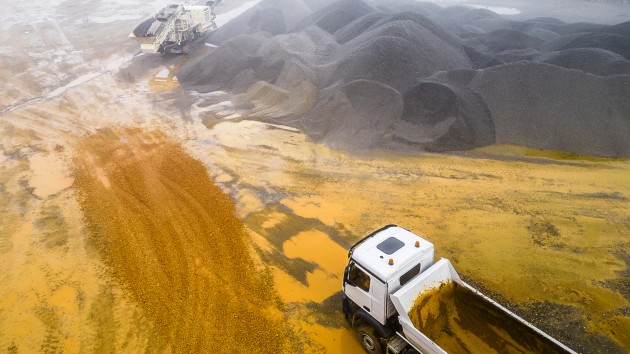
Critical materials supply chain sustainability
Advertisement
Trending - Altmetric
-
👁 Score 12
The undervalued quality-of-life benefits of demand-side energy and climate strategies
-
👁 Score 3
Satellite data enable estimation of harvest volumes and carbon emissions from Congo Basin logging
-
👁 Score 3
Diminishing returns and rising ecological costs of cropland reclamation in China’s four northern provinces
-
👁 Score 2
Spatial patterns of cattle densities across the Brazilian Amazon revealed by very high-resolution satellite imagery