|
VOOZH | about |
|
VOOZH | about |
Amazon Web Services offer numerous alternatives to its users, all of which come with their own pros and cons. Amongst the distinct pricing models available for the users, EC2 Spot Instances are known for offering cost savings of up to 90% of the initial investment. You can save the most but also risk ALOT if you are not doing it right. Let’s delve into what EC2 Spot Instances are, how they work, and what are the advantageous use cases. Read Through!
In layman’s terms, unused EC2 instances offered for less than the On-Demand price are known as AWS EC2 Spot Instances. Spot instances can cut your on-demand instance expenses by up to 90%, drastically lowering your EC2 costs. The hourly cost of a Spot instance is known as a Spot Price. Based on changing demand and supplies for Spot instances, AWS determines the Spot price for each instance type within every availability zone.
To be explained in a simpler way, whenever any instance from a particular availability zone is available, it is charged as AWS EC2 Spot Instances to help users save around 90% of costs. So that was the positive side of on demand vs spot instances. But coming to the downside of on demand vs spot instances, you will only be notified two minutes before the Instance gets terminated and your program/application is ceased. Thus, it is the alternative you would like to go for only when your platform’s availability is flexible and your applications can most probably be interrupted after a two-minute warning signal.
Here are the primary benefits of AWS Spot Instances that every business should be aware of:
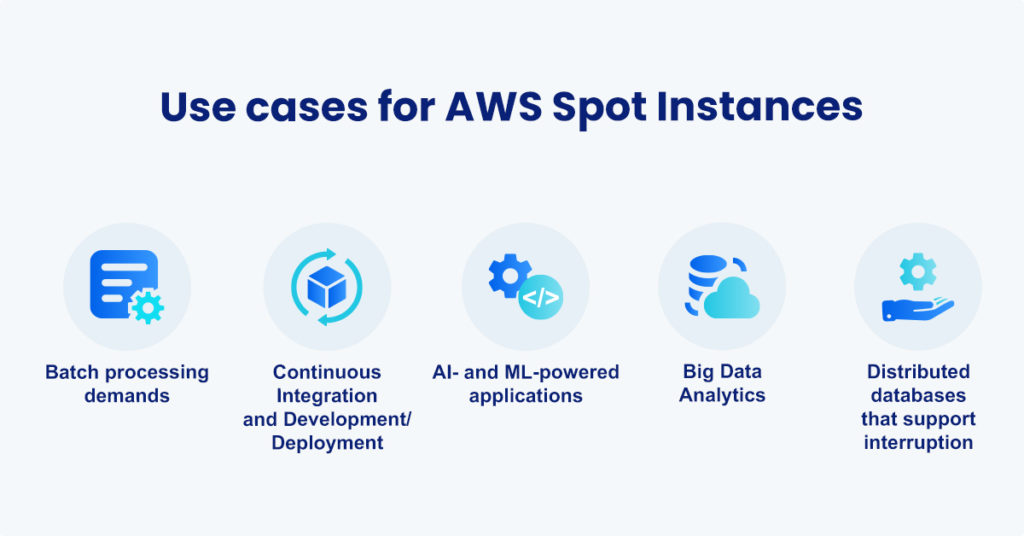
AWS Spot Instances are a definitive cost saver but involve high risk if not employed appropriately. Thus, to help you out, here are some right use cases for AWS Spot Instances you should consider:
For a detailed overview of the use cases of AWS Spot Instances, refer to When to Use Spot Instances.
You must have been wondering how the AWS Spot Prices change and what determines them. Here’s how:
Instead of establishing a fixed price, Amazon gradually modifies the Spot Prices based on the supply and demand of the related market factors. More particularly, it doesn’t take into account your real-time bids but rather the market’s general long-term patterns.
Following that, AWS usually continues by monitoring all the placed bids. The users whose highest price bids happen to be greater than the current Spot Price are subsequently given Spot Instances.
You can explore the current rates for various Spot Instance types and track the Spot Price history page before placing your actual bid.
With Amazon Web Services (AWS), your cloud computing needs are never underutilized, nor overpaid, if you get the cloud requirements right. The Cloud Cost Optimization game is about knowing what you want, why you want it, and how much you want. Thus, it is highly important to understand your cloud needs. And here’s where cloud management tool like nOps enters to help you scale effectively.
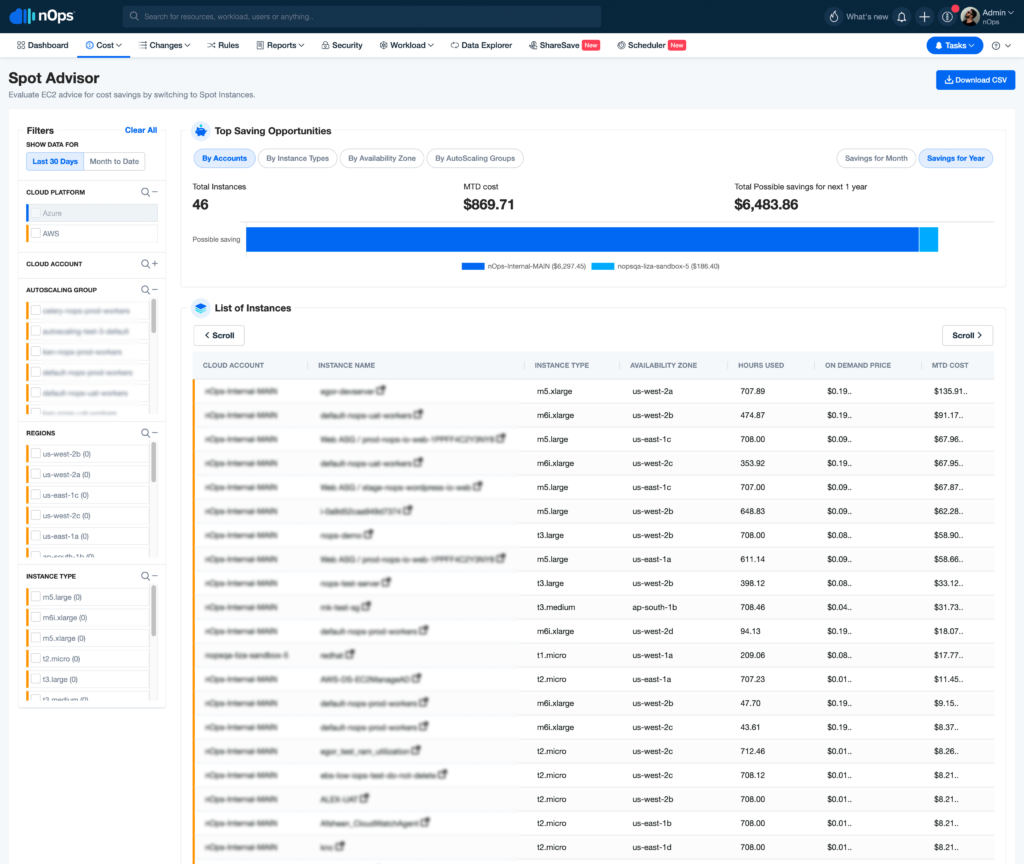
With nOps ShareSave solution, you can consolidate cloud accounts into a single pricing model and offer ongoing visibility to change requests. This helps you easily manage cloud costs and save more money.
Plus, with nOps Cloud Cost Optimization, you can save more by centralizing cloud accounts into a consolidated billing model, providing instant and continuous visibility to change requests and delta to your infrastructure that cause cost, and giving you the best root cause analysis capabilities available anywhere.