|
VOOZH | about |
|
VOOZH | about |
The term “FinOps” and “DevOps” are becoming increasingly popular in the IT industry. Although the two terms are often used interchangeably, they actually refer to two distinct concepts. FinOps is a relatively new term in the IT industry, whereas DevOps has been around for some time. In this blog, we will explore the differences between FinOps and DevOps, including their purpose, benefits, and how they can be used to improve enterprise IT operations.
Before getting into what the differences are, it is important to understand what are the fundamentals of FinOps and DevOps. So here’s a quick overview:
FinOps (Financial Operations) is a discipline focused on optimizing the cost and efficiency of cloud computing resources. It involves understanding and managing cloud services and infrastructure costs and developing strategies to improve cost control and optimize usage. FinOps teams use financial and operational data to identify cost optimization opportunities and drive strategic decision-making. A better understanding of the topic can be grasped from the blog: What is Cloud FinOps?
DevOps is a software development approach that emphasizes collaboration between the development and operations teams in order to deliver software faster and with greater reliability. It combines the practices and tools of development, operations, and quality assurance to automate and streamline the software delivery process from development to deployment. DevOps aims to reduce the time-to-market of new features and applications while simultaneously increasing the reliability of software systems. A better understanding of the topic can be grasped from the blog: What is DevOps?
| Particulars | FinOps | DevOps |
| Primary Focus | Focuses on cloud cost optimization | Focuses on improving collaboration and communication between development and operations |
| The Process | Integrates financial best practices into technology operations | Automates the build, test, and deployment process |
| Management | Manage the financial aspects of cloud-based services | Automates infrastructure management |
| Department Involved | Finance + Operations | Development + Operations |
| Utilization | Utilizes Cloud Management to take control of financial risk, and compliance | Utilizes comprehensive automation to streamline the deliverables |
| Stages Involved | Cost Optimization, Financial Planning, Resource Allocation, Risk Management, Performance Measurement, Reporting and Analytics | CI-CD, Infrastructure Automation, Configuration Management, Monitoring and Logging, Automated Testing, Release Management |
| Benefits | Improves cloud savings and efficiency | Improves collaboration and delivery process |
Both DevOps and FinOps have several similarities, including
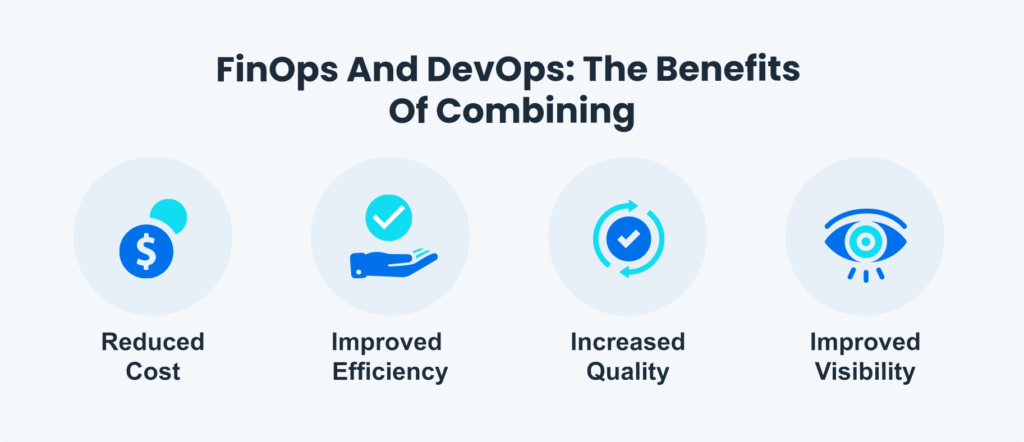
By combining DevOps and FinOps, organizations can benefit from both approaches and get the most out of their software development investments. Here are some of the main benefits of combining these two approaches:
One of the biggest benefits of combining DevOps and FinOps is reduced cost. By combining the two approaches, organizations can optimize their spending and get the most out of their investments. DevOps teams can use automation to streamline the software development process and reduce costs, while FinOps teams can use financial forecasting and resource management to ensure that money is being spent in the most efficient way possible. This can help organizations save money and get the most out of their software development investments.
Another benefit of combining DevOps and FinOps is improved efficiency. By combining the two approaches, organizations can ensure that their software development process is efficient and effective. DevOps teams can use automation and communication to ensure that the software development process is streamlined, while FinOps teams can use cost optimization and resource management to ensure the process is as efficient as possible. This can help organizations get the most out of their software development investments.
Combining DevOps and FinOps can also lead to increased quality. DevOps teams can use collaboration and communication to ensure that the software development process is efficient and effective, while FinOps teams can use financial forecasting and cost optimization to ensure that the process is as cost-effective as possible. This can help organizations get high-quality software products and services at a reasonable cost.
Combining DevOps and FinOps can also lead to improved visibility. By combining the two approaches, organizations can better understand their software development investments and identify areas for improvement. DevOps teams can use collaboration and communication to monitor the development process, while FinOps teams can use financial forecasting and resource management to track spending and identify waste areas. This can help organizations get the most out of their software development investments.
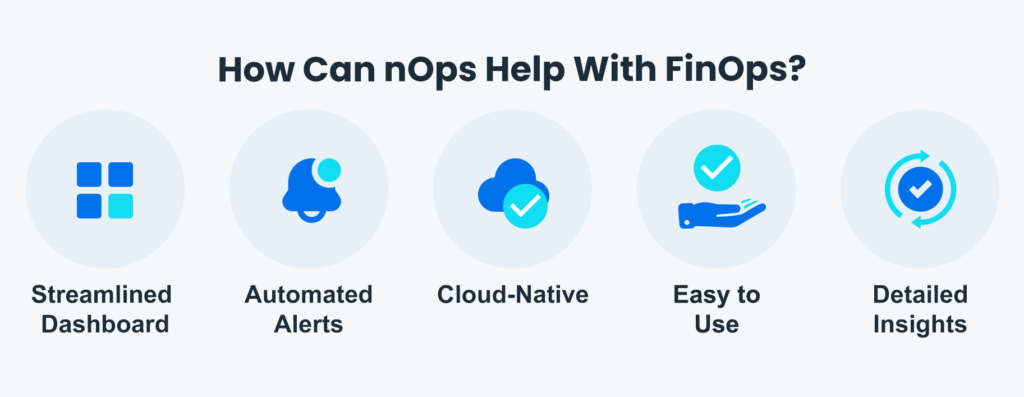
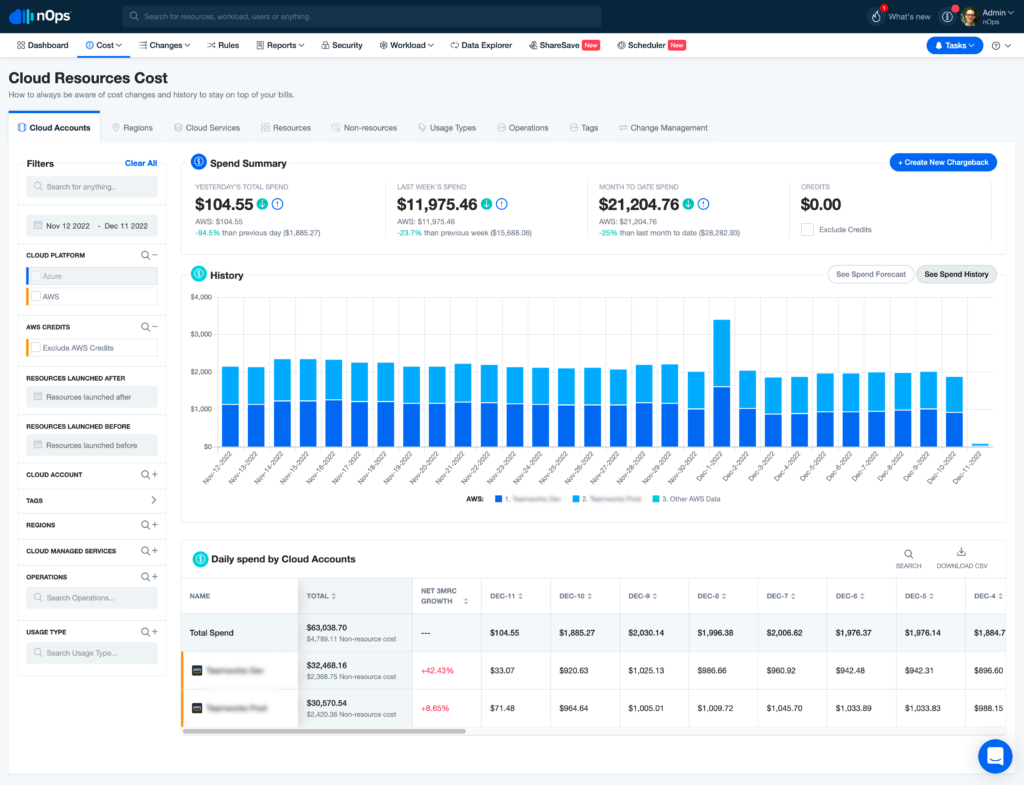
nOps provides businesses with a comprehensive cloud FinOps platform that makes it easy to track, analyze, and optimize cloud financial operations. The platform offers a suite of analytics tools that make monitoring and analyzing cloud costs easy. It also provides detailed cost breakdowns and insights into usage patterns, enabling businesses to identify cost optimization areas and track progress over time. Additionally, nOps provides automated alerts and recommendations to help businesses stay on top of their cloud FinOps KPIs.
At nOps, we help you deliver FinOps in two ways. First, we provide a wide range of cost optimization capabilities to help you keep cloud spending to a minimum. In addition, we provide the ShareSave feature that enables your team to optimize cloud costs continuously with smart Reserved Instance planning. Sign up for nOps today to see it in action.