|
VOOZH | about |
|
VOOZH | about |
Flexera is a long-established enterprise platform for cloud cost management and IT governance. In 2026, organizations evaluating Flexera want clarity on two things: what the platform actually delivers — and how much it really costs.
This guide breaks down Flexera’s features, pricing structure, contract terms, and potential alternatives to help you decide whether it’s the right platform — or if a more automation-first approach might deliver faster savings.
Flexera is an enterprise technology management suite that spans Cloud Cost Optimization (CCO), IT Asset Management (ITAM), SaaS management, and hybrid cloud governance. It helps large organizations gain visibility into cloud spend, track software and hardware assets, manage SaaS subscriptions, and enforce financial and operational controls across both cloud and on-prem environments.
What makes Flexera distinctive is that it’s not a single organically built platform — it’s a collection of acquired products operating under one umbrella. Over time, Flexera expanded its footprint through acquisitions like Spot (Kubernetes and infrastructure automation), and ProsperOps (commitment management automation), layering various capabilities into the broader portfolio.
Flexera’s cloud cost optimization and cost allocation capabilities include:
Flexera provides cloud cost visibility, budgeting, allocating costs, business unit economics, management and optimization insights across your entire cloud environment through Flexera Cloud Cost Optimization. It helps teams identify savings opportunities, track cloud usage and cost efficiency trends and, and manage Reserved Instances and Savings Plans. The platform emphasizes financial governance and cost control at scale.
Flexera provides customizable dashboards for cost breakdowns, trend analysis, and budget tracking through Flexera One analytics. Teams can forecast future cloud spend based on historical patterns. Reports can be tailored for finance, engineering, and executive stakeholders.
Through its Spot.io acquisition, Flexera includes Kubernetes cost visibility and infrastructure automation features via Spot by Flexera (including Spot Ocean). This adds container-level insights and cloud instance optimization capabilities. Automation depth varies depending on product configuration and deployment model.
If actual cloud spend exceeds contracted levels, additional charges may apply based on the agreed pricing percentage. This means platform costs can rise alongside infrastructure growth. Overage terms depend on negotiated contract details.
Because Flexera operates as a broad enterprise technology management suite, pricing may reflect bundled capabilities across cloud, SaaS, and IT asset governance. Agreements are often structured at the enterprise level rather than as simple self-serve subscriptions. Total cost depends on scope, modules included, and overall organizational scale.
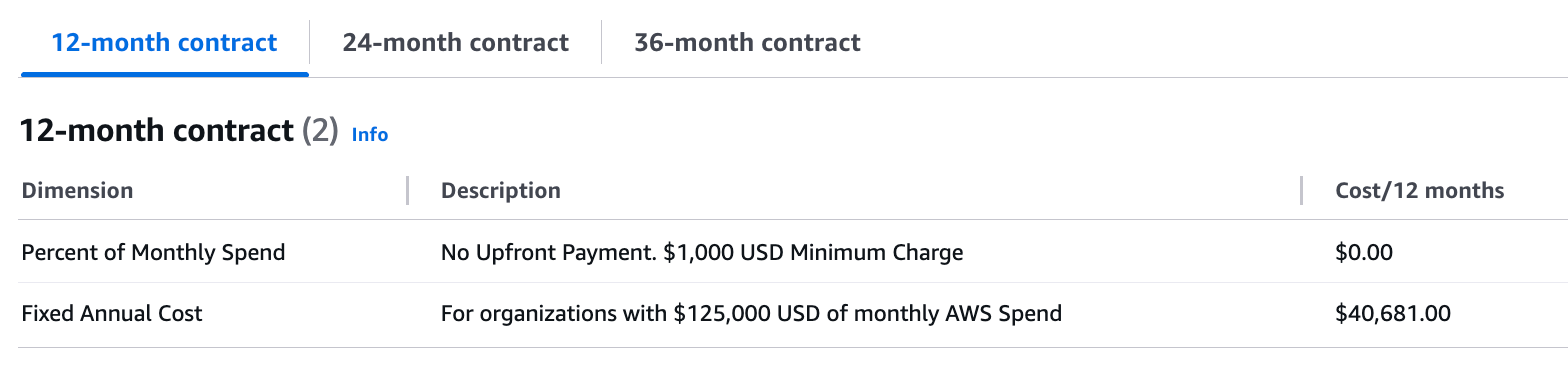
Flexera Cloud Cost Optimization pricing is contract-based and scales with cloud spend. AWS Marketplace listings show multi-year contract options and spend-based pricing dimensions. The AWS Marketplace listing indicates:
Flexera IT Asset Management is priced around asset scope. ITAM agreements typically define a specific entitlement (like number of servers and endpoints) for a fixed contract term.
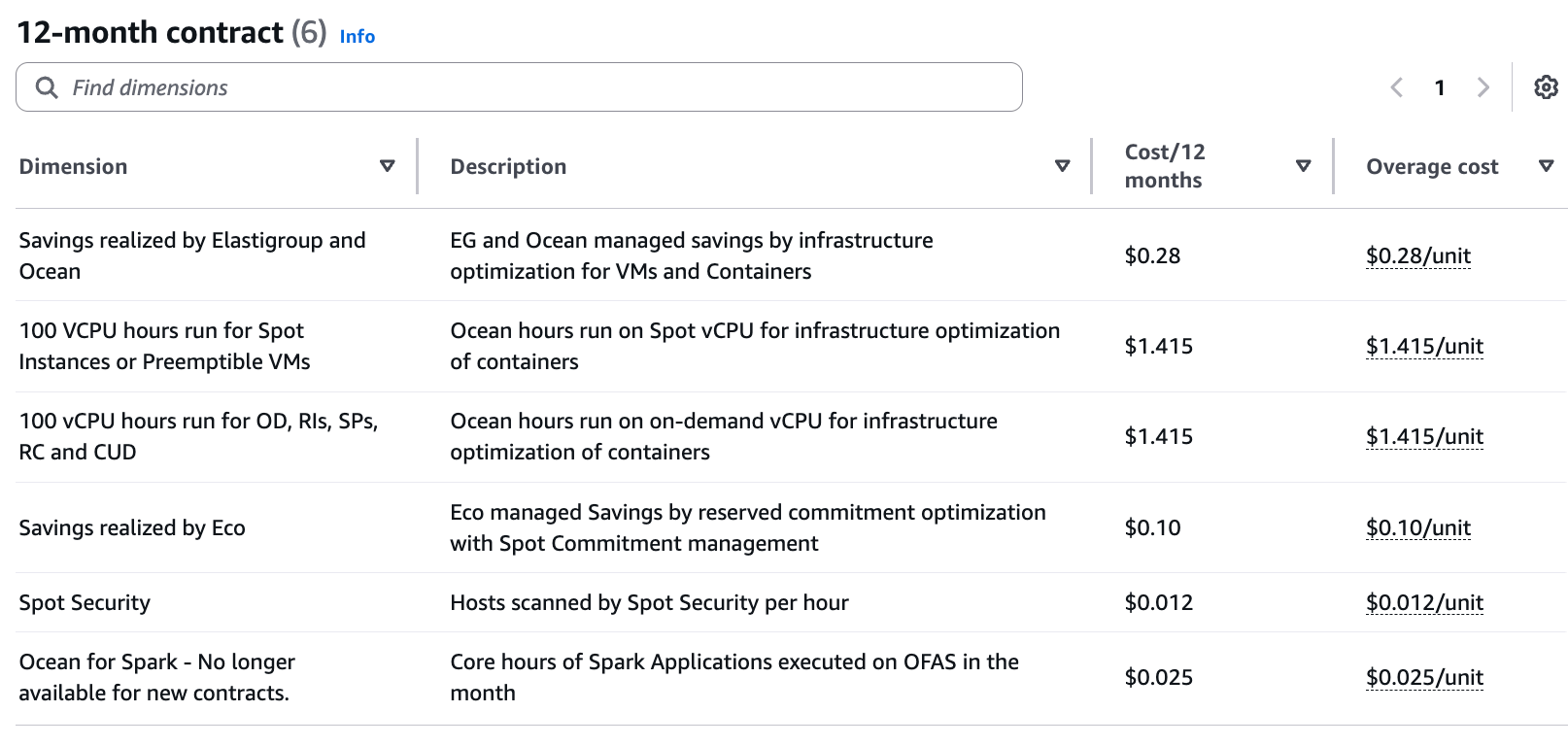
In the AWS Marketplace example shown:
Spot pricing is structured as a contract plus usage-based charges. You commit to a 12-, 24-, or 36-month term (with longer terms advertised as offering larger discounts), and then pay per-unit fees based on actual usage and any overages not covered by the contract.
ProsperOps pricing is built around a performance model called a Savings Share. Instead of charging a flat subscription fee, ProsperOps charges a percentage of the savings it generates by optimizing cloud commitments like Reserved Instances, Savings Plans, Reservations, and CUDs. ProsperOps doesn’t publish one fixed percentage publicly — the Savings Share rate is typically tiered and defined in the customer’s contract.
To make that model tangible, a common way to think about it is: if your agreement used a 30% Savings Share (example only) and ProsperOps generated $100,000 in commitment savings in a month, the platform fee would be $30,000 for that month. The exact calculation can depend on how ProsperOps categorizes savings (e.g., Inherited vs. Smart) and how those categories are treated in your commercial terms.
If you want the full breakdown, see our guide to ProsperOps pricing.
Flexera’s suite-based pricing model introduces a few tradeoffs to be aware of as part of your cloud financial management strategy:
Flexera is a governance-heavy enterprise suite designed to manage cloud, SaaS, and IT assets under one umbrella. For organizations that prioritize centralized control and cross-environment reporting, that breadth can be valuable. But the tradeoff is generally longer onboarding cycles, heavier processes, and more complex tooling.
For teams looking to execute on FinOps quickly, an automation-first, unified platform may deliver faster and more measurable results. nOps frees engineering teams to focus on building and innovating with a completely hands-off, no-overhead solution.
Why teams move from Flexera to nOps:
| Category | Flexera | nOps |
|---|---|---|
| Commitment Automation Depth | Recommendation-driven with automation layered in through acquired modules | Fully automated, hourly commitment lifecycle management |
| Cloud Coverage | AWS, Azure, GCP + hybrid/on-prem visibility | Multi cloud cost optimization and visibility |
| Pricing Model | Percentage of cloud spend + enterprise licensing bundles | Outcome-aligned (savings-based) or flexible subscription models |
| Contract Flexibility | Typically 12–36 month enterprise agreements | Flexible terms with faster commercial cycles |
| Implementation Complexity | Enterprise rollout across multiple modules | Lightweight deployment with minimal setup |
| Continuous Optimization | Governance-heavy with policy controls and optimization tooling | Active, continuous execution across commitments, compute, Kubernetes, and Spot |
| Time-to-Value | Longer onboarding and configuration cycles | Immediate setup with savings activation in minutes |
The bottom line is that Flexera may be the right fit if you want a governance-heavy enterprise suite — but if your priority is faster savings through continuous, automated optimization, it’s worth seeing what an automation-first platform can deliver.
Book a free savings analysis to find out if nOps can help you get more value out of your cloud investments. nOps manages $4B+ in cloud spend and was recently rated #1 in G2’s Cloud Cost Management category.
Last Updated: April 29, 2026, Commitment Management
Last Updated: April 29, 2026, Commitment Management
AI-powered rate optimization with risk-free guarantee
AI-powered commitment management with risk-free guarantee