
-
👁 Image
Researchers are using GPUs and OpenACC to accelerate the codes for their data-driven simulations -
👁 Image
Learn how OpenACC can simplify parallel programming and deliver high performance results -
👁 Image
Anne Severt shares how she is using OpenACC to simulate smoke propagation in underground metro stations. -
👁 Image
Janus Juul Eriksen shares how he is using OpenACC to optimize and accelerate the quantum chemistry code LSDalton on the Titan Supercomputer at ORNL.




Case Studies
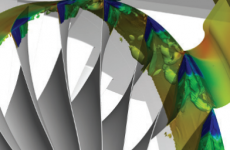
computational fluid dynamics
With 10x or higher speedups on key routines, typical cases showed a full application speedup of up to 2.0x on Titan supercomputer.
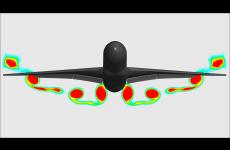
computational fluid dynamics
Using OpenACC, ADSCFD GPU-accelerated their density-based, explicit time-marching code for multistage steady and unsteady turbomachinery analysis.
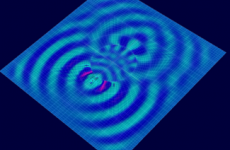
computational electromagnetics
Strong and weak scaling on up to 16,384 GPUs compared with 262,144 CPU cores achieved a 2.5x speedup over a highly tuned CPU-only version.

quantum chemistry
A quantum chemist without any formal education in computer science achieves 12x speed-up modifying less than 100 lines of code in one week.
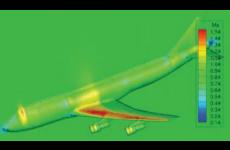
computational fluid dynamics
Using OpenACC, the team ported the implicit solver on the GPGPU. OpenACC enabled the translation of mathematical formulations with minimal coding.

climate weather ocean
OpenACC made it efficient to develop for GPU-based hardware while retaining a single source for almost all the COSMO physics code.

computational hydrodynamics
An OpenACC GPU version of CloverLeaf with no code changes runs on a CPU with performance equal to an optimized OpenMP version.

astrophysics
Researchers can now run more scientifically interesting simulations by modeling larger nuclear reaction networks in 3D using OpenACC.