
Whether you love macOS Sequoia or Windows 11, it's clear that Apple makes some pretty great computers under the Mac line. However, it hasn't always been smooth sailing. There have been corporate failures, user outrage, and huge misses throughout the decades-long history of the Macintosh. Surprisingly, many of Apple's worst decisions to hit the Mac lineup were made recently. Let's break down the 10 worst moves Apple ever made regarding the Mac.
10 Adding a notch to the MacBook
Until we get Face ID on a laptop, the notch is basically useless
Aside from the initial M1 MacBook Air and 13-inch M2 MacBook Pro, all Apple silicon laptops have shipped with a notch at the top of the screen. There's a healthy debate about whether the notch is good, bad, or if you should even care about it. Personally, I find that the notch aligns with the macOS menu bar — which is already taking up that top portion of your screen — so I don't get too worked up about it. However, the fact that the notch doesn't actually line up with the edge of the menu bar is frustrating, and frankly out of line with Apple's typically-thoughtful and intentional design decisions.
There are enough Mac users frustrated with the notch that it earns a place on this list. Aside from not being aesthetically pleasing, the notch takes up valuable space in the menu bar that could be used for menu bar modules. In fact, XDA writer Parth Shah says that he can't use all the menu bar items he'd like on his MacBook due to the notch. To make the notch actually useful, you can install NotchNook, a third-party app featured in the photos above and the article below. We're surprised Apple hasn't done more to maximize the notch in the years since its introduction, whether that be through adding Face ID or something else altogether.

I tried the Dynamic Island on my MacBook, here's how
You can make the notch on your MacBook Air or MacBook Pro actually useful, and I'm loving it already.
9 Licensing Mac OS to other companies
It was a feeble and shortsighted attempt to revive Apple, at the expense of the Mac
During Apple's dark years in the 1990s, it decided to license Mac OS to other companies in an effort to earn more revenue and acquire more users. The licensing program introduced with Mac OS 7 (also known as System 7) made it possible for other OEMs to license the system software and ROMs for the Macintosh. A notable deal was struck between Apple and Power Computing in 1994 centered around Mac OS licensing.
In hindsight, the licensing of Mac OS was a shortsighted decision that only hurt the Mac lineup, and Apple seems to have learned that lesson. We haven't seen an Apple operating system licensed since then, and even the days of the Hackintosh are quickly coming to an end.

Time is running out for Windows on Mac — and macOS on PCs
The glory days of Boot Camp and the Hackintosh are coming to an end sooner than you think.
8 Removing the iMac's RAM access door
It was an unnecessary change that made upgrades harder

For a while, Apple made the best Macs repairable. It was easy to replace the memory or storage drive in an Apple computer with simple household tools. That was true of every iMac model made before 2012, since all these all-in-one computers had a RAM access door that made it easy to swap out sticks. Apple inexplicably removed the memory access door from 21.5-inch iMac machines made after 2011, and required users to basically disassemble the entire computer to simply replace a RAM stick.
It might seem like a moot point now that exactly zero Mac computers have user-upgradeable memory, but the 21.5-inch iMac was sold for about a decade without this crucial functionality. Meanwhile, the 27-inch versions of the iMac kept the RAM access door as long as they were sold with Intel processors. Removing the door from the smaller iMac was a huge miss that probably led to more computers hitting the landfill sooner than they should've.

I upgraded a Mac's CPU for $15 on one of the last models where it's possible
I'm really going to miss upgradeability
7 Not connecting the fan to the heatsink on Intel MacBooks Air
The MacBook Air could've performed better with a more thoughtful cooling solution
If you head down the rabbit hole of perplexing Apple design decisions, you'll stumble upon the Intel MacBook Air and its cooling fan. In an attempt to make the last versions of the Intel MacBook Air as slim as possible, Apple decided to put a small fan in the corner of the laptop's chassis without connecting it to the heatsink. This design allowed the fan to push air over the heatsink, but wasn't effective in cooling the Intel chips underneath. It was an egregious and avoidable mistake that underscored Apple's poor form-over-function choices of the era.
6 Selling the right Mac at the wrong price
This is something that Apple has done numerous times throughout its history

There's a saying in tech that there is no such thing as a bad product, but only a bad price. Well, Apple has had a lot of those over the years. The original Macintosh was intended to be an affordable computing device, and ended up becoming a much more powerful and expensive system under Steve Jobs' direction. Similarly, the Apple Lisa — one of the company's worst failures overall — had a $10,000 price point in 1983 that effectively doomed the system. Although the Macintosh and the Lisa were both absolutely vital products to Apple's long-term success, they were limited in their time due to extremely high price tags.

40 years ago, Apple changed the way we use computers with the Macintosh
Apple showed us why 1984 wouldn't be like 1984
5 Creating the 12-inch MacBook too early
It was a collosal failure, but not because it was a bad idea
The 12-inch MacBook, first released in 2015, was one of Apple's best ideas and featured one of its worst executions. The entire machine brought first-of-its-kind hardware, like the Force Touch Trackpad. It was also Apple's first fanless laptop and was the first device to introduce the butterfly keyboard. This model had a few serious problems, like how its Intel Core m-series processors weren't powerful at all and were prone to overheating. The soldered SSDs inside the MacBook failed at extremely high rates, and were unfixable. Of course, there was the ill-fated butterfly keyboard, which was prone to failure and wasn't great to type on.
If you ask me, Apple released the Retina MacBook too early. The technology simply wasn't ready, but the concept was solid and warrants a comeback.
I revived a MacBook nearly 10 years old — by installing Windows
macOS Monterey was killing my 12-inch MacBook. Windows 10 saved it.
4 Making the MacBook Pro USB-C only
Come on, Apple, you know pros need more ports
You'll notice a trend throughout this article, and it's that the years of 2015 through 2019 really weren't great for the Mac. There were a lot of reasons for that, from the butterfly keyboard, to stagnating Intel processors, to form-over-function design. A consequence of that last point was the entire MacBook lineup dropping its ports, aside from USB-C and the headphone jack.
It's easy to forget that the MacBook was once a stalwart of connectivity, featuring things like SD, Ethernet, MagSafe, Thunderbolt, FireWire, and more. That makes it all the more disappointing that MacBook users had to suffer without the ports they'd been accustomed to when Apple ditched them in favor of Thunderbolt/USB-C.
Luckily, this is a problem Apple rectified with the most recent generation of MacBook Pro. Those models have Thunderbolt ports, but also feature MagSafe 3, HDMI, and SD for versatile connectivity.

MacBook Pro 16 (M3 Max) review: Apple’s just flexing
The 10-month old M2 Max MacBook Pro is still more powerful than 99% of laptops out there, then Apple released an upgrade with more graphical prowess
3 The 2013 Mac Pro's design and dual-GPU architecture
The dual-GPU trend died almost immediately after Apple redesigned its best Mac
Apple set high expectations for what a professional-grade machine should look like with the PowerMac and the original Mac Pro. That's why professionals and enthusiasts alike were stunned when Apple introduced the 2013 "trash can" Mac Pro. Not only was it oddly shaped, but it also didn't feature the kind of PCIe and storage expansion options users loved about the previous Mac Pro. The entire system was built around a dual-GPU architecture that used AMD graphics cards. Unfortunately, the dual GPU trend died completely after.
This created a few problems for the Mac Pro. Apple couldn't really update the hardware or provide upgrade paths for current owners, since AMD simply wasn't making dual-card designs like it used to. Additionally, the dropoff of the trend meant that professional-grade software stopped supporting the use of both graphics cards. So, some professionals who tried to keep their Mac Pro systems alive would find that they could only use half their graphical power. Add it all up, and the 2013 Mac Pro was a huge failure on Apple's part.

I built a Mac Pro for under $300 and it's better than Apple Silicon in these 4 ways
Apple Silicon is fantastic, but this Intel Mac still beats modern ones in a few key situations.
2 Releasing the Magic Mouse with charging woes, twice
Both iterations of the Magic Mouse have charging methods that are gloriously terrible
👁 A Magic Mouse connected to a Lightning cable.
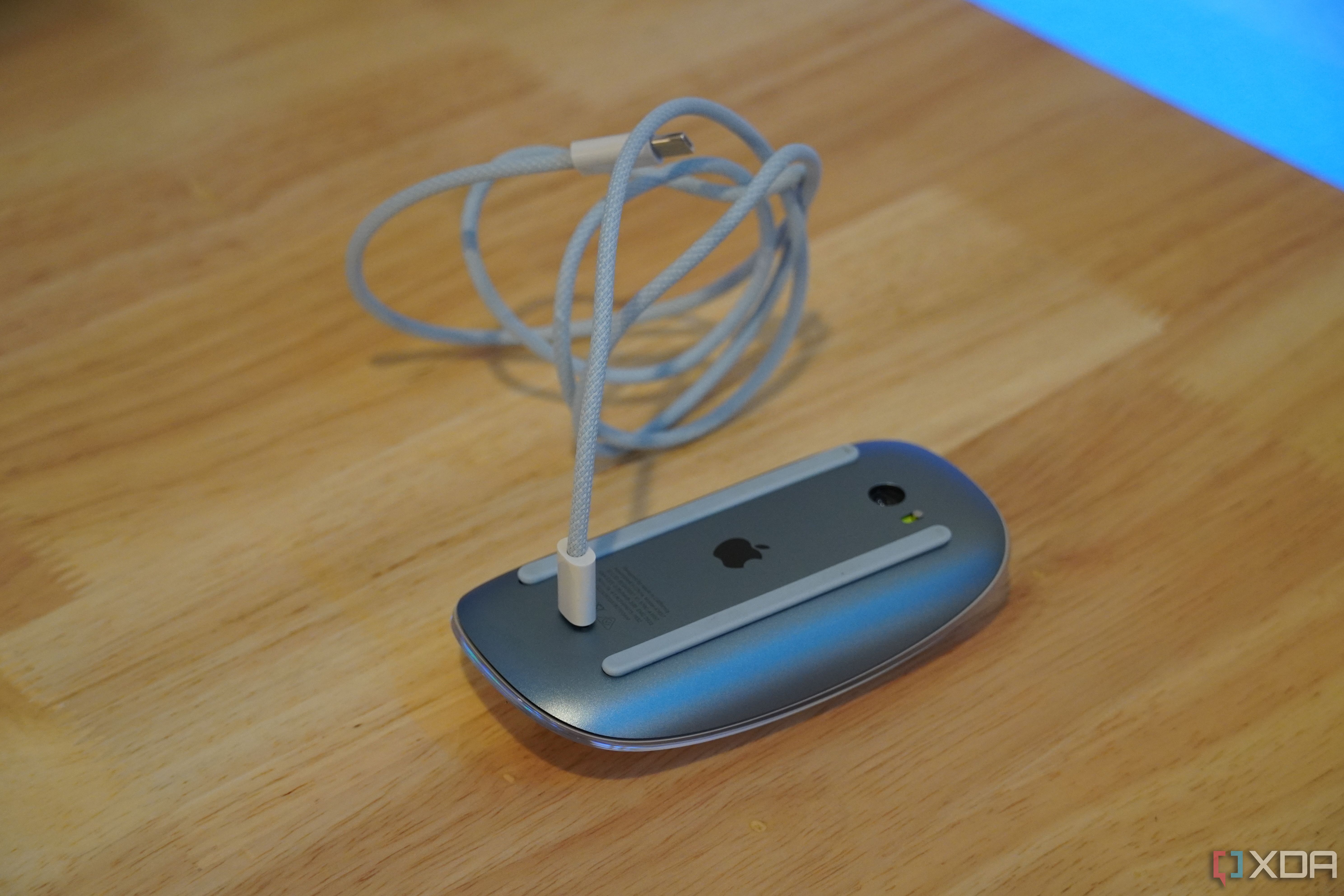
We shouldn't forget about the Magic Mouse, which still has a Lightning port, is still being sold in 2024, and still charges via an idiotically-positioned charging port on the bottom of the mouse. This is awful, since you can't charge the Magic Mouse 2 while using it. The funny thing is, Apple released a Magic Mouse with terrible charging issues twice. The first Magic Mouse was powered by two AA batteries, but the contacts and cradles for those batteries weren't tight enough. Batteries would frequently slip out of place, causing frustrating connection issues.

iMac (M3, 2023) review: Still alive and well
Apple's incremental update to the 24-inch iMac has brought up the idea that the product might be dying. I'm here to tell you that's just plain wrong.
1 Introducing the butterfly keyboard
This keyboard design was a huge miss and defined a rough era for the Mac
The only acceptable choice for the top spot on this list is the butterfly keyboard. This new take on the classic scissor-switch mechanism was supposed to make Apple laptops smaller, and shape the MacBook keyboard of the future. It was introduced with the MacBook in 2015, and shipped on all MacBook lines until 2019. The butterfly keyboard was so bad and so prone to failure that Apple issued recalls and settled a class-action lawsuit regarding the problems to the tune of $50 million.
Butterfly keyboards offered virtually zero key travel, so you felt like you were smashing the MacBook's deck with every keystroke. More importantly, they suffered from issues like sticky keys, phantom presses, and simply didn't register actuations in some situations. On a series of MacBooks Pro shipped between 2016 and 2019 riddled by customer complaints, the butterfly keyboard was the worst offender.

Apple just killed the Touch Bar, and I'm already rooting for a comeback
The Touch Bar was a good idea, with poor execution, that was ahead of its time. But massive initial failures shouldn't rule out a comeback entirely.
It's time for some honorable mentions
Those were the worst decisions Apple has made to the Mac lineup, but there are plenty more that are worth considering. For starters, the lack of upgradability on modern Mac computers is incredibly concerning. Apple has also introduced some anti-consumer practices regarding Mac repairability, like the serializing of parts. Aside from those points, it feels like the Mac is at its best in the Apple silicon era. So, what will Apple do next that earns a spot on this grueling list?