
While we can all agree that 1GbE networking is becoming outdated — even for home network use — what speed to replace it with is another matter. As Multi-Gig networking and ISP plans become more widespread and Wi-Fi standards evolve, it's time to retire Gigabit networking in favor of Multi-Gig. But that gives you a question to answer, because Multi-Gig could be 2.5GbE or 5GbE, and many switches and routers that support those also support 10GbE on the same port.
If you had to make that choice in the next year or so, which speed would make the most sense for upgrading to? I don't have all the answers, because it depends on your home network, your ISP plan, and what you do on your network, but after replacing parts of mine with 10GBase-T and 10GBase-AOC and the rest with 2.5GBase-T and Wi-Fi, I can say that most people don't need to upgrade to 10GbE, 5GbE isn't on many devices, and 2.5GbE is the speed to aim for. That will give you a good balance between your ISP plan and the speeds your devices download or upload at, while providing plenty of overhead for smart home devices and other bandwidth uses.

When do you need a 10GbE network card?
Installing a 10GbE network card can definitely boost the bandwidth of your home server. But is a 10GbE NIC really worth it for the average user?
If everyone had Multi-Gig Internet, it would be different
But it's not, and most networked device manufacturers know this
I know, I know. It wasn't that long ago that I said you don't need 10GbE networking at home. I will stick with that, though, because I now have 10GbE networking between some devices. While I enjoy the speed when downloading games or moving data to my NAS, it's not that earth-shattering that it's really worth it. I got a good deal on the adapters and cables I'm using, as they're all ex-enterprise stuff from eBay, but that's not always possible. 2.5GbE should be the new 1GbE, and that's what anyone should look for, at least when buying new equipment.
Plus, my home has more random networking equipment than average, and even then, most of my switches and client devices have 2.5GbE or 5GbE as their top speed. The copper wiring in my walls is Cat5e, which means I could probably get 10GBase-T speeds since my house isn't that big, but realistically, it will be 5GbE or lower without pulling new cable, and I hate pulling cable.
Faster networking comes with hidden costs
It's not just the costs of new network switches, clients, routers, and cables that make upgrading to 10GBase-T a hard sell for many. Power costs must also be considered when networking equipment is constantly on, and 10GbE uses up to 5x the power per port compared to 2.5GbE. That could be even higher if you're using PoE to power access points or other equipment, which adds up quickly. And added power means more heat generated, which means more air conditioning bills if it's the summer.
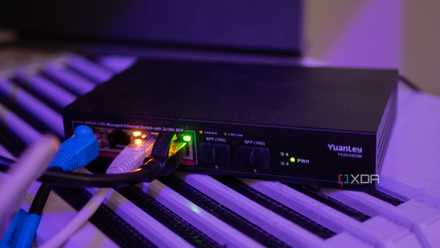
A cheap 2.5GbE managed switch was one of the best home networking upgrades I've made
Cheap doesn't have to mean bad.
Not convinced? Let's talk numbers
Most home users don't need to shift massive amounts of data in a hurry
I'm going to preface this section by saying if you already want 10GbE or faster, go right ahead! You know your networking needs better than anyone, and I'd be a hypocrite if I said nobody should upgrade, considering the home and lab networks I have running. For those of you who might be wondering what sort of real-world improvements they'd notice on 2.5GbE or if they need to upgrade from Gigabit Ethernet anyway, let's run some numbers.
Backing up data to a NAS is one of the most common household tasks for large data transfers. If we say we have 100GB of images and videos to transfer, that would take just under 14 minutes on a Gigabit connection, assuming the data rate stays constant. With a 2.5GbE network link, that same 100GB now takes about five and a half minutes to complete, a significant change.
Overall transfer speeds are dictated by the slowest part of the data path, which is often the storage medium being written to or read from. Other devices using the network and network protocols also somewhat reduce the available bandwidth, which is why it's always better to have a slightly faster network than any device you might be using.
Gamers and livestreamers don't need massive bandwidth once they have enough to send the necessary encoded data. Latency to the server makes more of an impact, and 2.5GbE won't be that far off 10GbE for latency. If you do rely on upload speeds, you'll want a fiber ISP because most cable providers cap the upload speed to a fraction of the download one, which causes issues when enough 4K streams are being watched, let alone when multiple users are on video calls or trying to stream to Twitch, for example.
One way a faster wired backhaul will immediately impact a home is by trunking between two network switches or between a switch and a Wi-Fi 6/6E/7 Access Point (AP). Wi-Fi 6E can easily saturate a 1GbE link, while Wi-Fi 7 can outperform a 5GbE connection under the right conditions.
So, who actually needs 10GBase-T or fiber at home?
I'll be honest here, you probably don't need 10GbE at home. I'm not sure if I do, but the price difference between 2.5GbE equipment and 10GbE when I was looking to upgrade wasn't much, so I splurged. I still don't have most of my devices on 10GBase-T or 10GBase-SR, because that would require significant outlay for client adapters, but those that already have it built in and a couple of heavily used computers are rocking faster networking.
If you match one of these categories, you probably need the fastest networking you can get easily, which will likely be 10GbE, but a lot of SFP+ equipment will do 25GbE as well:
- Content-creation pros - Moving RAW video footage needs fast networking
- Overkill home labs - If your servers and NAS devices all use SSDs, you can choke slower networking
- Early adopters on symmetrical 5–10 Gb fiber - In this case you might even want 25GbE or higher
For anyone else? Maybe not, but if you're buying prosumer or enterprise network switches, those could last 10 or 15 years, so you might want to do some forward planning.

All-SSD NAS devices are the best companion for frequent travelers
Although they are often associated with home labs, all-flash storage servers are amazing travel companions
Only 1 in 10 households needs 10GbE networking
If you're a home lab enthusiast, you might already have 10GbE speeds at home because, of course, you might. It's there, and you wanted it. I can't argue with that logic, but for most users who might only have a few wired devices and use Wi-Fi most of the time, 2.5GbE is the sweet spot between cost of ownership and speed.