
Considering that the RISC-V project began in 2010, it’s one of the newest CPU architectures to grace the computing space. While there’s still a noticeable shortage of consumer-grade processors in the RISC-V space, manufacturers like Milk-V have released a handful of RISC-V-powered devices.
The Milk-V Jupiter stands out from the crowd, both with its affordable pricing and a surprisingly decent collection of operating systems. Having used this inexpensive RISC-V motherboard for weeks, here are three cool yet practical projects you can build with it.

Milk-V Jupiter review: This budget mini-ITX motherboard packs a RISC-V processor
The RISC-V CPU is the biggest highlight of the motherboard, though its lackluster performance and disappointing app support leaves a lot to be desired
3 Linux desktop for RISC-V coding projects
Though it’s a bit limited on the performance front
Whether you’re a newcomer who wants a cheap means to run Linux or a grizzled coding veteran looking for a powerful device to experiment with RISC-V projects, the Milk-V Jupiter is a solid alternative to the average RISC-V SBC. Besides supporting more IO ports and an M.2 SSD slot, it’s also compatible with the GUI versions of Ubuntu, Fedora, and Bianbu.
Although app compatibility and performance are still a bit finicky, this $60 mobo can run several essential applications and coding tools. Besides Buildroot and GCC, you can also use this nifty device to compile your own kernel for Bianbu.
2 Kodbox server
With a decent collection of apps and plugins
If you’ve glanced at the resources page of Milk-V Jupiter and were unable to find a Kodbox distro, it’s because Bianbu has some customized versions featuring extra functionalities. This includes a Kodbox image, which you can flash onto the Milk-V Jupiter to convert the device into a self-hosting workstation.
Despite its RISC-V roots, the Milk-V Jupiter supports certain useful apps, including Photopea, OnlyOfficie, Excalidraw, and Draw.io. Not to mention, you can even turn it into a reliable file-sharing server thanks to the built-in file manager utility. Throw in the Google Photos-like Gallery app and integration with iCloud, and your Milk-V Kodbox machine becomes a jack-of-all-trades personal cloud platform.
1 Makeshift NAS with OpenMediaVault
That’s more affordable than your average SBC
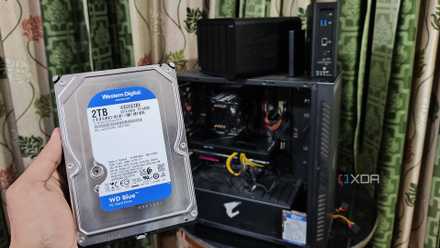
Apart from Kodbox and the CLI and GUI versions of Bianbu, you can even find an OpenMediaVault edition of the OS, and it’s easily my favorite operating system for the device. That’s because the lightweight OMV is all you need to build a robust NAS out of the Milk-V Jupiter.
Besides the four USB ports, the Jupiter motherboard also includes front panel headers, allowing you the option to add two USB 3 and two USB 2 connections with a PC cabinet. Plus, you can set up OpenMediaVault on a microSD card to free up the M.2 SSD slot, granting an extra drive slot to your jury-rigged NAS. While the RISC-V system’s incompatibility with most plugins is quite the buzzkill, the NAS-oriented aspects of the OMV work incredibly well, putting the Milk-V Jupiter above most SBCs (barring the ZimaBlade and other ZimaBoard units) if you want a low-power and budget-friendly device for a makeshift NAS setup.
Pre-built NAS vs. DIY storage server: Which one’s better for you?
Having a hard time deciding whether you should assemble a NAS or buy a pre-built enclosure? We're here to help out!
Bringing useful ideas to life on a RISC-V machine
With more and more RISC-V SBCs and mobos starting to make the rounds, I’m quite hopeful about the future of this new CPU architecture. Don’t get me wrong, there’s still a lot of work left to be done, especially in the software department. But considering the $60 Milk-V Jupiter includes a PCIe Gen 2.1 x8 slot, it’s hard not to get excited at the prospect of running games, AI, and other GPU-heavy tasks on the device once it gets the proper driver support it deserves.
Milk-V Jupiter mini-ITX RISC-V motherboard
- Memory Type
- Soldered 4/8GB (K1) or 16GB (M1) LPDDR4X
- Form Factor
- mini-ITX
- Wi-Fi
- Wi-Fi6
- RBG Support
- No
- CPU Support
- RISC-V
- PCI Slots
- 1x PCIe x8
Milk-V Jupiter, powered by the Spacemit K1/M1 SoC, is the world's first Mini ITX device to support both RVA22 and RVV1.0. This device integrates a standard PCIe connector, supporting common PCIe devices such as graphics cards, PCIe to SATA adapters, and network cards. It features dual Gigabit Ethernet interfaces, onboard Wi-Fi 6/BT 5.2, and supports NVMe SSDs, making it an ideal choice for an entry-level RISC-V desktop.