
Three years of 3D printing have taught me that filament choice matters most after the novelty wears off. PLA still has a place on my shelf, and I’ll happily use it for quick prototypes, decorative parts, and anything that doesn’t need to survive daily use. But when I’m printing something that has to hold weight, resist heat, clip into place, or live near electronics, I don’t reach for PLA anymore. I reach for PETG because it offers the best balance of strength, flexibility, and reliability without turning every print into a materials science project.
The job of a functional print is not to impress me under desk lighting. It’s to disappear into the setup and keep doing its job.
That shift didn’t happen because PETG is the flashiest filament in the drawer. It happened because the parts I actually depend on kept asking for the same traits over and over again. I wanted brackets that didn’t crack, organizers that didn’t warp, clips that didn’t snap, and mounts that didn’t soften the first time they got warm. PETG isn’t perfect, but it’s become the filament I trust when a print needs to be part of my setup rather than just another thing I made.
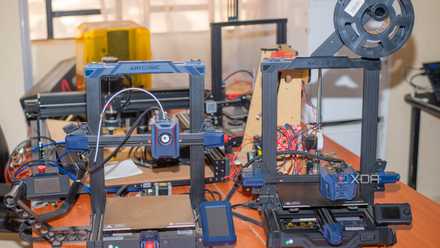
6 ways PLA filament is fine for 3D printing beginners but not for enthusiasts
3D printing newbies should start with PLA, but be prepared to switch as you grow your skills in the hobby
PETG handles real use better than PLA does
Functional prints need toughness more than perfect surface finish
PLA is still the filament I recommend to anyone learning 3D printing because it’s forgiving, cheap, and usually easy to tune. It prints cleanly, sticks well, and makes you feel competent before the printer has had a chance to humble you. But functional parts often expose PLA’s limits after the print leaves the bed. A part can look great on day one and still fail once it gets pulled, twisted, warmed, or flexed a few dozen times.
That’s where PETG started winning me over. It has enough toughness to handle the kind of abuse that small functional parts actually see. I’m not talking about extreme engineering loads or industrial fixtures here. I mean the quiet, annoying stress of cable clips, drawer organizers, tool holders, brackets, and mounts that get handled constantly and need to stay in one piece.
The difference is especially obvious when a part needs a little give. PLA tends to feel rigid until it suddenly decides it has had enough. PETG offers greater flexibility, making it better for clips, tabs, and parts that need to snap into position without becoming one-time-use hardware. That small amount of forgiveness matters more than I expected, especially around PC setups where printed parts often need to fit around cables, desk edges, rails, cases, or shelves that were never designed with 3D printing in mind.
Heat resistance matters more around computers than expected
PETG survives the warm corners where PLA gets nervous
The more I printed parts for my PC setup, home lab, and general desk chaos, the more heat resistance became impossible to ignore. PLA doesn’t need to be in an oven to become a problem. A warm enclosure, a sunny window, the back of a monitor, or the space around a power supply can be enough to make me question it. I’ve had too many prints turn from “that’ll work” into “why is this slightly banana-shaped now?”
PETG gives me more room to breathe in those situations. It isn’t magic, and I’m not pretending it belongs everywhere high-temperature plastics belong. But for most functional parts around a desk, a printer, a NAS, or a small server setup, it handles heat much better than PLA. That makes it an easy default for the parts I don’t want to think about after I install them.
This is especially useful for prints that live near electronics. Cable guides, SSD holders, Raspberry Pi cases, fan brackets, and small mounts all exist in places where airflow and heat can get weird. PLA can work in some of those roles, but I don’t like wondering whether a part will still be straight next month. PETG removes enough of that doubt that I’m willing to accept its printing quirks.
PETG can be annoying when the printer is not dialed in
Stringing and surface cleanup are part of the tradeoff
The strongest argument against PETG is that it’s simply not as pleasant to print as PLA. PETG likes to string, blob, and leave behind little wisps if retraction, temperature, and cooling aren’t tuned well. It can also be fussier about bed adhesion in both directions, which is a special kind of ridiculous. Sometimes it doesn’t stick well enough, and other times it sticks so well it’s trying to become a permanent feature of the build plate.
PETG usually requires more tuning than PLA, especially regarding temperature, retraction, cooling, and bed adhesion. Once you have a reliable profile, though, it becomes much easier to treat it as a practical, everyday filament rather than a difficult specialty material.
That’s why I don’t think PETG is the best beginner filament, even though it’s the one I use most for functional work now. PLA teaches better habits without punishing every small mistake. PETG asks for a little more patience, especially when you’re switching brands, colors, or profiles. It isn’t difficult once you’ve got your setup dialed in, but it does make you earn that confidence.
There’s also the finish to consider. PETG parts often look a little glossier, softer, and messier than comparable PLA prints. If I’m printing something decorative or something that needs crisp surface detail, PLA is still the easier choice. PETG’s strengths are practical, not cosmetic, and that means it doesn’t always feel as satisfying when the part first comes off the bed.
The hassle is worth it once the part is installed
I would rather clean strings than reprint broken parts
The reason PETG still wins is that most functional prints don’t need to be beautiful. They need to stay useful. I’d rather spend an extra minute cleaning up a little stringing than reprint a cracked clip, sagging bracket, or warped holder later. The job of a functional print is not to impress me under desk lighting. It’s to disappear into the setup and keep doing its job.
Once PETG is tuned, the day-to-day experience gets much easier. I keep a known-good profile, dry the filament when needed, and avoid treating every spool like a brand-new adventure. That doesn’t make PETG effortless, but it does make it predictable. Predictability is what I want from a material that I’m using for parts I’ll actually depend on.
Shop Maker deals: Filaments, tools, and accessories
It also helps that PETG avoids the bigger compromises of some tougher materials. ABS and ASA bring fumes, warping, and enclosure requirements that don’t always feel worth it for ordinary home and PC parts. Nylon can be excellent, but it’s more expensive, more moisture-sensitive, and often overqualified for the job. PETG sits in the middle, and that middle ground is exactly why it has become my default.
PETG became my practical filament, not my perfect one
After three years of printing, I don’t think there’s one filament that does everything best. PLA is still excellent for fast, clean prints that don’t need to survive much stress. TPU is great when flexibility is the whole point, and tougher materials make sense when the use case actually demands them. But for the functional parts I print most often, PETG has become the material that fits the widest range of real problems.
That’s why it’s the only filament I print functional parts in now. It gives me enough strength, enough heat resistance, and enough flexibility without forcing me into a much more demanding workflow. It isn’t always the prettiest option, and it can be annoying before the settings are right. But when I need a printed part to remain useful after the novelty wears off, PETG is the spool I trust.
Elegoo Centauri Carbon 2 Combo
The Centauri Carbon 2 can easily print your favorite PC parts in PETG.