
3D printing makes it easy to believe every problem is just a stronger infill setting away from going away forever. The weird part is that many failures have nothing to do with print quality in the moment, and everything to do with how plastics behave after weeks of heat, stress, light, water, and chemicals.
Some of the worst failures don’t happen during the print, they happen weeks later.
Researching real-world breakages and long-term use stories unveils the same pattern: “it worked perfectly … until it suddenly didn’t.” So these examples focus on the sneaky, delayed failures that feel unfair the first time you meet them.
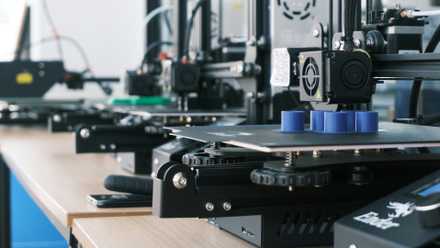
5 reasons your 3D prints keep failing (and how to fix them)
If you're bothered by 3D print failures, these are some of the most common issues to look for
The slowly sagging shelf bracket
Creep quietly reshapes parts under steady load
A printed bracket can look rock solid on day one, especially if it feels stiff in your hand and survives the first install without complaint. The surprise is that some plastics can deform slowly under constant stress, even at room temperature, in a process called creep. People describe prints that gradually droop, tilt, or “relax” over time while still looking intact, and it can feel like the laws of physics changed overnight. The part is not “snapping,” it is patiently giving up a tiny bit at a time until it finally looks wrong.
What makes this failure annoying is how normal everything seems while it’s happening. Your shelf is still on the wall, your clamp is still holding, and the screws never loosened. Then one day, you notice the angle is off, and you cannot unsee it. If the bracket is supporting something sensitive, like a camera, a display, or a door latch alignment, creep can turn into a functional failure rather than just an aesthetic one.
The fix is not a single magic setting, because creep is more about material choice and load direction than about surface finish. Print orientation can help, and so can adding bulk where the stress concentrates, but the bigger win is choosing a material with better long-term load-bearing resistance. It also helps to treat “static load” like a real stress test, not a harmless scenario. If something is under tension all day, every day, it deserves more respect than a quick shake test on your desk.
The car interior heat warp
Sunlight pushes PLA past its comfort zone
A print can survive your office, your garage, and your daily routine, then fold like warm pasta in the back seat of your car. The failure mode is not subtle, either, because heat softening looks dramatic when it hits a long or thin part. People routinely report PLA props and accessories warping after being left in a hot car, sometimes in just a few hours. The shock comes from how “not that hot” the day felt outside compared to how hot the inside of a vehicle can get in direct sun.
This is a special kind of betrayal because the print often holds its shape right up until it doesn’t. It can sag, twist, or take on a permanent bend, making it useless for anything that relies on alignment. You may even think the part got crushed by something, because heat warping can look like impact damage. The reality is that the material is simply being pushed past its temperature limits, especially for thin sections that heat quickly.
The lesson here is that “indoor plastic” and “car plastic” are different categories, even when the part never touches an engine bay. If the print might live in a parked vehicle, undergo shipping through summer heat, or sit near a sunny window, PLA is often the wrong bet. Heat-resistant materials exist for a reason, and sometimes the smartest upgrade is not strength, but temperature stability. You don’t need a heroic engineering project; just a better match between the material and the environment.
The soap dish that cracked
Warm water and cleaners can age prints fast
Bathroom and kitchen prints feel like easy wins because they are low-stakes, small, and satisfying to customize. Then months later, they can start showing cracks, holes, or a weird crumbly surface that seems disproportionate to the job they do. I’ve heard of and seen PLA degrade in watery environments over time, including in bathrooms and aquariums, with prints developing holes and breaking apart after extended exposure. The failure is sneaky because nothing catastrophic happens at first, and the part is “fine” right up until it fails.
Water alone is not always the villain, but bathrooms add heat cycles, soap residue, cleaning chemicals, and constant wet-dry swings. Those conditions can expose weak points in layer lines, encourage stress in thin features, and accelerate aging in ways you would not predict from a dry desktop prototype. If your design has tiny ribs, sharp corners, or hollow pockets, the environment has more places for trouble to start. It is the kind of failure that feels personal, because the print was supposed to be a simple quality-of-life upgrade.
If a print must live in wet conditions, it helps to design for sealed surfaces and reduced crevices, but material choice still does most of the heavy lifting. Even “safe” plastics can behave differently depending on additives, pigments, and how well the part is fused. Some filaments are also more variable than people expect, which is why the same model can last years for one person and fall apart for another. For water-exposed prints, planning for longevity up front saves you from reprinting the same item on a slow, annoying schedule.
The outdoor mount that snapped
UV and weather can change plastics over seasons
Outdoor prints often fail in a surprise twist, looking unchanged until the day they fracture. Sunlight and weather exposure can degrade some plastics over time, making them brittle, faded, and more likely to crack under stress. PLA is well known to lose durability outdoors, and even PETG can degrade under UV, especially with long exposure or certain colors and formulations. The tricky part is that the damage can be gradual and mostly invisible until a load or vibration finally finishes the job.
This is where “it survived a storm” becomes a misleading victory lap. Wind, temperature swings, and sunlight do not always cause your models to break apart immediately, but they can quietly shift the material’s behavior so the next bump becomes the breaking point. You might blame the design, your fasteners, or even your printer settings when the real cause is the environment gradually rewriting the part’s properties. That disconnect is why outdoor failure feels unpredictable, even though the chemistry is doing precisely what we should expect.
If something must live outside, the shortlist of acceptable materials changes quickly. ASA is widely recommended for outdoor use because it’s built for UV and temperature resistance, and that’s not marketing fluff so much as a practical response to what sun exposure does to common hobby materials. You can also improve odds with UV- or heat-resistant coatings or paint, but you still want a plastic that is comfortable living outdoors in the first place. The best outdoor print is the one you forget about for a year, not the one you keep reprinting on a weekend rotation.
The sanitizer handle that crazed
Chemical exposure can trigger stress-cracking surprises
Some failures are not about force or heat at all, but about what touches the print. Chemical exposure can trigger or accelerate stress cracking, especially when a part is under load, and a solvent or cleaner enters tiny surface flaws. Research on environmental stress cracking shows that certain conditions can cause sudden, severe strength reduction in polymers, even when the part looks visually fine at first. That is the kind of failure that feels like sabotage, because the print can go from “working” to “splitting” without any dramatic moment of abuse.
This comes up in the real world when a printed handle, latch, holder, or bracket is regularly wiped down with cleaning products. CNC Kitchen’s testing on disinfectant exposure shows that common materials can experience measurable changes in strength after soaking, even before you add real-world stresses like bending, torque, and fasteners. Even when the effect is modest in a controlled test, repeated contact plus constant stress can stack the deck against you. In other words, the print may not fail because you cleaned it, but cleaning can help the failure arrive early.
The practical move is to treat “chemical contact” as a design requirement rather than an afterthought. If a part will live near alcohol, cleaners, fuels, or even certain household products, choose a material with better chemical resistance and avoid designs that concentrate stress at thin corners. It also helps to remember that parts used around people tend to get cleaned, sometimes aggressively, and that behavior is perfectly reasonable. A successful functional print is not just strong in theory, it is compatible with how humans actually live with objects.
What these failures taught me about choosing materials
The common thread is that most “unpredictable” print failures are actually delayed interactions between the material and its environment. Creep, heat, water, UV, and chemicals all show up after the excitement of a fresh print wears off, and they tend to fail parts that looked perfect on day one. Once you start thinking in terms of where a print will live and what it will touch, the right material and design choices get clearer.
|
Material |
Environmental conditions more likely to cause failures |
Environments that are almost guaranteed to be safe |
|---|---|---|
|
PLA |
Heat is the big one, because PLA can soften and permanently warp once temps climb into the “hot car” zone. Long-term load can also cause creep, in which a part slowly deforms under constant stress, even if it never snaps. Aggressive cleaners or solvents combined with stress can trigger cracking or surface damage that appears as if the part suddenly weakened overnight. Direct sun can add heat and accelerate aging, especially for thin parts. |
Indoor, climate-controlled spaces away from heaters, sunlit windows, and hot electronics. Light-duty parts that are handled occasionally rather than held under tension all day. Desk organizers, display pieces, enclosures that do not heat soak, and low-stress brackets. Dry storage and moderate temps keep PLA happy. |
|
PETG |
Prolonged UV exposure can degrade or fade it over time, especially in direct sunlight for months. Heat is less scary than with PLA, but sustained warmth plus constant load can still cause creep or gradual distortion. Certain chemicals can still cause stress cracking depending on the cleaner type, concentration, and the extent of flexing. Poorly designed thin features can fail from repeated bending because PETG can fatigue in flex-heavy parts. |
Indoor functional parts that need greater toughness than PLA and might occasionally be exposed to heat near electronics. Utility prints like holders, guards, and light-duty mounts that are not in direct sun all day. Kitchens and workshops are often fine if the part is not sitting against a heat source. Shaded or occasional outdoor use can work well if UV exposure is limited. |
|
TPU |
Direct sunlight and UV exposure can degrade some TPU formulations over time, and performance varies widely by brand and blend. Certain solvents and prolonged chemical contact can cause swelling, softening, or loss of elasticity, depending on what comes into contact with it. Heat and moisture for long periods can accelerate aging in some flexible polymers, especially if the part is used in a wet, warm environment. Sharp edges and repeated stretching can create tears that start small and then run. |
Indoor flexible parts like bumpers, feet, cable strain relief, gaskets, grips, and vibration isolators. Applications where impact resistance and flexibility matter more than rigidity. Areas that see occasional oils or grease are often a good fit compared to brittle plastics. Normal room temperatures and intermittent handling make TPU last a long time. |
|
ASA |
Strong solvents and harsh chemical exposure can still cause cracking or weakening, especially if the part is under tension. High heat under load can still lead to creep over time, even though ASA handles heat better than PLA. Mechanical fatigue is possible if a part is designed to flex repeatedly rather than stay rigid. In practice, the bigger “failure” risk is often choosing ASA when you cannot control printing conditions, but that’s a manufacturing issue more than an in-service one. |
Outdoor environments are one of ASA’s strengths, including sun, wind, and temperature swings. Mounts, housings, brackets, and covers that would slowly degrade in PLA tend to hold up far better in ASA. It is a strong option for parts that live near windows, on patios, or in exposed equipment enclosures. If you want “install it and forget it” for outdoor use, ASA is usually the first stop. |
Even following this advice, you will still get surprises sometimes, but they stop feeling random and become more like helpful feedback you can apply to the next model.
Creality K2 Plus Combo
- Build Volume
- 350 x 350 x 350mm
- Printing Speed
- ≤600mm/s
- Materials Used
- PLA/ABS/PETG/PA-CF/PLA-CF/PET/ASA/PPA-CF
This 3D printer can handle a wide range of materials, so be sure to choose one appropriate for how and where you'll use the print.