
If you're a PC enthusiast with any amount of expendable income, you know how difficult it is to ignore the itch to upgrade, even if everything you have is already sufficient. 2025 was a year in which I probably didn't need to upgrade anything. My system ran most things quite well, and I had very little to complain about otherwise. I've made a lot of hardware moves over the years that have been pretty transformative for my PC experience, but I've also made a ton that could be considered a lateral move—maybe even a downgrade. Not every upgrade I made this year fell into the first category, but these 4 made a huge difference in my day-to-day work and play.
GPU
Going from an Ampere GPU to RDNA 4 was a massive shift
A GPU upgrade that jumps multiple generations has the potential to be transformative, especially if you're going from a mid-tier card of a previous generation to a higher-tier card of the current generation. In terms of where my upgrade falls, the RTX 3080 was more expensive than the RX 9070 XT at launch, but despite that, I paid basically the same amount for both cards, as I got the Nvidia card pre-owned around a year after it released.
The 3080 was (and still is) a powerhouse, especially the EVGA FTW3 model that I chose. I stuck with EVGA from the Maxwell architecture when I bought my first new GPU, the 750 Ti, all through the Pascal architecture with their 1070 Ti SC, and finally ending with the 3080. It's a shame that their differences with Nvidia were unreconcilable, because their GPUs were second to none in build quality and especially customer service.
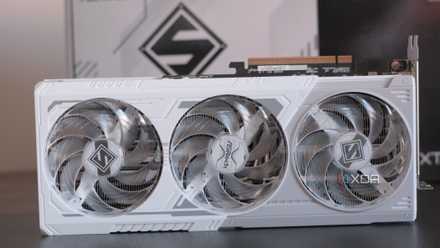
The RX 9070 XT is a fitting upgrade, especially the beefy NITRO+ edition from Sapphire. It looked right at home in my build, and for my first discrete Red Team card since they purchased ATi, I wasn't disappointed. In raster, this thing is a beast, but it didn't really spread its legs fully until I played some new releases. It runs way cooler and quieter, and the additional 6 GB of VRAM arrived basically just in time. I was just beginning to see the telltale signs of a full VRAM buffer in some games, and 16 GB will be more than enough for at least the next few years. The RTX 3080 was still chugging along fine, but it was beginning to show its age once I began to upgrade my monitor, first to 1440p, and then eventually to 4K. It's new home is in the living room PC, where it happily drives a 4K TV at 60 FPS in most games.
AMD's Radeon RX 9070 XT is the most exciting GPU to launch in years
It's here. It's brilliant. Go and buy one.
CPU
Another jump to AMD
When I bought it on release, the Intel Core i7-10700K was the best gaming CPU out. It was fast, overclockable, and didn't run overly hot. If I didn't play so many CPU-bound games, I probably wouldn't have felt the need to upgrade when I did. When it came to anything besides Escape From Tarkov and Counter-Strike 2, the 10700K was more than enough horsepower to feed my RTX 3080.
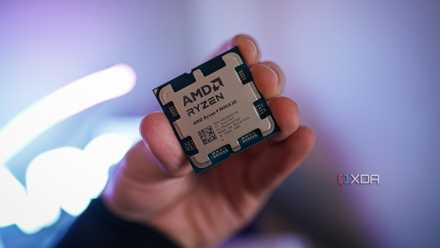
Moving to AM5 with the Ryzen 7 7800X3D was borderline unfair in those two titles I named. The average framerates boomed, but it also brought up the 1% and 0.1% lows by a very significant margin—over 30% in some scenarios. I couldn't have asked for a better reintroduction to AMD processors, with my last one being the A8-6600K APU over a decade ago, the 7800X3D was truly a transformative upgrade.
6 games that provide the best gains with AMD Ryzen X3D CPUs and 3D V-Cache
Get the most from your X3D CPU with these PC games.
RAM
32 GB was beginning to become a squeeze
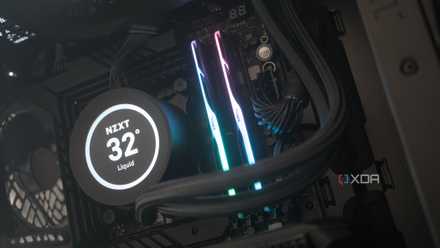
In most situations, 32 GB is more than enough for gaming, and on my Intel system, I had four DDR4 8 GB sticks, which ran beautifully. Once I moved platform to AM5, I stuck two sticks of 16 GB in my system, which was more than enough for games, but my productivity demanded more, so I filled the other two slots to help with VMs, primarily.
I didn't expect it to matter as much as it did. Of course, when working with VMs, the extra memory was a godsend, but even outside of that, having 64 GB meant I no longer had to worry about tabs, open applications in the background, or dipping into swap whatsoever. And with the recent boom of RAM pricing, I can't help but feel like I dodged a bullet.
Upgrading to 64 GB of RAM was one of best upgrades I’ve done, and you should too
Feed your PC more RAM, as a little treat.
Monitor
The swap to OLED was probably the biggest upgrade I made
I’ve used IPS and TN panels for over a decade, and they were “good enough.” But moving to a 4K 240Hz OLED fundamentally changed how my entire PC looked and felt. Every window, every game, every line of text became sharper, clearer, and more vibrant.
I haven't experienced OLED outside trade shows and through my TV, and despite the concerns about brightness and burn-in I was reading online, I haven't had anything to complain about with my 32" Samsung G8. The blacks are incredible and deep, HDR content is actually HDR, and the motion clarity at 240Hz is truly incredible for the competitive FPS games I enjoy. The jump from 1440p to 4K along with the size increase from 27" to 32" was welcome, but not as noticeable as the vast difference between IPS and OLED. Definitely a worthwhile upgrade.

5 things I wasn't prepared for when I switched from IPS to OLED
OLED deserves the hype, and the asterisks are starting to get removed
2025 will be hard to beat
In terms of PC upgrades, 2025 will be a difficult year to beat. I'm not going to be jumping platforms, making generational jumps in GPU tech and swapping my monitor panel every year, and it's going to take some pretty special innovations to get me to splash as much cash as I did this year again. I don't like upgrading when the benefit is just a few percent of improvement here and there; I've made those upgrades, and I've come to regret them every single time.