
Ever since the age of computing started, technological advancements have come by leaps and bounds. Some of these became foundational technologies, changing how we do things forever, while others were temporary fixes before the next big thing came on. But as time went on, these technologies were either replaced or integrated into other devices, and I think that's a shame. Some of these still have a place in the marketplace today, even if the companies that made them have moved on. With nostalgia biting hard and many of these technologies firmly passing into the retro realm, let's explore what could be.

5 simple ways to give new life to your old tech and avoid the scrapyard
You don't have to throw your old tech away, thanks to these quick and simple tips to extend their life
5 The iPod
The click wheel navigation is still unmatched
The iPod hasn't been off the market long, but with a resurgence in digital music players, it's ripe for a comeback. I disagree that it's a relic of an era gone by, but more like a familiar friend that always has the right words to say to you when you meet. Mind you, I'm not talking about the iPod touch or nano, although those were fine devices. The Shuffle can probably stay where it is too, because I never got the hang of using a screenless music player and it would be nigh impossible to use with how much SSD storage could be stuffed into the chassis.
No, I mean the iPod everyone thinks of at first, whether it's the Classic or the slightly smaller Mini, with the absolutely phenomenal Click Wheel. Now, those early iPod models had a custom hard drive, with either 1.8-inch HDDs for the Classic or 1-inch HDDs for the Mini. Yes, spinning disks in your pocket, prone to damage at any time. With today's miniaturized SSDs, the iPod could have terabytes of music on it, and if you add Siri for easy searching, it could be a perfect media player again. That's why many, like our own Brady Snyder, have modded the iPod Classic to give them modern features like SSD storage, Bluetooth, and USB-C connectivity. Apple might have no interest in a new iPod touch, but surely they can see the appeal of a retro classic's return.

I modded an iPod Classic from 2008 to add Bluetooth, USB-C, and an SSD — here's how
Who says you can’t still use an old iPod Classic in 2024?
4 The Microsoft Zune
It wasn't quite the iPod-killer but it was awesome
Ahh, the Zune. Microsoft's ill-fated attempt at taking on the mighty iPod failed, but what a spectacular failure it was. I loved it, with its futuristic, minimalist UI taking up most of the device's front, even if the 'wheel' for navigation was hiding a four-way D-pad instead. The early hints of what would be Windows Phone began on the Zune, as did aspects of Windows 8 and Xbox. The device only lasted three generations, with the latter two both featuring flash memory. I remember it having more storage than my Sony Ericsson Cybershot phone, which I'd bought to play MP3s as a secondary feature, but I always wanted a Zune.
Sure, it had DRM issues at the time, but the hardware was great. Imagine what a modern version could do, running a slimmed-down version of Windows. Thousands of music and video files stored on a pocketable device with high-res audio and video. Okay, that sounds a lot like a new Windows Phone, but the appeal is to have something that isn't your phone, something dedicated to music.

17 years ago, the Zune tried (and failed) to combat the iPod
It's been 17 years since Microsoft launched the short-lived portable media player, the original Zune. The line lasted less than five years.
3 Windows Mobile
It's time, Microsoft, it's time
Microsoft doesn't quite have the penchant for killing off products that Google does, but it has slashed many products in its prime. No, I'm not advocating for Internet Explorer to come back, that can stay buried, but I'd love Microsoft to have another go at Windows Mobile. Not the early versions of Windows Mobile either, where you needed a stylus to be able to open the Start menu to run anything, but the later iterations with tile-based UI. The Windows 8-era version was awesome on mobile devices, even if it had a distinct lack of app support. With the Microsoft Store and more powerful mobile hardware, that drawback can be overcome, and I believe Windows Phone has a place in the market.
The rise of PC handheld gaming consoles has shown that desktop Windows isn't a great fit for smaller screens. But, Windows Phone was already designed to work on much smaller screens, and it could have been so much more. Now, Bill Gates blames the failure of Windows Mobile on the pressure of the government's antitrust lawsuit. That may be so at the time, but that shouldn't mean the company shouldn't try again. I loved the string of Windows Phones I owned (several Nokias and a Microsoft Kin). They were fun at a time when most phones were moving to black slabs. I also had a Motorola Droid, so I was part of the problem for Microsoft at the time, but it's a different world now. Bring back Windows Phone, and expand it to work on tablets and handheld gaming consoles, and it'll be a hit.
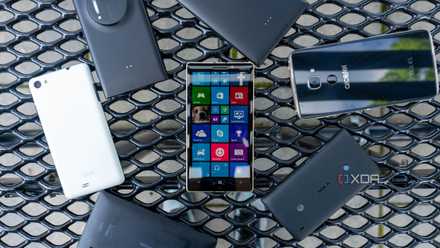
Even today, people are still craving the next Windows Phone
The Windows Phone has become a relic of the past, but its memory still burns bright today.
2 Physical media for music
Vinyl is back but what about cassettes and CDs?
It's not like physical media for music ever completely went away, but it did dwindle and is now experiencing a resurgence. Vinyl is big again, with many bands releasing LPs, but what about the rest of the physical music formats we used to use? The age of streaming has turned music, video, and talk radio into something else, with platforms competing for listeners when the focus used to be on music.
The loss of physical media is part of that problem, removing some of the intentionality of music listening. Some companies are trying to reverse this and ride the wave of nostalgia, like We Are Rewind, who produce portable personal cassette players with modern features like rechargeable batteries and Bluetooth connectivity. By making personal mixtapes, the act of choosing becomes part of the listening experience again, free from the algorithmic choices foisted upon us by music streamers. I'd love to see more physical media types return, like MiniDisc which always felt more futuristic to me than using CDs.

1 Physical keyboards on our phones
You can pry my Blackberry out of my cold, dead hands
I fondly remember the first all-touchscreen phone I acquired, the ZTE Blade, running Android 2.3 Gingerbread. It was one of the first Android devices to get a thriving modding community, and I'm pretty sure that was around the time I started frequenting XDA's forums. It felt like the future, mostly, but typing on a virtual keyboard felt like a big step backward. I was fast at typing with T9, and the touchscreen held me back for a good while until I got used to it.
I'm still not that fast at typing on a touchscreen, but phones like the BlackBerry Key2 and their full physical keyboard have me flying through texts. I don't want to have to carry a travel keyboard to type more comfortably on my phone. I want physical keyboards back. Even if one major manufacturer were to bring them back, for one device on their product stack, they'd have me as a customer for life.

Clicks makes the Apple and Blackberry fruit salad you've always wanted
No app can replicate the feeling of using a physical keyboard, and the Clicks case is here to prove it.
These old technologies deserve a second chance at life
The tech world is constantly innovating, but that also means many promising technologies get lost in the churn. Sometimes innovation removes the soul of the technology, like how streaming music is never quite the same feeling as physically choosing a record or CD to play. Other times, it's a promising tech that was gone too soon due to the market conditions not being right, like the demise of Windows Phone. With retro revivals and nostalgia playing a big role in product launches these days, it's about time some of these products got their second day in the sun.