
NVIDIA's RTX 50 series “Blackwell” graphics cards launched a year ago at CES 2025. The RTX 5070, RTX 5070 Ti, RTX 5080, and RTX 5090 were the new Big Four in town, and they come with inevitable arguments about whether gamers need to upgrade.
Thanks to the 50 series’ exclusive DLSS 4 technology, which flaunts the power of multi frame generation, gamers worldwide are now looking at their towers and wondering if it’s time to move to Blackwell. However, there are plenty of cards from the past few years that don’t require any upgrading at all, regardless of how grand the 50 series cards might look.

5 reasons I don't plan to upgrade to Nvidia's RTX 5000 series
It'll be exciting to cover what Nvidia's RTX 5000 series brings in January, but I don't plan to upgrade.
GeForce RTX 3080 family
Still going strong
That’s right — the RTX 30 series is still relevant, despite what NVIDIA’s fancy marketing will have you believe. We draw the line at the RTX 3080 since anything under 10GB in 2026 is sure to give you problems before the year ends. With the RTX 3080 or the 3080 Ti as your graphics card, you don’t truly need to move to the 50 series just yet.
The latter’s 384-bit bus width also bolsters its case — the RTX 3080 Ti is still a 1440p trooper in every sense of the word. While the RTX 3080 cards are still missing DLSS 3’s Frame Generation or DLSS 4’s Multi Frame Generation capabilities, their raw power enables them to bring things home with ease. Plus, NVIDIA has promised DLSS improvements even for the 30 series, which include enhanced ray reconstruction, super resolution and deep-learning anti-aliasing capabilities.
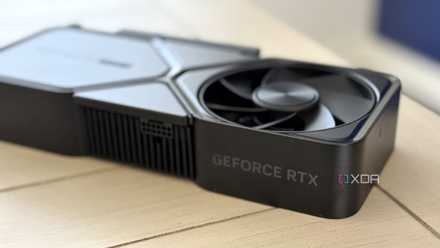
5 things I need on the RTX 5080 to justify upgrading from my RTX 3080
Here's my last-minute wishlist for the RTX 5080
Radeon RX 7800 XT
All frames, no sweat
Less than a year and a half old, AMD’s RX 7800 XT is a premium graphics card that delivers phenomenal 1080p and 1440p gaming at Ultra settings. In fact, you can even venture into 4K lands with the RX 7800 XT, albeit with some quality settings set to medium or medium-high in a few games. Regardless, the 7800 XT has proven to be a formidable competitor to the RTX 4070 SUPER, with its 16GB VRAM capacity edging out its Team Green rival by 4GB.
If you’re currently running an RX 7800 XT in your gaming PC, it’s a no-brainer to stick to this card for at least a couple of years or more. Granted, AMD’s RDNA 4.0 is right around the corner, but RDNA 3.0 is not going anywhere. After all, we’ve even got an RDNA 2.0 card here on this list. As such, the RX 7800 XT is an undeniable performer, with guaranteed longevity. Plus, FSR 3.0 marches on the path of refinement with each update, and in 2025, the two frame generation technologies are nearly neck-and-neck.
Radeon RX 6900 XT
RDNA 2 flagship
In today’s landscape, VRAM truly can keep a card relevant for longer than its competition, and the RX 6900 XT is perhaps one of the finest examples. Four years old now, the RX 6900 XT is RDNA 2-based, sure, but with 16GB of VRAM powering this card and raw performance neck-and-neck with the RTX 4070 SUPER, you’re not going to be struggling to play any major AAA games, even in 2025.
Provided ray-traced gaming isn’t an absolute must-have for you, the RX 6900 XT easily delivers 80-100+ frames on 1440p and 1080p displays, while mainstream AAA games such as Horizon Forbidden West and Forza Motorsport on non-RT, high settings. As such, you might as well skip giving the 50 series cards a look, unless you wish to move over to 4K gaming. Your PSU might be looking for a substitute to take over this card’s load, though.

3 reasons why it's time for NVIDIA to start ponying up more VRAM on their mid-range GPUs
NVIDIA has been skimping on VRAM for far too long.
GeForce RTX 3090 family
Still a titan in 2025
There is really not much to discuss here. Anyone running an RTX 3090 or an RTX 3090 Ti in 2025 is still not going to need a 50 series card. Going band-for-band in raw performance, the base RTX 3090 continues to be an enduring once-flagship card that fights with the best cards today.
After all, a 24GB VRAM and a 384-bit bus width are no laughing matter, and the RTX 3090 develops no sweat beads when you throw the best games at it on 4K. Then comes the RTX 3090 Ti, which only ups the ante in ray-traced performance. Furthermore, even with an RTX 3090, if you’re not fond of ray-tracing’s diminishing returns, the RTX 3090 and 3090 Ti’s rasterized power is still a joy to behold, and any users can easily see another year through before they start considering moving over to Blackwell.
Stop buying these 10 GPUs in 2024 (here's what to buy instead)
These 10 GPUs might be some of the most regrettable purchases you could make in 2024, especially when far better options are available
GeForce RTX 4080 family
Second in command
The RTX 4080 and 4080 SUPER run flank with the brand’s flagship, and even thinking of upgrading to the 50 series cards while your tower flaunts this GPU would be bizarre. Armed with 16 gigs of VRAM, both the RTX 4080 and its SUPER variant employ NVIDIA’s best tech today, with their exclusive Frame Generation capabilities making them two of the best 4K-gaming cards on the market.
Unless you want to splurge money unnecessarily on a card only because it’s the newest kid on the block, there is no practical or performance-based reason to justify moving from the RTX 4080/SUPER to even an RTX 5070 or 5080. That is, of course, the 50 series’ multi frame generation becomes the new norm, and developers forget how to optimize their latest and greatest for cards that don’t use AI to bolster frame rates.
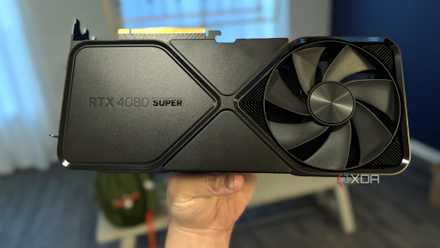
Nvidia GeForce RTX 4080 Super review: Minor power increase with a major price slash
With a hefty drop in MSRP over the card it's replacing, this graphics card is finally priced correctly.
Radeon RX 7900 XT/ XTX
Team Red’s best
Another no-brainer, AMD’s RX 7900 XT is one of the best cards in the world right now, behind only the RTX 3090 Ti, the RTX 4080s, its own XTX variant, and NVIDIA’s ultimate flagship, the RTX 4090. If you have an RX 7900 XT or XTX in your build, a clear decision to go Red was made, and there is absolutely no reason to go back on it.
Not only are you looking at bulletproof 4K gaming thanks to the Radeon RX 7900 XT’s 20GB VRAM, or its XTX variant’s 24GB VRAM capacity, but the card continues to be the best AMD offering for ray-traced performance. Needless to say, AMD’s crown jewel requires absolutely no upgrading to the 50 series.

AMD Radeon RX 7900 XTX review: A substantial step-up for RDNA 3
AMD hits back at NVIDIA's mighty RTX 40 series GPUs.
GeForce RTX 4090
Need I say more?
Truth be told, if you have the RTX 4090, you like being on the bleeding edge of consumer tech. In fact, that might even be a reason for you to want the RTX 5090 with its eye-watering $2,000 price tag in your rig. However, you’d clearly do not need to.
The 4090 was, hands down, the greatest consumer GPU made up until now, and if the RTX 3090 doesn’t require any immediate upgrade to the 50 series, neither does NVIDIA’s current spearhead. It boasts a massive 24GB VRAM capacity, the second-highest on any NVIDIA consumer GPU even today. Even without the AI-driven multi-frame-gen support of its 50 series counterpart, the VRAM capacity alone will keep this card near the very top of effortless 4K gaming for years to come.
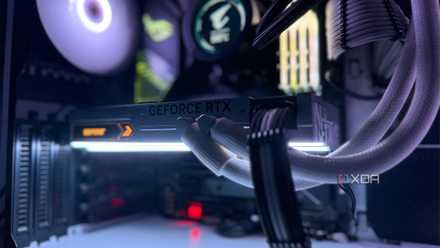
4 reasons I'm keeping my RTX 4090 when the 5090 comes out
Nvidia's RTX 5090 just isn't tempting enough
Do You Need a 50 series Card Immediately?
If you’re happy with your current GPU, there’s no need to upgrade. However, AAA games are increasingly demanding top-tier hardware from NVIDIA and AMD. While the RTX 50 series cards bring exciting new technologies like DLSS 4 and Multi Frame Generation, they primarily appeal to early adopters and those chasing cutting-edge performance, costs be damned.
In 2026, GPUs with 8GB VRAM will find themselves struggling, especially as 1440p rapidly becomes the new standard. The point isn't that you need to immediately upgrade, but rather that it would simply be a far more justifiable purchase to go with the RTX 50 series unless you have the above cards. Ultimately, the best GPU is the one that fits your needs and budget, not just the newest option available.