
I used to hoard bookmarks as if they were going out of style. Browser folders nested three levels deep, "Read Later" lists that never got read, and a OneTab list count that looked endless. Saving too much wasn’t the problem here, really. I just could never find anything when I actually needed it.
Traditional bookmarking is fundamentally broken because it's a filing system, not a retrieval system. With NotebookLM, your sources are actually understood. After months of using it as my primary knowledge management tool, I've completely abandoned traditional bookmarks for anything that matters.
Where bookmarks fail you
Static links can't answer questions
The fundamental flaw with bookmarks is that they're dumb containers. You save a link, slap a vague title on it, and pray you remember why it mattered six months later. I had hundreds of bookmarks tagged "design inspiration" or "productivity tips," but when I needed specific information, I'd spend 20 minutes clicking through each one trying to remember which article mentioned that specific framework.
The other problem is link rot and context collapse. Websites get redesigned, paywalls appear out of nowhere, and that brilliant Medium article you saved gets deleted when the author nukes their account. Even when links survive, you lose the surrounding context: why did you save this? What specific insight mattered? Was it the introduction or that one paragraph buried halfway down? Bookmarks give you no breadcrumb trail back to your original thinking. NotebookLM solves this by capturing the actual content at the moment you save it, preserving not just the information but your ability to interrogate it later.
NotebookLM flips this entire model. Instead of storing links, you upload sources (which could be PDFs, Google Docs, websites, or even research papers) and the AI ingests the actual content. When I need information, I don't hunt through folders. I just ask: "What were the main criticisms of productivity apps in that article?" and NotebookLM pulls exact quotes with source citations. It's the difference between having a library card catalog and having a research librarian who's read every book.
Please stop using NotebookLM as a note-taking app
Stop treating NotebookLM like a...notebook.
Building a knowledge base that actually works
Context is everything
Each "notebook" can hold up to 50 sources, and the AI maintains context across them. I have one notebook dedicated to productivity workflows where I've uploaded articles from XDA, Notion guides, academic papers on attention management, and YouTube transcripts from productivity creators.
The real power emerges when you start cross-referencing. I asked NotebookLM to "compare the GTD method across these three sources and identify where they disagree." It generated a coherent synthesis that I would've spent hours creating manually. For research-heavy work, whether you're a student, content creator, or just someone who learns deeply, this contextual understanding beats bookmarks by miles.
The interface is intentionally simple. You create notebooks by topic, upload your sources, and start querying. NotebookLM also generates automatic study guides, FAQs, and even podcast-style audio discussions between two AI hosts summarizing your sources. That last feature sounds gimmicky, but is surprisingly useful for reviewing material during commutes.
When you should still use bookmarks
Not everything needs deep analysis
To be clear, I haven't nuked my bookmarks entirely. NotebookLM works best for material you need to reference, synthesize, or learn from. If you're just saving a recipe for later or bookmarking a GitHub repo you might contribute to, old-school bookmarks are still fine.
Where NotebookLM becomes essential is for knowledge work. I use it for article research, learning new technologies, and consolidating scattered insights from podcasts, articles, and books into single, queryable notebooks. The friction of uploading sources means you naturally curate what's worth keeping, which is healthier than mindlessly bookmarking everything.
One limitation: NotebookLM can't access paywalled content or dynamically updated pages. If a source changes after you upload it, your notebook won't reflect those updates. For living documents or real-time information, traditional bookmarks, or tools like Raindrop.io still have their place.
The shift in how I consume information
From collection to conversation
The biggest change isn't a technical one. You need to think about it behaviorally. With bookmarks, I was a hoarder. With NotebookLM, I'm a curator. I now actively choose what's worth remembering and immediately engage with it by asking questions. This turns passive saving into active learning.
For anyone drowning in information overload, this is the real solution. AI doesn't just organize your bookmarks better; it fundamentally changes how you interact with saved knowledge. You stop collecting and start conversing. That shift alone makes NotebookLM worth the switch.
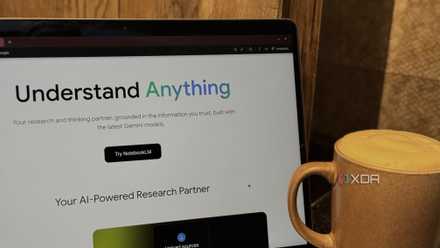
NotebookLM is Google’s AI-powered research assistant that turns your uploaded documents, notes, and sources into an intelligent, conversational workspace that helps you connect ideas, summarize insights, and generate new ones.