
There's no doubt that AMD's new RX 9070 XT is one of the best graphics cards you can buy this year. As you can read in our RX 9070 XT review, it offers performance on the level of the RTX 5070 Ti, just for $150 less. However, if you're willing to make a few small tweaks, you can actually get performance ahead of Nvidia's $1,000 RTX 5080, at least according to new testing from famed overclocker Der8auer.
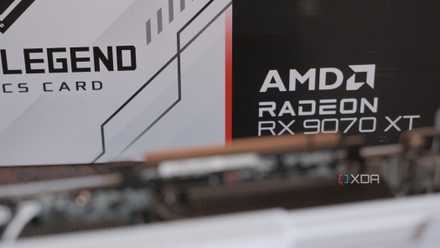
AMD needs to do more to keep the 9070 series at MSRP levels
Unfortunately, we're already seeing reports of retailers hiking the prices of AMD's Radeon RX 90 series. This couldn't come at a worse time for PC gamers who are finally able to explore an AMD-powered upgrade route for their existing system. AMD did all the hard work with the launch of FSR 4, the RX 9070, and RX 9070 XT, yet it is now having to plead with retailers to maintain MSRP on listings. If you can't spot a good deal on one of the new RDNA 4 GPUs, don't lose hope, and never buy one from a scalper. AMD needs to do more.
Undervolting the RX 9070 XT is impressive
Make sure not to push it too far, though
After publishing his review, der8auer posted a video looking at the overclocking capabilities of the RX 9070 XT. The overclocking experience isn't great, but undervolting is a different story. Undervolting feeds the GPU with less voltage for a given clock speed, allowing you to run your GPU at the same clock speed but at lower power. Der8auer found that undervolting and increasing the power limit could significantly increase the clock speed of the RX 9070 XT, however, and bring about some large performance gains.
In 3DMark Time Spy and Cyberpunk 2077, Der8auer uncovered about a 10% increase in performance, allowing the RX 9070 XT to not only close the gap with the RTX 5080, but actually beat it. It's a very impressive showing considering the $600 price tag of the RX 9070 XT, and how it compares to Nvidia's $600 RTX 5070. Unfortunately, this performance level isn't practical for long-term use.
Der8auer says that "overclocking is completely broken on the RX 9070 XT," and he showed off several instances of strange behavior when tweaking the memory clock, voltage, and clock speed. Benchmarks would crash with too large of an undervolt, and with too high of a memory clock, Der8auer actually found the GPU performing slower than at stock settings. There are still some ways you can tweak your GPU for extra performance, though.
The YouTuber recommends undervolting the card and increasing the power target, effectively boosting clock speeds. As is usually the case with undervolting and overclocking, your mileage may vary. It's best to start small, making minor adjustments between benchmark runs until you have stable performance. You can undervolt your GPU with tools like GPUTweak from Asus, and you can check that your settings are stable with a stress test like FurMark.
Although you shouldn't expect performance out of the RX 9070 XT to rival the RTX 5080 over the long-term, the fact that the two GPUs are even close is mighty impressive. The RX 9070 XT clocks in at just $600, while Nvidia is asking $1,000 for the RTX 5080. That's quite the achievement.
Unfortunately, in both cases, you can't actually buy a GPU at that price. Both models are sold out at retailers at the time of writing, and given the state of the GPU market in 2025, they likely won't show up again at list price.