
Mechanical switches have long been the standard in keyboards, relying on physical contact to register key presses. However, they're prone to wear over time. Enter analog optical switches, which use light to signal a keypress, reducing wear and enhancing responsiveness. Unlike mechanical switches' binary response, optical switches can detect different pressure levels, offering more nuanced control. This approach eliminates the need for physical contact between components, reducing wear and tear and enhancing responsiveness.
The difference between mechanical and analog optical switches
Classic mechanical switches are individual mechanisms under each key, characterized by their distinct components: the stem, spring, and housing. They are best known for their durability and the satisfying tactile feedback they provide.
A classic mechanical switch operates by the downward motion of the keycap pressing the switch stem, which compresses the spring beneath it. This movement causes the metal contacts inside the switch to close, completing the circuit and registering the keystroke. The complexity and precision of these components significantly influence the typing experience.
The main difference between mechanical and analog optical switches centers on their actuation mechanisms. Mechanical switches activate through physical contact between metal parts, which, over time, can lead to wear. On the other hand, analog optical switches utilize an infrared beam that instantly transmits a signal when interrupted by a keystroke. This method avoids direct wear and tear on the components.
Moreover, using light for signal transmission in optical switches means a faster actuation time than their mechanical counterparts. This quick response is particularly advantageous in gaming, where rapid inputs can make a significant difference. Optical switches, thus, offer a blend of enhanced durability and speed, making them a preferred choice for gamers and heavy keyboard users alike.
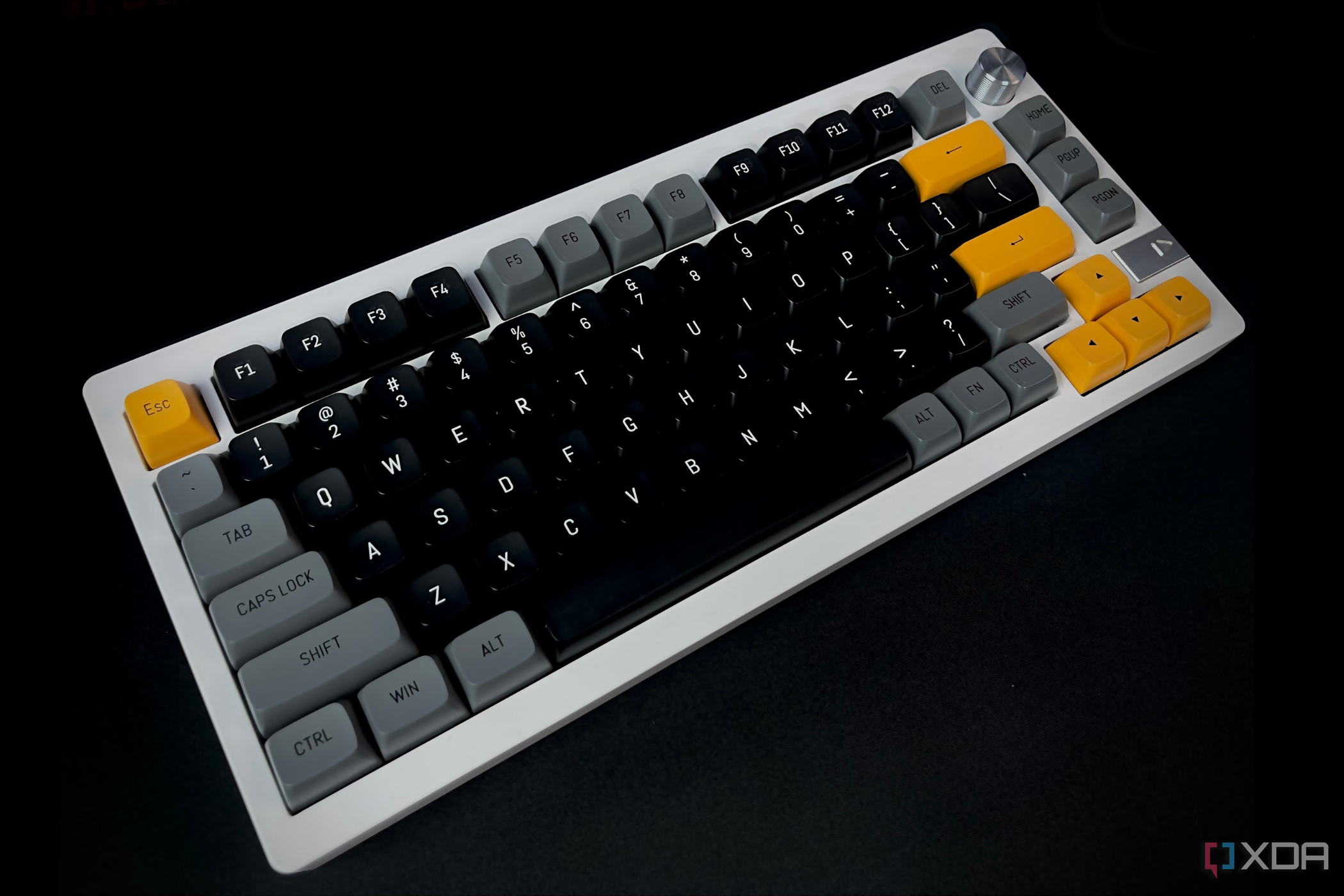
Benefits of analog optical switches👁 Zuoya LMK 81 mechanical keybaord with black and yellow keycaps on black background
Variable actuation points
Optical analog switches offer a unique feature of adjustable actuation points, absent in mechanical switches. Users can fine-tune the actuation distance, which is the point at which a keypress is registered, allowing for personalized keyboard responsiveness.
- Low actuation points: At low actuation settings (1.0mm - 2.0mm), the switches require minimal distance and force to register a keypress, making them ideal for scenarios demanding swift reactions, such as competitive gaming. This sensitivity, however, can lead to more accidental keystrokes, which might require an adjustment period for typists.
- Medium Actuation Points: At around 2.0 - 3.0 mm, actuation points offer a versatile experience, balancing speed, and tactile feedback. This range is suitable for various applications, from everyday typing to diverse gaming genres, providing a comfortable middle ground.
- High Actuation Points: At 3.0 - 4.0 mm, actuation points mimic the feel of traditional mechanical keyboards, favored for typing due to their tactile feedback and reduced likelihood of accidental keystrokes, making it the most suitable use case for typing.
Variable input control
The analog nature of these switches allows variable input, similar to a controller. This contrasts with traditional keyboards' basic 8-way directional input, enabling more nuanced in-game movement. This comes in handy where quick response and frequent movement are required. For instance, gently pressing a key can result in a character walking, while a deeper press can trigger running, offering a more immersive and accurate experience.
Dual step actuation
Dual-step actuation in optical analog switches allows a key to perform two separate functions at different press depths. Each key can detect varying pressure levels, enabling it to register a light press for one action and a deeper press for another. This feature enhances efficiency and control, especially in gaming and professional applications, by reducing the need for multiple keys. However, it requires precise calibration and user adaptation for optimal performance, so there is a learning curve to master this skill. Unlike macros, which execute a fixed series of actions, dual-step actuation offers greater flexibility, allowing gamers to adapt quickly to dynamic in-game situations.
Limitations of analog optical switches
Higher price
Optical analog switches generally come at a higher cost compared to mechanical switches. This price difference is mainly due to fabrication complexity and no budget options. On the other hand, mechanical switches have been around longer, with a wide range of budget-friendly options thanks to large-scale production and availability.
Limited options
Mechanical switches have been a mainstay in keyboard technology for decades, resulting in a vast array of options. In contrast, the analog optical switch market is relatively newer and thus has fewer options. Currently, only a handful of companies have the option of analog switches.
Bridging the gap between digital and analog
Optical analog switches provide a compelling alternative to classic mechanical switches, especially for users seeking advanced performance and customization. They offer faster response times, adjustable actuation points, and features like dual-step actuation and variable input control. These characteristics make them particularly appealing for gamers and professionals who require precision and adaptability in their keyboard interactions. By reducing physical wear and allowing for a more personalized typing experience, optical analog switches cater to current and future keyboard technology demands.