
The home lab is a strange love-hate relationship. At first, we love setting everything up, tinkering away with countless services, setting up hardware we'd only previously dreamt of owning. As time passes by, we start to automate everything, taking advantage of systems to run tasks we'd rather not have to run ourselves. Before you know it, the home lab is effectively running itself. It's a little like Factorio, starting with manual work, but eventually creating a bustling metropolis of robots. The home lab must grow.
The best home lab is one that runs silently in the background, requiring no human intervention and never causing issues with self-hosted services. Just like your home network, it's great when everything is running well enough that you can almost forget they even exist. I had blinking LEDs everywhere, labeled cables and VLANs, services within services (Serviception, if you will), and a whole host of duct-taped implementations for stuff that I thought might be useful one day, which often never arrived. But I loved every minute and would log in daily to check on things.
But now I rarely connect to Proxmox or any of my switches and access points (APs). There will be specific services loaded daily, such as ntopng and a few other things, but that's about it. Automation has completely taken over almost everything else.
The novelty eventually wears off
Like all shiny new purchases
Just bought a new smartphone or vehicle? It's exciting right now, but give it a few long journeys or a few months using WhatsApp and TikTok, and you'll be less excited about the shiny new toy. It's simply how we're wired as humans and how easy it is for companies to take advantage of this through planned obsolescence, frequent product launches, and the fear of missing out (FOMO). The same goes for the home lab. Updating containers manually was fun at first, so was rotating logs, which also allowed me to learn some things, but eventually I automated everything just like backups.
It's satisfying to know every moving part within the home lab has my DNA attached to it. I set it up, configured some automation, and manage the hardware. It still feels like my own place to call my technical home, but I've delegated much of the work. Instead of grabbing my attention for every small task or notice, I automated processes, tasks, and other regular steps I would have to take to ensure everything is running smoothly. Updates are all automatic, though I do ensure I'm notified about every changelog for all my services.
docker system prune -f
Backups are handled automatically, so if something goes wrong, I can quickly revert to a previous snapshot. It all started with Docker for me. I used a script to clean up old Docker images (see the above snippet), utilizing the power of cron jobs. Actually, looking back now, it was cron jobs themselves that got me into automating since they were primarily used for our hosted websites to run various PHP scripts. I decided to bring them to the home lab and handle some tasks. With each automation set, it felt like a victory was scored, much like setting a leak detector to sound an alarm and flash light bulbs in Home Assistant.
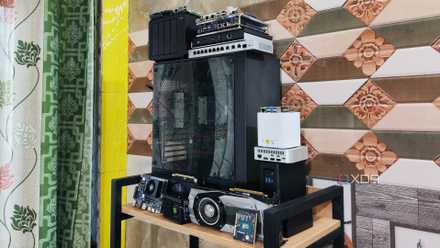
A chaotic server rack is a sign of a working home lab, not a failing one
There's no need to micro-manage every aspect of your experimentation lab
I didn't expect to become somewhat detached
Automation leads to more free time
It's interesting how the more I automated, the less I would connect to any given system. Admin panels would be logged in less frequently. This wasn't me feeling like the home lab wasn't needed anymore, but I had more free time to use elsewhere. After buying our first home, which just so happens to require some work, we now have more time to focus on other tasks. The home lab would hum along as expected, carrying out almost every task without my input. I no longer found myself randomly thinking about the home lab, jotting down notes on what else I can quickly log in and do.
Dashboards like Homepage are essential for keeping tabs on everything running within the home lab, as well as making it easy to access all your self-hosted content without browsing through bookmarks or remembering IP address assignments. But this is a middle ground between manual operation and full automation. Instead of checking CPU usage on the server, you can now see a pretty chart somewhere. Automation takes this further by allowing you to automatically restart or halt services that may be hogging resources, or even alert you when CPU usage goes above a specific threshold.
rsync -av --delete /srv/docker /mnt/backups/docker
My home lab eventually became less of a project and more like an appliance. We trust our refrigerator to run unimpeded while we're away on vacation. The same goes for the home lab. I know it won't suddenly cease working because of something I failed to automate. Not unless a piece of hardware fails. Even with power outages, the system is protected by an uninterruptible power supply (UPS). This also has the effect of forcing me to only install and use what we actually need. Because the infrastructure now essentially babysits itself, I no longer find myself wondering what could be added to the mix next.
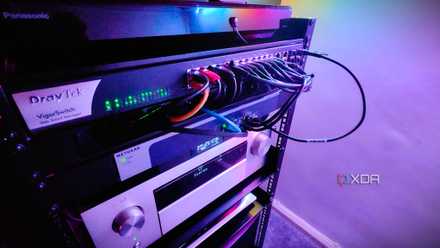
Avoid these 10 pitfalls when setting up the network for your home lab
Don't let these networking issues break your home lab enjoyment.
It's not all good news
I've stopped being curious
I no longer tinker around, try new things, make numerous mistakes, and break the entire setup. Everything works flawlessly, but that's by design and is rather boring. Don't get me wrong, both I and everyone who uses our LAN appreciate the fact that it works as intended, but it has also made experimentation largely too costly. This is where a specific dev environment will come into play. I'm going to put together a small compact system that has enough system memory to run many of the services we do within the home lab. This will be used for experimentation before pushing to the live deployment.
Another way to look at maximizing reliability is as a sort of endgame. Once systems cease to fail regularly and you have no trouble using everything daily, alerts suddenly become the only time attention is required. Gone are the days of late-night debugging of a specific Docker container. Automation can be configured in such a way that even the more basic troubleshooting steps can be carried out without notifying me. Once these fail or something more serious breaks, that's when I'd spring into action and start to take a look.