
Summary
- Bolt Graphics introduces the Zeus GPU as fastest ever
- The Zeus GPU boasts 10x performance over the RTX 5090
- New approach to GPU design with chiplet and path tracing hardware
There isn't a lot of competition among the best graphics cards, especially when looking at GPUs as powerful as the RTX 5090. But startup Bolt Graphics is looking to change that with its new Zeus GPU. The company calls it the "fastest graphics processor ever," it can handle everything from HPC to film rendering to gaming, and Bolt claims that it offers performance that's 10 times what the RTX 5090 is capable of in certain applications.
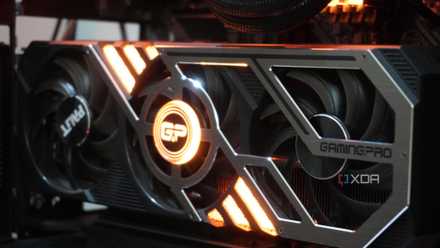
The only graphics cards you should buy for Cyberpunk 2077 path tracing
Cyberpunk 2077's path tracing has finally made it a next-gen visual masterpiece. But there are only a handful of GPUs that you should consider for it.
Bolt Graphics is taking a new approach to GPU design
And apparently it clobbers what Nvidia's been doing
It's difficult to neatly put the Zeus GPU in a bucket, as the company says it "completely redesigned the GPU" from the ground up. ServeTheHome published a deep dive on the architecture and performance claims, and there's a lot to unpack.
Let's start with that 10x performance claim. Surprisingly enough, Bolt didn't make that claim around an enterprise-level workload. That performance claim comes from rendering with path tracing. According to Bolt, it's able to achieve the performance of 280 RTX 5090 GPUs with just 28 of its Zeus GPUs, and at a fraction of the power. The application here is for a rendering farm working on offline tasks, but it's not hard to see how this could scale down to accommodate real-time rendering scenarios.
There are two key reasons why Bolt is able to achieve such a performance increase. First is the chiplet design of the Zeus GPU. With a single chiplet GPU, the company claims it's able to achieve a 2.5x performance improvement over the RTX 5090 at a TDP of 120W. The 10x performance improvement comes from a GPU packing four chiplets. You can see the specs for the various configurations, and how they compare to Nvidia counterparts, above.
In addition to the chiplet-based design, Bolt is using dedicated path tracing hardware inside the Zeus. To leverage that hardware, Bolt built a real-time path tracer that it calls Glowstick. These accelerators attach to an out-of-order RVA23 scaler, built on the RISC-V ISA. ServeTheHome says Bolt is using RISC-V as a foundation but adding a bit of "its own special sauce."
Although the Zeus GPU excels in rendering workloads like gaming, it's targeting an enterprise market for now. The company says it'll start shipping early access to developer kits later this year, but servers won't ship until the second half of 2026. By the end of next year, Bolt says that it plans to start mass production of a PCIe version of the Zeus GPU for retail.
Bolt is certainly making some bold claims about what its Zeus GPU is capable of, and we'll need to wait and see if those claims hold up. Competition is welcome at the high-end, however. With AMD refocusing its efforts on the midrange market with cards like the RX 9070 XT, there's a lot of room at the top for someone to take the fight to Nvidia. Based on what we know about the Zeus GPU so far, that very well could be Bolt.