
For a time, the idea of chaining two or even three graphics cards together in a single system was irresistible to many PC gaming enthusiasts. With technology like Nvidia’s SLI (Scalable Link Interface) and AMD’s CrossFire, multi-GPU gaming promised the ultimate in performance. Yet, for all the excitement, the concept gradually faded into relative obscurity... and has now all but disappeared from mainstream gaming. So, what happened? And could it ever return to the forefront of high-performance gaming?
The history of multi-GPU gaming
It started in the 1990s
The roots of multi-GPU technology date back to the late 1990s with 3dfx and its Voodoo2 cards, which used “Scan-Line Interleaving” to share the load between two video cards for higher frame rates. It was a novelty that showed promise, prompting Nvidia to acquire 3dfx, but it took until the mid-2000s for the company to revive the concept formally under the name SLI, soon followed by AMD’s CrossFire.
From around 2008 to 2015, multi-GPU setups earned a cult following among gamers who were looking for the highest possible frame rates and resolutions. Back then, 1440p and 4K screens were starting to increase in popularity, and running the latest games at high resolution with playable framerates required some serious horsepower. If you were a gamer who didn't shy away from the bleeding edge, you might have had a double or even triple GPU setup.
But despite the performance benefits (when games were optimized properly), there were persistent issues: micro-stuttering, inconsistent driver support, and a real dependence on specific game engine optimizations. Over time, these drawbacks began to overshadow the advantages. While DirectX 12 and Vulkan support explicit multi-adapter computation (without SLI or CrossFire), Nvidia and AMD both eventually scaled back support and focused on single-GPU setups.
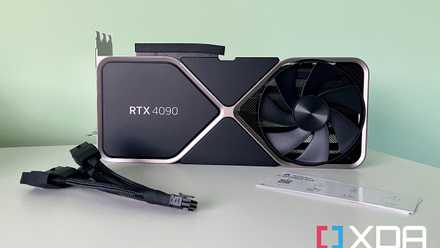
4 ways the Nvidia GeForce RTX 5090 is superior to the RTX 4090
Want the most powerful GPU? The RTX 5090 is your only option.
Could a comeback happen?
Probably not, at least for most people
First and foremost, it’s no secret that official support for SLI and CrossFire has waned:
- NVIDIA restricted SLI profiles mainly to older cards or limited two-way setups, moving on to technologies like NVLink primarily for professional computing.
- AMD has largely deemphasized CrossFire on its consumer line, again focusing on more direct GPU performance improvements.
In fact, the last Nvidia card to support SLI was the RTX 3090, and in early 2020, the company announced that it was discontinuing SLI profiles for cards older than the RTX 2000 series. AMD supports it via its Crossfire rebrand dubbed "mGPU", though this is again handed off to the developer to implement via modern APIs.
Where multi-GPU configurations do remain common is in professional and enthusiast spheres. Machine learning, 3D rendering, and data analysis often benefit enormously from multiple GPUs, since these workloads can be split effectively across multiple cores or GPUs. In the gaming space, however, very few new releases advertise multi-GPU support.
With all of that said, some believe that with new advancements such as PCIe 6.0 or advanced interconnects like NVIDIA’s NVLink or AMD’s Infinity Fabric, there could be a chance for multi-GPU setups to thrive, given that these technologies provide much faster data sharing. Enterprise-level technologies could theoretically trickle down to consumer products and enable efficient communication, and the biggest bottlenecks of older multi-GPU designs might be mitigated. Unified memory approaches—where multiple GPUs effectively pool VRAM as a single, larger resource—could also address the memory duplication issues that once hampered performance gains.
Enthusiasts could potentially look to multi-GPU configurations again if these technical hurdles are overcome, though the high cost of GPUs nowadays might make this unlikely. A few well-known titles that utilize DirectX 12 or Vulkan to achieve this already exist, such as Deus Ex: Mankind Divided, Rise of the Tomb Raider, and Ashes of the Singularity, with the latter supporting multiple GPU configurations that mix AMD and Nvidia.
However, there are a few issues that hold back these configurations from making a comeback. For starters, the aforementioned pricing issue of GPUs means that it's hard to justify buying a second GPU for fractional performance gains, especially when most games won't even support it. To make matters worse, power and heat also become significantly more problematic, as modern GPUs can easily draw hundreds of watts and produce considerable heat. And that's without getting into the size of GPUs these days, either.
As for developers, why would they spend time on it? With so many gamers on consoles or running mid-range hardware, there's little financial incentive to devote large chunks of development time to specialized multi-GPU development. Even though DirectX 12 and Vulkan technically allow for explicit multi-adapter support, actually utilizing those features is complex and adds significant overhead.
4 things to consider before buying the RTX 5090
Don't be quick to splurge on the RTX 5090
It's unlikely we'll see multiple GPUs make a return for gaming
Though not impossible
A true, mainstream comeback of multi-GPU gaming, just like the SLI and CrossFire days, is incredibly unlikely. Single graphics cards continue to grow in performance and in power draw, and the additional expense, complexity, and limited support for multi-GPU setups are pretty major roadblocks. While the technological advancements are there to make it more worthwhile, those same technological advancements such as API improvements, faster interconnects, and unified memory, are part of the reason why we don't need it anymore.
With that said, it's not impossible. Multiple GPU setups are already a boon when it comes to productivity, and it's not out of the question that with the rising cost of GPUs, more developers put time into optimizing for multiple GPU setups so that gamers can combine two older graphics cards instead. That requires a motherboard that supports it though, which is another problem in and of itself.