
Summary
- Gaming performance on DDR4 RAM is still competitive, with DDR5 not offering a significant uplift.
- A full DDR4 to DDR5 platform upgrade is still pricey, and selling your DDR4 build isn't likely to net you enough money.
- It's better to upgrade your GPU for improved gaming performance than to move from a DDR4 to a DDR5 system.
It's been a while since DDR5 gaming PCs finally became commonplace. After the initial weeks and months of prohibitively priced DDR5 motherboards and memory, PC builders could realistically consider shelling out a little extra for the latest-gen components. And now, pretty much everyone will suggest building a DDR5 PC in 2024, whether you're going with Intel or AMD's AM5 socket.
However, what about those who still have a DDR4 gaming PC? AMD changed the game for the better when it launched the iconic AM4 socket back in 2017, supporting it even in 2024 with new CPUs. Intel didn't respond with long-lasting sockets, but at least you got both DDR4 and DDR5 support on its 12th, 13th, and 14th Gen Core processors.
If you're like me, rocking a solid Ryzen 5000 or Intel DDR4 gaming build, you don't need to rush to upgrade to a new DDR5 gaming PC, at least not yet.

How to build a PC now with future upgrades in mind
Build now and easily upgrade later with these handy tips.
4 DDR4 offers plenty of gaming performance
The delta between DDR4 and DDR5 RAM isn't huge
Let's start with the most important thing — gaming FPS. If you've been looking at the performance numbers of DDR4 and DDR5 RAM in games, you'll already know that the difference in FPS isn't night and day. For instance, a PC with, say, a Ryzen 5 5600X or a Ryzen 7 5700X and 32GB of 3,600MT/s DDR4 RAM is still pretty powerful for all modern titles. Of course, you need a decent GPU as well, but that's required on a DDR5 PC too.
With time, DDR5 will replace DDR4 as the de facto standard, just like DDR4 replaced DDR3, but that time isn't here yet.
So, just from a performance standpoint, it's not necessary to jump to DDR5 RAM just yet. Games still have not been able to take advantage of the superior transfer speeds of DDR5 RAM, and in some cases, you're better off with more stable DDR4 RAM. With time, DDR5 will replace DDR4 as the de facto standard, just like DDR4 replaced DDR3, but that time isn't here yet.

Is DDR4 still viable in 2023?
Many believe the advent of DDR5 has already killed off the significance of DDR4. Let’s see if that’s really the case.
3 A full platform upgrade is still pricey
Considering the gaming benefits aren't all that great
Then comes the cost consideration. DDR5 motherboards and memory have dropped in price significantly compared to earlier, but that doesn't mean a full platform upgrade isn't expensive now. You need to remember that, in this case, you aren't building a PC for the first time. The question is whether to retain your existing DDR4-based build or upgrade to a DDR5 one.
For gaming alone, this investment isn't likely to deliver huge gains, and you'll probably end up feeling shortchanged.
The latter involves purchasing a new motherboard and RAM, and even a processor if you're switching to AM5. For gaming alone, this investment isn't likely to deliver huge gains, and you'll probably end up feeling shortchanged. It makes perfect sense to go with the latest-gen components though if you have an extremely old Ryzen or Intel Core CPU in your build, as the performance uplift will be significant. However, for a DDR4 PC with, say, a Ryzen 3000/5000 or Intel 12th/13th/14th Gen processor, there is little reason to upgrade, if all you're interested in is gaming.

Why my Zen 3 to Zen 5 upgrade will have nothing to do with the new Ryzen 9000 CPUs
The new Ryzen 9000 chips look decent but I'm saving an upgrade for something better
2 Selling your DDR4 PC isn't worth it
It won't offset the cost of a new PC by much
If you're thinking you can reduce your investment in a DDR5 gaming PC by selling your existing DDR4 build, it might not be the smartest play. The value of PC hardware falls quite rapidly, and in the case of DDR4 motherboards, RAM, and processors, you might be looking at selling off a PC that's around 2 to 4 years old already.
Overall, you're better off retaining your DDR4 gaming PC for a few more years instead of selling it, and upgrading it when it really starts to become obsolete.
Moreover, despite the promising gaming performance of DDR4-based hardware, the gains brought about by newer CPUs and memory are quite substantial in other departments. For instance, in professional workloads and thermal efficiency, newer CPUs and memory lead by quite a margin. Hence, the appeal of older hardware suffers from another blow.
Overall, you're better off retaining your DDR4 gaming PC for a few more years instead of selling it, and upgrading it when it really starts to become obsolete.

How much is my PC worth? Know your PC's resale value
Finding out your PC's resale value doesn't have to be tough. Here are four ways to do it.
1 A GPU upgrade is better than jumping to DDR5
Upgrading your graphics card will net bigger gains
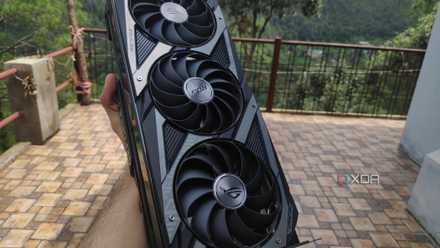
It is what it is — swapping out your current GPU for something more powerful is likely to yield a far greater gaming experience than doing a platform upgrade. Your CPU matters for gaming, yes, but not as much as your graphics card. As long as you're not exclusively playing CPU-intensive games, you won't be bottlenecked much when you upgrade to a newer graphics card.
You can extend the life of your DDR4 gaming PC by a few more years with a simple GPU upgrade.
Effectively, the money that you're planning to spend on a new motherboard, RAM, and possibly a CPU should go toward a new GPU, if gaming is the only objective. You can extend the life of your DDR4 gaming PC by a few more years with a simple GPU upgrade. Even the cost of a new GPU might end up being less than that of a full platform upgrade, making it a win on all fronts.
Should you upgrade your CPU or GPU first?
PC struggling to keep up? Here's how to know if it's the CPU or the GPU that needs to be replaced first.
DDR5 is superior, but DDR4 isn't irrelevant yet
When something new comes out, the existing technology doesn't become obsolete overnight (typically). This is exactly what's playing out in the DDR4 vs. DDR5 gaming PC consideration. If you're building a new PC for the first time or because your current one is ancient, then go with DDR5-based hardware by all means. However, if you're rocking a fairly recent DDR4 gaming PC, then it still has a lot of life left in it.
Besides, a GPU upgrade is all you need to breathe some new life into your existing DDR4 PC. Instead of throwing your old PC away or selling it for a disappointing amount, it's better to retain it for a few more years, if gaming is your only use case. Upgrading when your system is truly incapable of running the games you want is a much better strategy, in my opinion.