
We all have a shoebox or drawer filled with miscellaneous old tech and junk that you haven't looked through since 2018. Whether it's Arduino Nanos, dusty ESP8266s, old PIR sensors, or just a bunch of tangled jumper wires, there's probably a lot of tech in this old drawer that could be put to good use rather than just sitting and collecting dust.
The problem is that coding these in C++ for every minor task is a major chore, and that ends up leaving them sitting around unused because the effort-to-utility ratio is just too high. ESPHome removes the code barrier altogether by using simple YAML configuration files. You can turn a $4 chip and $2 worth of sensors into a device that rivals a $50 commercial product with no cloud required and no subscription in sight. ESPHome has evolved into a powerhouse that supports not just ESP32/ESP8266 but also RP2040 and even some RISC-V chips. It's the ultimate digital glue that turns a drawer full of old dev boards and sensors into a high-end, local-only smart home system.
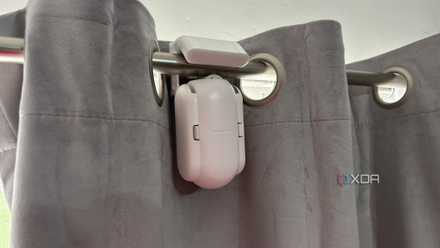
Curtain automation is fun, but the weird smart home projects are where things get really useful
Make your smart home work for you.
There are countless projects you can take on
And you can make them suit you
One of the first projects that you can undertake is the room occupancy sensor. By putting together an old ESP32 and that human presence sensor that you bought on AliExpress but never used, you can create a radar that detects when people enter a room. This is great for more than just a standard PIR sensor, as it can keep track of whenever you're in the room rather than just when you enter or when you move.
Unlike a PIR sensor that loses you if you sit still, this setup attracts X and Y coordinates and speed. That way, you can use it to keep your office lights on while you're reading or to trigger a private notification if someone enters your room while you're on a video call. There are so many great uses for a room occupancy sensor that allow for countless forms of home automation, so you can stop thinking every time you enter a room about the smallest of chores you have to do. Instead of entering a room and having to adjust the temperature, adjust the lights, and open or close the blinds, your occupancy sensor can detect you've entered and send a ping back to your smart home to have all of these tasks done for you.
Another great project you can undertake is creating a multi-room audio node by using an ESP32 and an old pair of computer speakers. You can create synchronized multi-room audio nodes. By using the new 2026.3 media player architecture, you can allow for ESPHome to now support high-fidelity I2S output.
As a result, you get Sonos-style synchronized multi-room audio nodes, and because ESPHome runs at the maximum CPU frequency, which is 240MHz by default, the audio sync is tighter than almost any commercial Wi-Fi speaker.
If you're someone who wants to be able to have alerts pinged to your phone when the washing is done, then you can use an appliance monitor using the old junk that's in your drawer. A $1 CT clamp and an ESP8266 make a great combination. Clip it onto your washing machine or dryer's power cord, and then the ESPHome will monitor the heartbeat of the appliance, which is essentially how much power it's drawing. When the power draw drops to zero for five minutes, which indicates that the cycle is done, it will send a notification to your phone saying the laundry is done. You've just given a 10-year-old dumb appliance a $2 digital brain, so you no longer have to listen out for the never-ending chime or worry that your laundry is just sitting dormant.
Outside of these examples, there are countless other projects you can undergo based on what your needs are and what your smart home setup is. If you're striving for more automation, then that can be the case. If you just want a small project to undertake, then using the ESP series is a great choice.
But what are the benefits of ESPHome?
You get a whole lot more than you used to
ESPHome is significantly improved over the course of the past year. Using it now feels like a major performance flex. The 2026.4 performance boost has improved it tenfold: ESPHome now uses zero-copy APO scores, making sensor updates up to 46 times faster.
You can even use old ESP32s as Bluetooth proxies. This means they can grab signals from your Bluetooth-only toothbrushes, thermometers, or any other device in your home and then pass them on to Home Assistant, effectively extending your smart home's range for free.
You can even perform signal-over-the-air updates, meaning your junk drawer nodes are actually more secure than any of the off-the-shelf IoT devices you can pick up these days.
Not only is 2026 the year of the smart home, but it's also time to make the swap to local-only devices too. That way, you're not relying on the internet, and you're also not paying monthly subscription fees.
A benefit of going local-only is also the fact that you don't have to worry about companies sunsetting their devices and them becoming literal e-waste in your home because the company has decided to turn the service off. When you're using local devices or even those that you've built yourself using old junk you've already had sat around, the hardware always belongs to you, and you can always make use of them.
Don't let your old tech become e-waste
Give it a new lease of life
The smart home market is currently obsessed with monthly fees and cloud locks. However, ESPHome is the antidote. You might look at your junk drawer and think that it's full of trash or feel anxious thinking about starting up projects using all of the old tech because it's just too much effort for very little payoff. In reality, it's full of unlimited potential. Stop buying plastic boxes from Amazon and start building a home that actually belongs to you.