
As Europe strives to achieve digital sovereignty from proprietary software, there has been a big rush to move toward open-source software. We're seeing laws passed in some EU countries declaring that governmental PCs should run open-source operating systems and productivity apps, and it's easy to assume that, if an app is open-source, it means it has you in the front of its mind.
However, the recent drama with Euro-Office proves that just because a group allows you to look under the hood, it doesn't necessarily make them a worthwhile ally in the fight against proprietary software. In fact, sometimes those people can be aiding the very practices users are trying to escape from.
Open-source software is often marketed as 'sticking it to the man'
It's not always true, though
When you compare proprietary software to free and open-source software (FOSS), you'll find a common trend. The apps where you're not allowed to look at the code running it are usually more biased around big businesses and profits, while the FOSS apps are the ones made by a passionate hobbyist and their community. It's not always true, for sure, but over time, it's easy to associate closed-source apps with 'the man' and FOSS as the people making an alternative to it.
However, that's not always true. Sometimes, hobbyists go closed-source to protect their work from theft, and big companies sometimes see the light and give people their source code. And then there are the really weird use cases where both happen. Take Fedora, for instance; you, as a user, can download it for free, and it's open-source. However, its owners, Red Hat, will take the same tech people have been using for years and sell it to big businesses. It's to the point where some people won't use Red Hat software because they have fingers in the business world.
So, from the get-go, the idea of "closed-source bad, open-source good" isn't as watertight as you may first assume. But Euro-Office was a special case in that it seemingly tried to dip its toe into both pools at the same time.

5 pros and cons of switching to an open-source office suite
Saving money or sacrificing features?
Euro-Office continues a Microsoft standard that is hard to break away from
Not quite fighting for digital sovereignty
So, let's break down what all this means with Euro-Office. The story begins when Euro-Office first arrived on the scene, and instantly, it caused a mess with OpenOffice, which accused Euro-Office of using its code without a license. Then, a little while after, LibreOffice made a stand to speak against Euro-Office.
LibreOffice claims that Euro-Office seemingly wanted all of the benefits and rep that come with being open-source without fully adopting the traditions that come with FOSS. Yes, while Euro-Office is open-source, it comes with a fatal flaw; by default, it saves documents in the proprietary OOXML format.
The OOXML format is maintained by Microsoft, and has suffered severe criticism based on how its handled. The problem isn't so much that people can't see what it's doing; it's more that there's just so much of it that it's impossible to wrap your head around it. The standard itself comes to around 7,000 pages, which makes it very hard for other apps to recognise and load properly.
LibreOffice argues that, while an app being open-source is a great step toward achieving digital sovereignty, it cannot support formats like OOXML by default. By doing so, it's actually not fighting for digital sovereignty at all; instead, it's helping the very companies that it's claiming to be against. What could have potentially been an avenue for European companies and businesses to break free from Microsoft's control instead plays right into its hands.
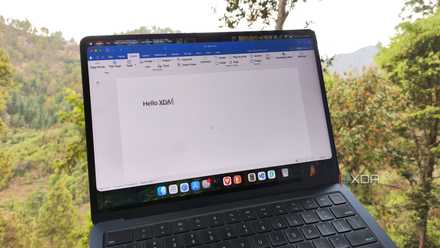
I tried Euro-Office so you don't have to, and LibreOffice is still the one to beat
Euro-Office is hard to get running, but LibreOffice already solved this problem.
Software can be compatible with lock-in technologies without defaulting to it
Compatibility is important, but sticking to your guns is more important
So, here's the thing. The argument LibreOffice and I make isn't that an open-source app shouldn't be compatible with OOXML and other proprietary formats. If someone is making the move to open-source, they're going to want something that can read their existing files. If FOSS programs can't read them, the user is, essentially, locked into using proprietary software. They can't access their files otherwise.
No, the real problem is what it saves documents in by default. By picking OOXML as the format of choice for people to save documents in, Euro-Office is essentially no better than Microsoft when it comes to using open-source document formats to champion digital sovereignty. By adopting a format that Microsoft made the default, it's not breaking free at all. It's just continuing to propagate the same tech that Europe is trying to move away from.

I finally found free open-source tools that beat Microsoft Office 365 where it counts
The open-source productivity upgrade I should’ve tried years ago.
Open-source does not mean it supports open-source values
It's admirable to want to break free from proprietary software, but it's a good idea not to blindly trust an alternative just because it's open-source. Always make sure the people behind the code share the same values as you, or you may just be going from one problem to another.