
It’s been an amazing year for developers. We watched Cursor turn the IDE into an autocomplete powerhouse, and tools like Cursor Code bring sophisticated agentic reasoning to the terminal. However, these tools still assume the developer is doing the heavy lifting.
Enter Google Antigravity. It delivers an agent-first architecture that combines the editor, the terminal, and a live browser. It is clearly more than an AI-assisted typing and unlocks the true power of vibe coding.
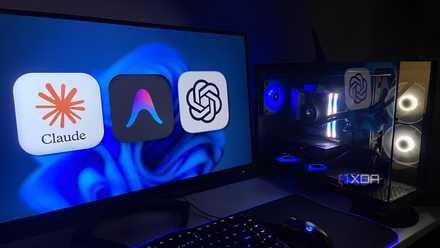
I used Claude Code, Google Antigravity and OpenAI Codex to develop an app, and found only one worth using
Vibe coding is here to stay, and it has only one champion
From being an assistant to agent
A major shift

Vibe Coding
From AI pair programmers to autonomous coding agents — how well do you know the tools reshaping software development?
Who coined the term 'vibe coding' and popularized it in early 2025?
Cursor is best described as which type of product?
Anthropic's Claude Code is primarily designed to operate in which environment?
Google's 'Project Astra' and experimental coding tools fall under which broader Google DeepMind initiative often associated with AI-assisted development?
Which of the following best captures the core philosophy behind vibe coding?
What was the name of the AI coding assistant launched by GitHub and OpenAI that predates the vibe coding era and helped set the stage for it?
Which company released 'Devin,' widely marketed as the world's first fully autonomous AI software engineer?
Replit's AI features contributed significantly to vibe coding culture. What is the name of Replit's AI agent designed to build full apps from a prompt?
Your Score
Thanks for playing!
It was better than opening a separate Google tab. But I had to know exactly what to ask for, review every line they wrote, and manually wire everything together.
But with Google Antigravity, the whole script has flipped. In the old way, the code was the center of the universe. I spent my day staring at a blinking cursor and tried to figure out how to explain my ‘vibe’ to a machine that only understood text.
Even with Claude Code, I was still the one driving. I would open a terminal, type a command, wait for a response, and then tell it yes or no.
With Google Antigravity, I just give it a task and watch it execute the command in real time. For example, I don’t tell it to ‘Write a function to handle user sign-ups.’ I tell it: ‘Build me a landing page that feels like a 90s arcade, connect it to a database, and make sure the Join button actually sends a welcome email.’
In the Agent Manager, I can see multiple agents start working simultaneously. One is spinning up the backend, another is hunting for retro assets, and a third is opening a browser window to see if the colors look right.
The browser-in-the-loop
The killer feature
While Cursor v2 has introduced browser preview, Antigravity has a better implementation. With Cursor, if the layout is broken or a button doesn’t click, I’m the one who has to spot it, copy the error, and explain it back to the AI.
In Antigravity, the agent literally clicks the buttons it just made. It fills out the forms. It resizes the window to see if the mobile version looks like trash. And here is the killer part: if it sees a bug, it fixes it before I even notice.
In the old way, I would spend half my time refreshing the page, clicking ‘Submit’, seeing it fail, and then going back to the code to find out why. In Antigravity, the agent does that loop for me.
This is the ultimate vibe feature because it removes the most annoying part of coding: the feedback loop. I don’t have to inspect elements or dig through console logs to find out why a margin is five pixels off.
I tried Gemini, ChatGPT, and Copilot for a month and I have a clear winner for you
Don’t buy the hype.
My new weightless workflow
Why it’s Antigravity
If you have used Cursor or Claude Code, you know the routine; it’s a never-ending text message chain. You type a prompt, the AI replies, you ‘Accept’ the code, you find a bug, you type another prompt, and the cycle repeats. It’s a chatbox, and while it’s smart, it’s also exhausting.
I found myself spending half my day just managing the conversation. Google Antigravity replaces the entire scenario with Mission Control.
In Mission Control, I can see exactly what the agents are thinking, what they have finished, and what they are stuck on.
Now, I don’t start by creating a folder or installing a library. I just told Antigravity the goal. Because it’s connected to everything (my files, terminal, and even my Google Cloud), it handles the heavy lifting automatically.
The agents already know my environment, and there is no context switching either. I never have to leave the app to check a database or a browser. I’m just going from one big idea to the next, while the agents handle the work underneath me.
It’s one of the reasons why I can’t go back to the old, heavy way of coding.
Beyond the autocomplete
While Cursor and Claude Code have mastered the art of helping us write, Antigravity is the first to master the art of helping us finish. The search giant has successfully moved the developer from the terminal into the ‘Mission Control’ of the Manager view. And solved the final niggles of vibe coding.
By taking care of the boring, heavy parts of development, Google has finally made it possible to build software as fast as you can think of.
So, what are you waiting for? If you are still using old tools like VS Code, it’s time to wake up. We are moving out of the era of ‘writing code’ and into an era where having a great idea is the only skill that matters.