
With the ever-evolving landscape of technology, you might expect laptops to keep getting better and better every year. And for the most part, that is true. But there are always some aspects of laptops that seem to be a constant issue, even as the technology evolves.
Whether it's simple cost-cutting or out-of-touch decision-making, some companies keep making baffling choices when it comes to their devices, and while it doesn't make those laptops bad, it does make them less exciting than they could be. Here are a few examples of frustrating decisions laptop makers won't stop making.
8 Include a ton of bloatware
Whether it has purpose or not, it's just too much
A tale as old as time, isn't it? PC makers have been bundling all kinds of software with their laptops for as long as laptops have existed, and most of the time, it feels like these companies are trying to justify the value of a laptop with the most random junk you can imagine thrown into the laptop's software.
Sometimes, these are just system-related apps that do have some features like driver updates and system settings not offered by Windows. But many times, the settings offered in these apps just duplicate what's already offered in Windows, or they stack on top of it. A good example is performance modes, which Windows already offers, but many of these included apps also offer, and they either just change the Windows setting, or they don't, which means you're still leaving performance on the table unless you change both.
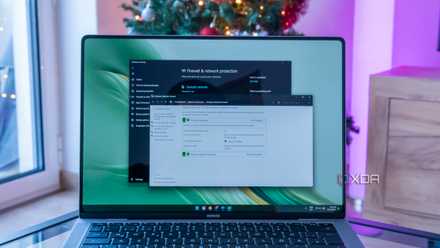
Laptop bloatware is bad, but here are 5 apps that are actually useful
Laptops come with too much bloatware, but there are some useful ones.
And then, many other times, the included software is just some kind of upsell. Some apps are for premium customer support you may have out of the box. Some apps are just third-party tools you don't need at all. A lot of PCS include antivirus software, which is often the worthless McAfee. Others include some kind of phone connectivity app, and many others just include things like Microsoft Office, which require a license that's sold separately. There's a lot of useless stuff packed into today's laptops, and it makes it important to debloat your Windows PC before you start using it.
7 Adding AI logos to the design
Worthless logos just make your laptop age poorly
A trend that kind of started in 2024 but is also kind of cyclical is the idea of adding AI logos to the design of a laptop. I say cyclical because every now and then, there's something companies feel the need to brag about with random logos on the chassis of their laptops, but AI is one of the most prominent and recent examples.
HP and Acer were two of the most guilty of this, adding AI logos to most of their premium laptops (Acer even had an AI light on the touchpad of the Swift 14 AI, which was insane). It's just an incredibly tacky part of the laptop's design, and most importantly, it screams insecurity. These laptops are trying to say "we can do AI, we swear!", but this is the kind of stuff you only really see when this technology is new and not very good at all. A laptop with an AI logo today is probably going to be far worse at AI than a laptop without said logo in the next couple of years.

5 ways AI can help boost your productivity
To help manage your busy day, you should consider turning to the wealth of available AI tools to help boost your productivity.
It just ages your laptop in a way that's totally unnecessary, because whenever you look at that logo, you'll be reminded of how stupid it was that the logo was there in the first place.
6 Premium laptops with low-end specs
16GB of RAM for the MacBook Pro?
A annoying trend that's very common, especially with Apple products, is premium laptops, many times aimed at creative professionals, starting with configurations that just make no sense for the price. Take a look at the MacBook Pro, for example. The 14-inch model starts with an Apple M4 chip that's fairly powerful, but it comes with just 16GB of RAM and 512GB of storage. 16GB of RAM is, in 2024, the minimum we'd recommend anyone to get, so much so that even Apple has upgraded every one of its laptops and computers to have 16GB at minimum. So why is this "pro" laptop for creators also equipped with just 16GB?
Microsoft does something similar. The $2,000 Surface Laptop Studio 2 also starts with just 16GB of RAM, even if you get the model with a discrete GPU. Someone who needs that kind of power could definitely benefit from more RAM, but companies are oddly stingy with it. This extends to basically every company making a gaming or creator laptop — there's always that one configuration that's meant to make the starting price a bit lower, but that no one should actually buy.
5 Weird USB-C port decisions
USB4 needs to be on all premium laptops
With the advent of USB-C, ports were supposed to be simplified. We have one port that can do it all, and yet, manufacturers keep finding ways to make this less intuitive than it should be. A lot of laptops that include USB-C ports don't offer the same specs on all of them, meaning you might have a Thunderbolt 4 or USB4 port and a standard USB 3.2 Gen 2 port, and if you want to plug in a docking station, you then have to figure out which one is which. What's even worse is when the ports are all on the same side of the chassis, making it so you can't have the docking station on whatever side you prefer.
But what's really bad about this is when premium expensive laptops use lame USB-C ports instead of USB4, even when the laptop has a premium price tag. The most recent example is the Honor MagicBook Art 14, which costs over $1,700 yet doesn't include a single USB4 port. A lot of AMD-powered laptops also skip on USB4 or Thunderbolt 4, even when there are Intel versions of the same laptop that have them. Thunderbolt 4 doesn't have to be Intel-exclusive technology, but manufacturers keep giving Intel the better specs for no reason.
4 Premium business laptops without 5G
Tripping up right at the finish line
Business laptops are known for a few things: customization options, upgradeability (sometimes), customer support, and great connectivity, which particularly includes cellular network support. Most laptops don't support 5G, but in the business world, this is a major feature, and it's pretty much expected that any mid-range to high-end business laptop offers the option for 5G connectivity so you can use the internet wherever you go.
So it's been baffling to see some companies build premium, incredibly expensive business laptops that just completely disregard this and don't offer that kind of feature. Right now, I'm looking at the HP EliteBook Ultra G1i that was just announced at CES. That laptop starts at $2,000, yet there's no option for 5G at all, no kind of cellular connectivity. It's not available at launch, nor is it seemingly planned. If you want 5G, you have to settle for the lower-end EliteBook X. Why?

HP EliteBook Ultra G1i hands on: HP gets it right this time
It's a proper Dragonfly successor
The people spending that kind of money on a business laptop are probably also people that travel a lot for work. Why would you not include that feature? I just don't get it. A lot of premium business laptops also don't offer a privacy screen option, which I also think is weird, but I can see how it might be less useful.
3 Make all laptops silver or black
Are laptops not allowed to be fun?
I know I'm going to inevitably going to get a lot of comments saying that laptops are work tools and they shouldn't be colorful, but let me stop you right there. First off, not everyone who has a laptop is doing big fancy business with it. Laptops are very popular with students, and just people who use it at home for all kinds of things. They don't all have to be work laptops. That's why there are consumer and business laptop categories.
Second, even if you do use a laptop for work, it doesn't mean it has to be boring. Lots of people work from home, and not every company is some old-fashioned entity that has some issue with laptops looking unique.
The bottom line is, people like personalization, and I don't understand why companies are so adamant to make every laptop silver or black, with some exceptions for white. I'm not going to be bold enough to ask for a lime green laptop (though I would gladly take it), but look at Lenovo's premium laptops, at least. The new Yoga Slim 9i that was announced at CES 2025 looks stunning in blue. Why don't we get more fun-looking laptops? It's especially frustrating because something like a phone can easily be covered up by a case to add personality, but most laptops don't have snap-on cases like that. You kind of have to stick with the default look, so more options would be truly great to see.
2 Saving all the good configurations for Intel
Long-standing partnerships hurt the consumer
One of the most annoying things that's still incredibly prevalent these days is the idea that the best configurations of any laptop are always going to be powered by Intel's processors, even when those processors aren't the best you can get. Even when companies try to make something more innovative with different processors, it has to be spun into its own line so as not to threaten the popularity of the Intel models.
Once again, the recent HP EliteBook Ultra is a good example. See, there was already an EliteBook Ultra model launched last summer with Qualcomm processors, but for some reason, despite being in HP's most premium tier of business laptops, that model was stuck with a 2.2K IPS display that wasn't even especially bright or vivid, it had a heavier aluminum chassis instead of a lightweight magnesium one, and it only used a 5MP webcam, whereas HP's most premium models have been using 9MP sensors.

HP EliteBook Ultra review: Another win for Snapdragon, but not so much for HP
These laptops are so good
All of those things that you would expect from HP's range topper only came at CES 2025 when Intel introduced the Intel version of the EliteBook Ultra G1.
But HP isn't alone in this. Lenovo's most premium laptop, the Yoga 9i, is exclusively powered by Intel. The Dell XPS lineup was exclusively Intel for years, until the XPS 13 finally introduced Qualcomm models last year, but even then, AMD is nowhere to be found. And again, things like ports are almost always better on Intel devices because they have Thunderbolt 4 and AMD models are often left out in the cold.
1 Using low-quality webcams
How is this still a problem?
2020 changed a lot of things, and one of the realizations many people had was that their webcams were not good for remote work. Lots of companies were still using 720p sensors, and some, like Huawei and Honor, had this horrible habit of putting webcams on the keyboard, giving you a terribly unflattering angle.
Even after that, though, things took a while to change. Dell kept making laptops with 720p webcams, even in its premium XPS lineup, and on lower-end models, it was still the standard. These days, 1080p webcams have thankfully taken over, but that doesn't mean they're always great. In fact, a lot of webcams on modern laptops are still pretty bad, so if you want to get into live streaming or anything like that, an external webcam is still very much necessary.

My webcam didn’t come with customization software, so I used OBS to reframe it
If your webcam's field of view is too wide, here's how you can use OBS to crop and reframe it
It's just silly to me that after all the focus on working from home and everything that happened during 2020 and 2021, companies are still hellbent on using the cheapest webcams imaginable. And don't even get me started on the horrible microphone placement of Honor's laptops, putting the microphones right near the touchpad so you can't use your laptop while you're calling.
It's high time we had decent webcams in laptops, and some companies have realized it. But not all of them.
It's time laptops fixed these issues
I know cheap laptops are always going to have to cut corners somewhere, and I'm not directing my criticism at sub-$800 devices. What baffles me is that so many of these problems are prevalent on PCs that cost over $1,000. There's no reason for these things to still be a problem in 2025, and yet, here we are. Hopefully we'll see some changes here sooner rather than later.