
Much has been said about HexOS, the up-and-coming operating system for NAS devices that aims to provide a more friendly user experience. When it's built on a foundation as strong as TrueNAS, which nis available for free for consumers, yet it asks for $199 for the privilege of using it (for now), it's fair to be skeptical.
But HexOS is doing something very important for NAS software: making it more easily accessible to everyone. In a way, it's very similar to what Ubuntu did for the Linux desktop. It may not make sense if you're already deep into the ecosystem, but it has the widest appeal for the majority of the public, and it could help popularize this kind of product.

HexOS is shaping up to be the best NAS OS for everyone
It's not there yet, but it's pretty close.
HexOS makes things easier
TrueNAS is fantastic, but...
As someone who set up my first (and so far, only) NAS using TrueNAS, let me tell you I get it, I understand why you might think HexOS is pointless. I love that TrueNAS is free to use, and looking back now, it certainly doesn't seem so hard to set up. But I had a lot of help getting started, and even then, I'm not going to pretend I'm any kind of expert in properly setting up a NAS in accordance with all the guidelines you'd usually see. I have a single HDD in my NAS and rely on cloud backups — there's no redundancy on the NAS itself.
I don't mean to belabor the point, but what I'm getting at is that TrueNAS kind of expects you to know everything about the principles of setting up your storage devices, and to make it more tolerable as a user, you might end up bypassing a lot of things that experts would consider essential. Either that, or you may need to have someone carefully guide you through the entire process or read all the documentation yourself, and either way, it takes a lot of time to get things set up.
Time is money, so when HexOS comes along and tries to make the whole process simpler, it's not unreasonable to ask for an upfront payment. When you set up HexOS, all the necessary concepts for having a functional NAS are explained to you in simple terms that are easy to understand, but you're not bogged down with unnecessary knowledge, either. It tells you the fundamentals and lets you get on your way, which is what most people want most of the time. Not everyone wants to make a hobby out of setting up a NAS, most just want to be able to use it. And that can be worth paying for.
TrueNAS is free, so why would anyone pay for a NAS OS?
People are too dismissive of paid NAS operating systems.
The similarities with Ubuntu are apparent
Linux wouldn't be where it is without it
It's interesting to look at what HexOS is doing to NAS operating systems and compare it to what happened with Linux desktops over the years. TrueNAS itself is a Linux-based operating system, and like all things Linux, it's a very open, powerful, and capable platform, but it's also one that requires a lot of knowledge and patience to make sure you can get a handle on everything properly. And for a long time, that high barrier to entry has kept a lot of users at bay when it comes to Linux desktops. It's part of the reason Windows is still so massively dominant in the desktop market.
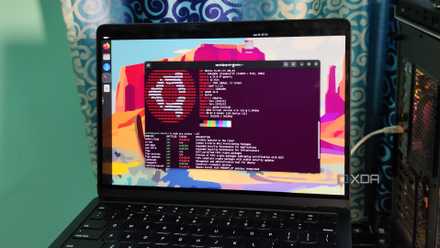
But that has started to change, albeit slowly, and it's mostly thanks to the work of Canonical with Ubuntu. Ubuntu is far and away the most popular Linux distro for desktops, and when you go through the setup process, it's not hard to understand why. It has a very friendly step-by-step process for getting everything set up the first time. You can easily connect to the internet, set time zones, choose whether you want all the optional drivers and media support so all your files play normally, and so on. Ubuntu makes it so that, once you get to the desktop, you can use your computer as you would expect to without any unexpected hurdles in the way. Sure, if you're coming from Windows, the UI is somewhat off-putting, but things work.
It can't be understated what a huge role Ubuntu has had and continues to have in making Linux a more popular alternative to Windows. But getting to that point requires a lot of investment, and Ubuntu is only able to spend that kind of money thanks to the people and companies paying for things like Ubuntu Pro. That platform provides extended support for LTS releases starting at $25 a year for a single desktop, but there are many other options for different scenarios, and costs go up quickly.
HexOS also needs the money in order to work on crafting an experience that's more user-friendly than TrueNAS. To some extent, TrueNAS already operates on a similar premise to Ubuntu, since the company behind it, iXSystems, makes money through selling pre-configured hardware, which allows it to maintain the platform. But because it's an enterprise-focused product and its paid solutions are focused on delivering a pre-configured experience, most of those investments aren't in making TrueNAS a very accessible platform for consumers. That's where HexOS comes in, and that's why it makes sense to be paid. Unlike TrueNAS or Ubuntu, HexOS doesn't offer a free and a paid version of its platform, and it's probably because it makes more sense for the free version of its platform to just be TrueNAS itself. After all, HexOS is just a frontend for TrueNAS anyway. Then again, a free version could come at some point when the platform is more developed and the company can differentiate between the free and paid tiers with things like real-time customer support and extended updates.
Canonical wants you to get Ubuntu Pro, but you don't need it
Good ol' Ubuntu is more than enough for the average user
HexOS isn't alone
And it won't be for everyone
Making NAS software more accessible is a noble goal, and it should be noted that HexOS isn't alone in this. Alternatives to TrueNAS already exist with solutions like Unraid, and that too is a paid software. In fact, for unlimited functionality, Unraid costs $249, which is actually $50 more than HexOS's early bird pricing of $199 (though that cost will go up to $299 at some point), so HexOS is a great option.
HexOS is also an intelligent approach in that, by relying on TrueNAS, it has access to everything that platform has. TrueNAS has a huge ecosystem of apps already available, and HexOS can leverage that instead of trying to attract developers to a whole new platform.
Still, it's not a solution that will fit everyone, and that's okay. In some of the early builds of HexOS, some users complained that it was a little too restrictive and didn't let them configure more complex settings like TrueNAS would, and if you do want completely fine-grained control over everything, TrueNAS or Unraid may still be better for you.
HexOS is focused on ease of use, and that's where it excels, even in its current development phase, and that could play a key role in making DYI NAS machines more popular as alternatives to fully proprietary, prebuilt solutions like Synology's NAS devices. In a similar fashion to Microsoft, that company has been making some questionable decisions, so anything that helps more users find more freedom by making their own solutions is a welcome improvement.

I moved away from Unraid, and this is the only thing I miss
Sometimes, power comes at the cost of peace
Again, it's very similar to how things look in the Linux desktop space. If you want full control over your experience, choosing the desktop environment and apps to start with, something like Arch Linux may be perfect for you. But most newcomers don't have the knowledge or patience to learn how it works, so Ubuntu attracts the most beginners. There's space for all these options to exist and complement each other, and we should be glad that they do.