
You may believe Home Assistant can only help you turn on and off smart lights and set up a few basic routines, but the software is much more capable than that. When configured correctly, you can save a considerable sum of money with nothing but a few smart sensors, some compatible devices, and some time to add everything to Home Assistant and set up a few automations. This winter has been quite the tricky one to navigate through, but here's how we've used Home Assistant to save money.
Create a custom HVAC
You're hot, and you're cold
The highest energy draw is heating and cooling, depending on the time of year. Whether you're using a heat pump, gas boiler, or electric radiators to make your home feel more comfortable through the winter, there's a good chance your utility bills are notably higher through these colder months. By using Home Assistant automations, one can configure a custom HVAC system that uses various sensors and inputs to better make use of available resources.
For our home, we make use of portable oil-filled and fixed wall-mounted radiators, which aren't known for being the most energy efficient. But the high power draw can be somewhat mitigated through a smarter setup. Instead of simply firing them up when needed in a room and leaving them on for hours at a time, we can automate everything and create a DIY central heating system, using Home Assistant as the controller hub.
We have all radiators configured to come on at various times of the day, but only if temperatures outside are below 10 degrees Celcius. All radiators turn on at 04:30 for an hour to take advantage of the lower night tariff pricing and eliminate the cold throughout the building. Then the downstairs radiators provide a quick blast just before lunch and again before dinner. The upstairs is once again hit with heat in the evening, but this only occurs when we're upstairs to make better use of the heat.
This allows us to cut down our usage and be smarter about where it's directed, ensuring spaces are only heated up during peak hours when required and for shorter durations, fully utilizing smart plugs to control when and how long radiators run for. Throw in some ways to determine room occupancy, and you've now got a truly reactive heating system that can effectively follow people around the home, directing heat where needed.

These 4 Home Assistant automations will make your home feel smarter than any Alexa routine
Automate the smart devices to function at your convenience
Avoid peak hour charges
No one enjoys paying full price
You've not used smart plugs until you've picked up a few with energy monitoring capabilities. These have turned into one of the best purchases I've made for the smart home, allowing me to break down the energy draw reported from my solar system inverter and see precisely where the house is using that power. This could be appliances such as the refrigerator, TV, home lab server, radiator, and desktop PC.
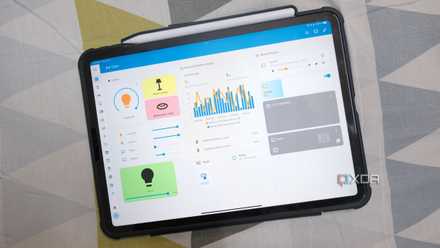
Not only does the smart plug report how much power it's currently drawing, but Home Assistant can use this and other reported data from the device to create some stunning yet useful graphs for keeping tabs on what's drawing what. It's also great for configuring times when the connected device is allowed to function, effectively bypassing peak hour pricing when electricity is most expensive. Devices can even pull small amounts of power when off or in standby.
A smart plug can eliminate phantom power draw, cutting as much unnecessary load as possible, and could save anywhere up to 10% of your electricity bill. It's shocking to see how much power devices can draw through monitoring and using an army of smart plugs with Home Assistant allowed us to become far smarter with how power is used throughout the home.
We've also been there when lights get left on by accident. Configuring automations to cut power at specific times or turn off devices after a set duration can help reduce wasted resource usage. We've also incorporated this into our radiator-powered heating system, where each radiator will automatically cut off after an hour to prevent anyone from turning them on via the smart plug outside of other automations and forgetting to turn them off again.
5 useful Home Assistant automations I wish I had in my life sooner
From energy tracking to turning off devices when not in use, Home Assistant helps improve my life by automating my smart home.
Avoid expensive leaks
Shut everything off automatically
There's nothing worse than wasting money due to a water leak, but depending on your location, this issue may persist for some time. That's where a smart leak detector, a remote-controlled valve, and a simple automation can completely solve this. All that's required is to set an automation to read when a leak is detected by a sensor and automatically shut off water flow to that specific part of the pipe network or the entire home.
The best part about these leak detectors is that they are incredibly easy to set up and manage. Many of them will last for months on a single charge and can report readings to Home Assistant almost instantly, allowing the automation to run as soon as the presence of water has been detected. We've got two sensors located in the utility room behind the stacked washer and dryer, as well as the refrigerator, so it can quickly detect any leaks.
A second option for this approach with liquid management via Home Assistant is to manage the automatic garden irrigation, ensuring water is only used when it's truly dry with no upcoming spells of rain, and nothing is wasted.

Your smart home doesn't need more devices, it needs better automation
Build your smart home smarter.
Saving with a smart home
Smart homes typically received a bad name due to the complexities and relatively pointless automations that were possible with earlier implementations. I was firmly in the camp with those who didn't find the need to transform their existing abode into a smart home. Fast forward a decade, and now I'm automating just about everything that makes sense and can provide some benefit, much of which comes in the form of savings.
Depending on what you plan to use Home Assistant for, it can be easier than you think to configure automations to save a little that could compound into quite a utility bill discount.