
Summary
- Hardware threads optimize CPU performance by allowing execution of multiple streams concurrently, improving multitasking capabilities.
- Simultaneous Multithreading (SMT) increases CPU core throughput by processing multiple threads simultaneously for efficient task handling.
- Multithreading complexity requires sophisticated algorithms for thread scheduling to balance load, manage resources, and optimize performance.
The term thread refers to two distinct concepts: hardware threads and operating system threads. Hardware threads, otherwise known as logical or virtual CPU cores, allow a single CPU core to execute multiple instruction streams concurrently, optimizing performance during tasks like memory access stalls. Meanwhile, OS threads are the units of execution managed by the operating system, running application and kernel code. These threads, potentially numbering in the thousands, are scheduled onto the available hardware threads for efficient processing.

Beginner's guide to CPU specs
There are plenty of CPU specs to wrap your head around — let's make it a bit easier
A thorough understanding of CPU threads
Hardware threads, or virtual cores, enable a physical CPU core to execute multiple processes simultaneously, enhancing multitasking by handling several tasks at once. In contrast, a software thread represents a sequence of programmed instructions within a process, managed independently by the operating system's scheduler. These software threads are then assigned to the hardware threads for execution. This approach optimizes CPU performance, allowing for efficient processing of multiple applications and tasks concurrently.
What is Simultaneous Multithreading (SMT)? 👁 Schematic Diagram of a CPU's internal architecture highlighting components supporting Simultaneous Multithreading.
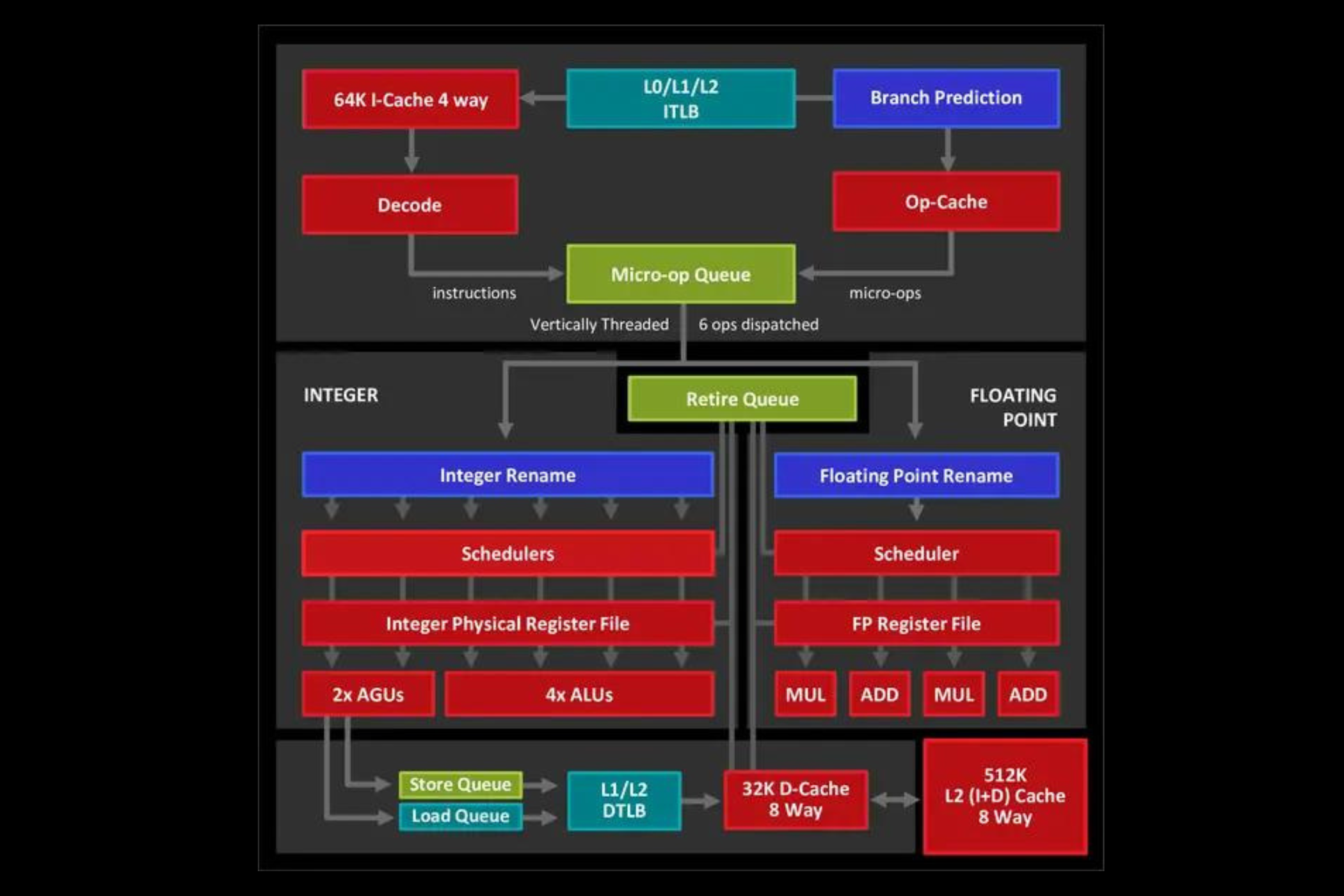
Simultaneous Multithreading (SMT) is an advanced type of hardware multithreading used in modern CPUs. SMT allows a single CPU core to execute multiple instruction streams (or threads) simultaneously. This is achieved by duplicating certain parts of the processor, such as the registers and program counters, while sharing other resources like the execution unit and caches.
The primary advantage of SMT is its ability to significantly increase the throughput of a CPU core. By allowing multiple threads to be processed in parallel, SMT takes full advantage of the CPU’s resources, especially when executing tasks that have non-dependent instructions. This parallelism is particularly effective in scenarios where a single thread might not be able to fully utilize the CPU's capabilities, allowing other threads to fill the gaps in resource usage, thereby maximizing efficiency.
SMT is highly effective in enhancing the performance of applications that are designed to run multiple threads concurrently. Applications like video rendering, complex scientific simulations, and server environments benefit greatly from SMT, as it allows for more efficient processing of multiple tasks.
One of the key challenges in implementing SMT is ensuring efficient thread scheduling and resource allocation. The operating system plays a crucial role in this, as it must manage and schedule these threads effectively to maximize the CPU’s performance without causing bottlenecks.
How does multithreading work?
Architectural foundations
Multithreading in CPUs fundamentally involves the creation of multiple execution contexts within a single processor. This design allows the processor to maintain state information (like register values and program counters) for multiple threads at the same time. The ability to rapidly switch between these threads creates an illusion of simultaneous execution, although at any given moment, the CPU is processing only one thread per core.
Hardware implementations👁 Schematic diagram showing the process of automatic register duplication
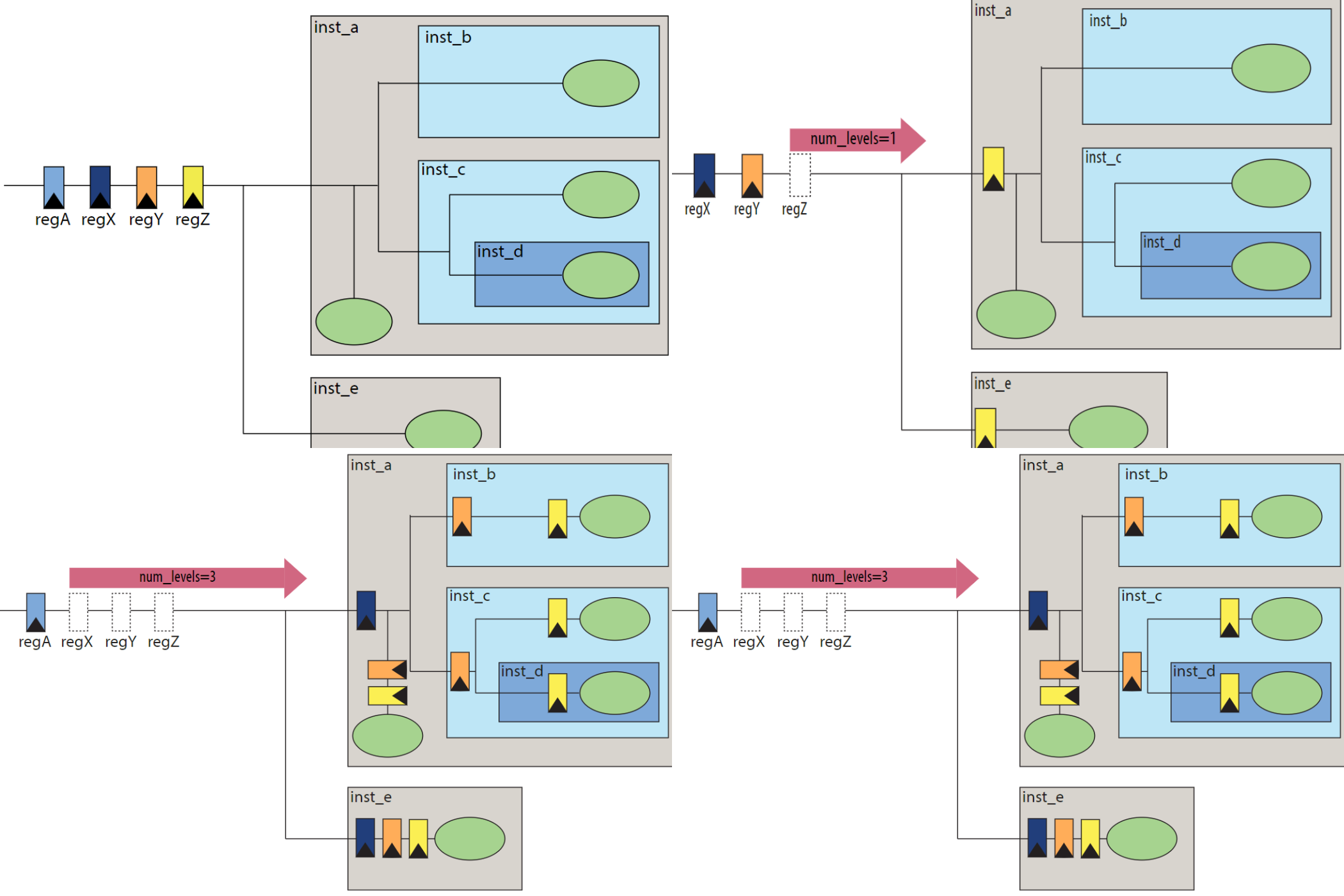
- Register duplication: In multithreaded CPUs, hardware elements such as registers and program counters are often duplicated. This duplication facilitates the CPU's ability to rapidly switch contexts between threads, as each thread maintains its own set of these resources.
- Pipeline stalling and thread switching: When a thread encounters a stall (e.g., waiting for memory access), the CPU can switch to another thread, minimizing idle time and maximizing utilization.
- Simultaneous Multithreading (SMT): Technologies like Intel's Hyper-Threading allow the processor to issue instructions from multiple threads in a single cycle. This requires complex control logic to manage instruction dependencies and allocate resources among threads.
Software interaction
- Operating system's role: The operating system schedules threads for execution on the CPU. It must balance the load across threads and cores, considering priorities and resource requirements.
- Application design: For effective use of multithreading, applications must be designed to break down tasks into parallelizable units. This involves careful planning to avoid issues like data races and deadlocks.
Scheduling and thread management in modern hybrid CPU architectures
👁 Block schematic showing the abstract process of thread allocation in Intel's hybrid CPU architecture
Intel's hybrid architecture with P and E cores
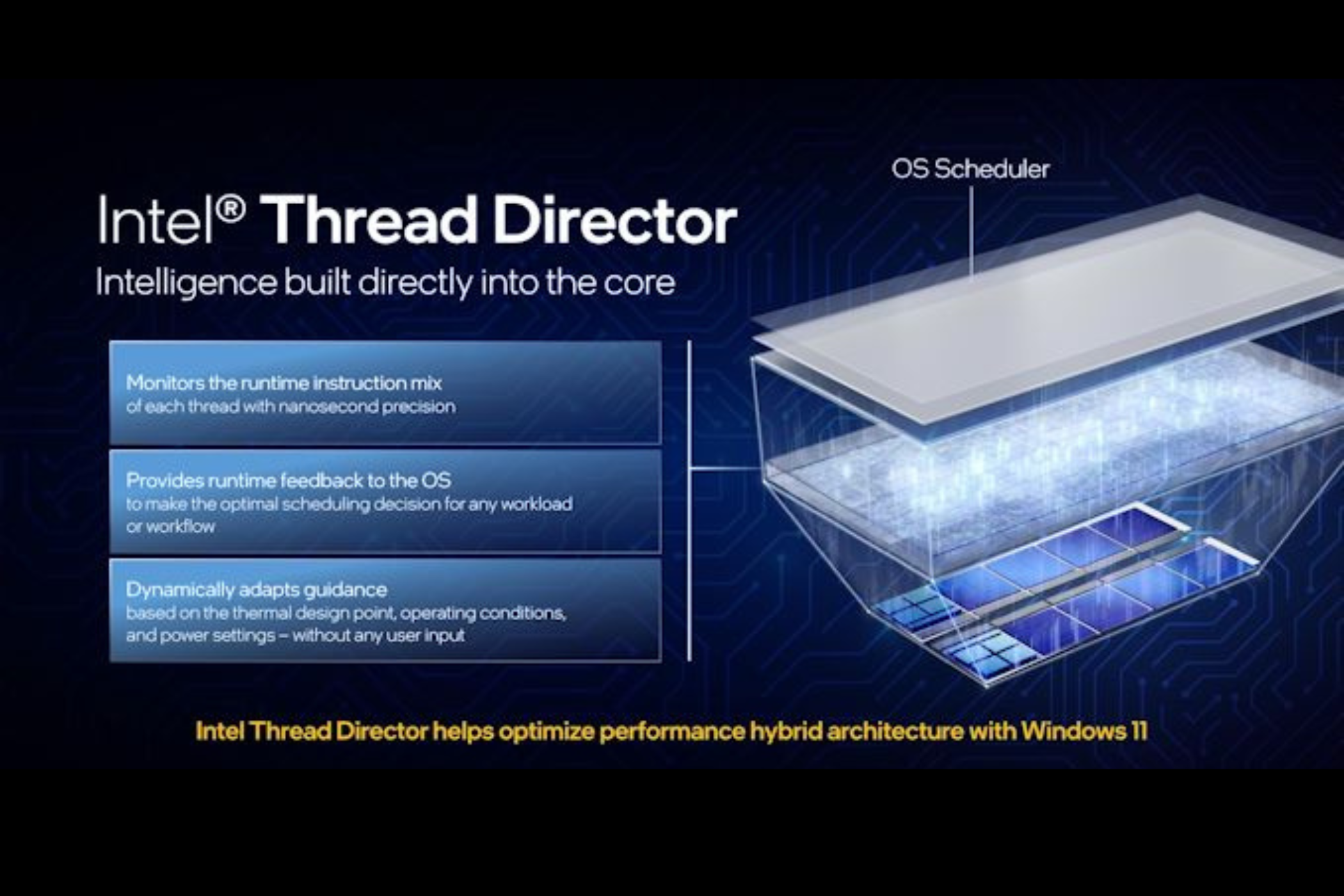
Modern Intel CPUs, particularly 12th, 13th, and 14th generation processors, have adopted a hybrid architecture that combines Performance cores (P-cores) and Efficiency cores (E-cores). This approach is designed to balance power and efficiency, adapting to current and future computing demands.
- P-Cores: These are designed for high-performance tasks, featuring higher clock speeds and more complex processing capabilities. P-cores are optimized to handle demanding workloads, such as heavy computations and complex calculations, and they support Hyper-Threading for enhanced multitasking.
- E-Cores: In contrast, E-cores focus on energy efficiency, handling lighter, routine tasks with lower power consumption. They are designed to efficiently manage always-on services and multitasking operations, operating at lower clock speeds without Hyper-Threading support.
Intel’s Thread Director technology
Intel's 12th Generation CPUs marked a significant advancement with the integration of the Intel Thread Director technology. This innovative hardware mechanism plays an important role in task distribution across CPU cores. It operates by meticulously analyzing the nature and requirements of instructions, as well as the current status of each core, doing so with nanosecond precision. This continuous monitoring allows the Thread Director to provide the operating system with real-time feedback. Such guidance enables the operating system to allocate tasks to the most appropriate cores, optimizing the CPU's performance and efficiency in handling various computational needs.
AMD's CCDs with 3D V-Cache
AMD's approach, particularly with their Zen microarchitecture and CCDs (Core Chiplet Dies) with 3D V-Cache, offers a different yet equally innovative take on multithreading and core management. The 3D V-Cache technology significantly increases the L3 cache available to the cores, which enhances the processor's ability to handle multithreaded workloads by reducing latency and increasing cache hit rates.
While AMD’s design doesn’t split cores into performance and efficiency categories like Intel does, the increased cache plays a crucial role in efficiently managing the threads. A notable example is the AMD 7950X3D, where only one of the CCDs is equipped with a 3D V-Cache. This asymmetric cache distribution necessitates proper scheduling to ensure that tasks, particularly cache-sensitive ones like gaming, are directed to the appropriate CCD.
Challenges and complexity in scheduling
The introduction of hybrid architectures and advanced technologies like 3D V-Cache adds complexity to thread management and scheduling. The operating system must now not only decide which thread to run but also determine the best type of core for each thread. This requires sophisticated algorithms and real-time decision-making capabilities to optimize performance without compromising power efficiency or system responsiveness.
Challenges of multithreading
Resource contention and interference
While multithreading offers significant performance benefits, it introduces the challenge of resource contention. In a multithreaded CPU, multiple threads often share hardware resources like caches and translation lookaside buffers (TLBs). This shared use can lead to contention, where threads compete for the same resources, potentially causing performance degradation.
One notable form of interference is cache thrashing. This occurs when multiple threads frequently overwrite each other's data in the cache, leading to an increased number of cache misses and reduced performance. Similarly, when threads share TLBs, the frequent loading of different address spaces can lead to TLB thrashing, increasing memory access latency.
To mitigate these issues, CPUs use sophisticated algorithms for cache and memory management. However, the effectiveness of these solutions can vary based on the workload and the specific architecture of the CPU.
Complexity in scheduling and thread management
Effective thread scheduling is necessary to maximize the benefits of multithreading, but it is inherently complex. The operating system must balance the load across different threads and cores, taking into account factors like thread priority, current load, and the nature of the tasks. Poor scheduling can lead to issues like thread starvation, where certain threads may not receive enough CPU time; or resource wastage, where CPU cycles are spent on less important tasks.
Additionally, managing multithreading at the software level adds complexity. Applications must be designed to efficiently use multithreading, which involves breaking down tasks into parallelizable units and managing shared resources. This requirement increases the complexity of software development, as programmers must consider aspects like data races, deadlocks, and the efficient division of tasks into threads.
Practical applications of multithreading
Multithreading technology has been instrumental in enhancing the performance and efficiency of various applications. Its ability to allow simultaneous execution of multiple threads has revolutionized how tasks are processed in both consumer and enterprise environments.
Enhancing the user experience in consumer computing applications
In consumer applications, multithreading plays a vital role in improving the user experience. For example, in web browsers, multithreading allows for the simultaneous loading of multiple tabs, where each tab can be considered a separate thread. This results in a smoother and more responsive browsing experience, even when dealing with heavy JavaScript and multimedia content.
Efficiency in server and enterprise environments
In server and enterprise environments, multithreading is crucial for handling multiple concurrent requests and tasks. This is particularly evident in web servers and database management systems, where simultaneous requests from different users must be processed efficiently. By utilizing multithreading, servers can handle a higher number of concurrent connections, improving overall throughput and reducing response times.
In cloud computing and virtualization, multithreading allows for the efficient allocation and management of resources across multiple virtual machines. This maximizes hardware utilization and enhances the scalability of cloud-based services, catering to the growing demand for computing resources in various industries.
Impact of multithreading on modern day computing
Multithreading plays a crucial role in enhancing CPU performance and efficiency. From consumer applications to enterprise environments, the implementation of multithreading has led to significant improvements in responsiveness and throughput.

Best CPU benchmarks: Five utilities to test your processor's performance
Know if your CPU is performing optimally with these programs.
The adoption of multithreading techniques like coarse-grained, fine-grained, and SMT has allowed CPUs to manage tasks more efficiently. This efficiency is achieved through intelligent allocation of tasks to various threads, enabling faster processing and reduced latency.
While multithreading brings numerous benefits, it also introduces complexities in resource management and scheduling. However, continuous advancements in CPU design and operating system development are addressing these challenges, ensuring that multithreading remains a robust and vital component of modern computing.
As we look to the future, the potential integration of multithreading with emerging technology like Artificial Intelligence indicates that we are only scratching the surface of its capabilities.