
DLSS and FSR are two technologies that have completely changed gaming for better or for worse. AMD just launched FSR 4, a substantial upgrade to FSR 3, introducing a new machine learning algorithm that greatly improves quality and performance, depending on the game. While this is great news for handheld and console devices that rely on such technologies to achieve gaming experiences far above what their weaker hardware allows, it also means some bad news for PC gaming.
4 reasons why Nvidia's DLSS is ruining PC gaming
DLSS works like magic, but it's actually making your games worse
4 Developers don't have to optimize code
It's not that they're lazy, but it's better for targets
With low-end "budget" GPUs having access to much of the same tech as even the flagship models, there's little incentive for developers to work on optimizing their games for lower-tier hardware. Sure, you have different platforms with varying specifications, but for the PC market specifically, DLSS and FSR have almost rendered this approach redundant. Why spend valuable resources optimizing the game to run on more hardware configurations when you can simply rely on algorithms to upscale and generate frames?
That's not to say developers are lazy and all studios would take this approach, but it's worth considering since games have often launched with a whole string of issues, performance being one. Even the RTX %090 will struggle to run some games with high visual settings at 4K without the assistance of DLSS, and the same goes for AMD's Radeon RX 7900 XTX and RX 9070 XT. Some games are outright anti-GPU, such as Black Myth: Wukong. Try getting a stable frame rate above 60 without DLSS or FSR, even with ray tracing disabled.
3 FSR can (and has) been used in marketing
We primarily use rasterized FPS for this very reason
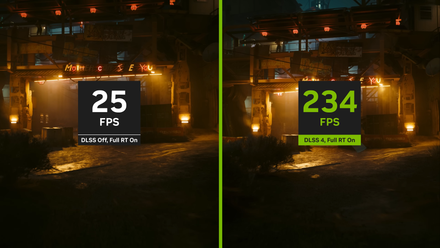
Although AMD did focus on rasterization throughout the RDNA 4, RX 9070, and RX 9070 XT launches, FSR 4 did make some of the headlines. It's a fantastic tool for getting higher FPS from games that support it, but this isn't what we should rely on moving forward. These inflated metrics shouldn't be used to sell graphics cards. It should be the rasterized performance that showcases clear comparisons between GPUs of all brands and tiers. Through DLSS, you could see an RTX 5070 beat an RTX 5090 if the latter had everything turned off.
Let's not even delve into how Nvidia misled gamers with its DLSS data and the RTX 5070, promising RTX 4090 performance for less than $600. In short, this GPU can hit FPS levels that the RTX 4090 achieved, but this is not across the board and is entirely dependent on DLSS and other tech being enabled. That's not quite the same as the RTX 5070 being as good as the RTX 4090 in terms of raw performance, and this can easily be misconstrued by consumers.
2 Even FSR 4 isn't as good as native
It's excellent but not without its issues
AMD was on the backfoot with FSR 3 and earlier iterations of the technology. Nvidia has continued to hold a comfortable lead with DLSS and other features, which is largely due to its focus on AI development and fine-tuning its ecosystem of machine learning tech. AMD is catching up, and FSR 4 is a colossal leap forward, but it's still behind Nvidia on performance and visual fidelity from what I (and others within the industry) have noted through early testing.
Even with everything enabled and configured for maximum quality, these technologies still can't beat native, and that's perfectly fine, but we should bear this in mind when discussing game requirements and how much additional headroom is required for stable gameplay at higher resolutions. Games aren't getting any smaller, and we're not seeing a huge generational performance uplift, although RDNA 4 delivered some notable ray tracing improvements.

7 ways Nvidia's DLSS 4 is making the future of gaming happen today
DLSS 4 shows upscaling is the future of gaming.
1 The actual GPU is (almost) the same
What is an upgrade, really?
The worst part about DLSS and FSR being so good these days is the lack of any tangible improvements for the GPU. Everything is AI and software, leaving actual rasterized uplifts in the dust. This is inevitable where we begin to hit a wall with GPU improvements outside of physically cramming more into the small package, but it also means AMD and Nvidia could focus on improving their respective upscaling and frame-gwen technologies over the architecture itself.
We've seen this with the RTX 5070, which at times can even be beaten by the previous-gen RTX 4070 series. That's not an upgrade in my eyes, and this was shared in countless reviews, including our own from Jacob Roach. Sure, DLSS 4 and other tech supported by the RTX 5070 do provide an edge when enabled, but without this fancy tech, it's not that much of an upgrade. This is terrible for gamers as it gate-locks performance upgrades behind a huge upgrade cost.
FSR 4 is incredible, but is it worth the cost?
I despised FSR 3, like many gamers out there with an AMD GPU. It wasn't great for performance and often made the game look much worse than native and Nvidia's DLSS. That made Radeon hardware a difficult sell for higher-end gaming at 4K and with ray tracing enabled. Everything changed when AMD announced FSR 4 would use machine learning, much like DLSS, and be paired with a new RDNA architecture with a focus on improving ray tracing performance.
Enter the RX 9070 and RX 9070 XT. These are two excellent GPUs for 1440p and 4K gaming, though a large part of this is thanks to FSR 4. This technology will enable AMD to push the boundaries of its current generation of graphics cards, but it'll come at a cost. Like Nvidia, AMD risks causing developers to refocus efforts away from optimization, could end up misleading some if not careful with marketing, and needs to continue refining FSR to make it almost impossible to tell it's even active.