
Now that everything about the new RTX 5080 is out in the open, I've reluctantly decided to skip this generation and retain my RTX 3080 for another year. I was hoping to upgrade to the RTX 5080 in the months leading up to the launch, but no matter which way I cut it, I can't justify that anymore. My RTX 3080 still holds up in the latest games at 1440p optimized settings, so the wait continues for me.
With the RTX 5090 and RTX 5080, Nvidia has delivered a refresh of the RTX 40 series rather than any true generational upgrades. Combined with the deceptive marketing around Multi Frame Generation (MFG), insufficient VRAM (as ever), and the paper launch leading to inflated prices, the disappointing gains on the RTX 5080 have suddenly made cards like the RTX 4080 Super and RX 7900 XTX look exceptional.
5 The gen-on-gen gains are disappointing
Congrats guys, we got the RTX 4080 Ti Super
The worst thing about the RTX 50 series launch is that the raw performance gains aren't what you'd expect after 2 long years. On average, the RTX 5080 is only around 5% and 15% faster than the RTX 4080 at 1440p and 4K respectively. Whatever Nvidia is trying to establish with MFG (which I'll address later), the rasterization gains should have been way higher.
Team Green using the same process node as the RTX 40 series is a factor, but then the prices should have reflected that this is only a "refresh" rather than a next-gen lineup. I could have easily bought an RTX 4080 or RTX 4080 Super months ago instead of waiting for Nvidia to come out with "faster GPUs." And now it's become harder than ever to find any previous-gen GPU in stock at reasonable prices, so I'm back to square one.
With Blackwell, things seem to be regressing as gen-on-gen gains have stagnated, and alternative levers like AI-generated frames are being overhyped to sell the latest graphics cards. I was excited to upgrade from my RTX 3080 to the RTX 5080, but it seems I'll now have to settle for a used RTX 4080 Super a few months down the line.

3 reasons I'll be skipping Nvidia's RTX 50 series
Nvidia's RTX 50 series is a fantastic series of graphics cards, but
4 It's an RTX 5070 in disguise
God help the actual RTX 5070
The disappointment doesn't end with potential performance stagnation. Nvidia seems hell-bent on extracting the most money from consumers for the least amount of GPU power it can offer. Digging slightly deeper into the specifications of the RTX 5080 reveals that it's a 70-class card at its core, and not an 80-class one as Nvidia would like us to believe.
You can see that the RTX 5080 features only around half the number of CUDA cores as well as the memory bandwidth compared to the RTX 5090, a historical low when looking back to the GeForce 700 series. The level of hardware reduction on the RTX 5080 matches the treatment meted out to prior 70-class GPUs, and hence, the RTX 5080 should actually have been called the RTX 5070 (or even the RTX 5060 Ti).
The $999 price of the RTX 5080 is half that of the RTX 5090, which could be some consolation, but that's because Nvidia arbitrarily slapped the absurd figure of $2,000 on the RTX 5090. This doesn't bode well for the rest of the SKUs in the 50 series lineup i.e. the RTX 5070 Ti, RTX 5070, and RTX 5060 family.

6 reasons to pick Intel or AMD for your next GPU instead of Nvidia's RTX 50 series
Nvidia's RTX 50 series might be hot right now, but there are enough reasons to consider an AMD and Intel GPU
3 Even MFG can't save this "refresh"
AI frames don't make sense on my 144Hz monitor
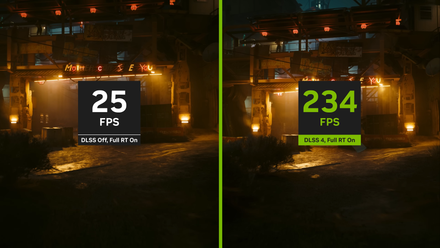
Nvidia's tall claims about the power of MFG hid a crucial aspect of AI-generated frames — they don't improve game responsiveness, only fluidity. This means while the frame counter goes up and the experience looks smoother to your eyes, the game doesn't "feel" any faster, because the responsiveness is still tied to the base framerate. Third-party reviews were quick to reveal this fact.
MFG works best when it makes the least sense to use it, meaning the best-case scenario where MFG will improve your FPS without a big latency hit or artifact introduction is when you're already getting 100+ FPS as the base framerate. Using 2x frame generation in such cases will get you to around 200+ FPS, and allow you to saturate your 240Hz monitor (or even faster monitors if you use 3x or 4x frame generation).
The more AI-generated frames you use, the more extreme the issues related to frame generation become namely the latency and artifacts, which are very noticeable in some games. That's why I mentioned 2x frame generation as the ideal, but even that will be wasted on my 144Hz monitor, as I could just enjoy the 100+ FPS native experience without dabbling in AI frames. So, in a way, MFG makes sense only for enthusiast gamers.
It's time to accept Nvidia's "fake frames" might be the new normal
Like it or not, Nvidia's RTX 50 series shows that AI-generated frames are here to stay
2 The $999 price isn't real
It's a paper launch yet again
One of the things on my RTX 5080 wishlist was Nvidia maintaining the same pricing as the RTX 4080 Super. While that technically came true, barely anyone can buy the RTX 5080 at $999 (or anywhere close to that). Unless you were extremely lucky during the first few days of the launch, all you'll be able to see are "sold out" listings on sites like Amazon, BestBuy, and Newegg.
Besides waiting for stocks to be replenished, you can turn to scalpers on sites like eBay that are selling RTX 5080s for around $2,500 (many listings are way higher). This has refreshed the terrible memories of the 2020–2022 GPU crisis where every single card was selling for twice or thrice its MSRP. Whether you were hoping to grab an RTX 5090 or RTX 5080 at the end of January, the RTX 50 series has been nothing but a paper launch.
It looks like it'll be 3 to 4 months before the stock issues subside, and RTX 50 series GPUs hit any semblance of reasonable availability. I'd rather use the time to grab an RTX 4080 Super for a discount or try the pre-owned GPU market for an even better deal.
7 older GPUs to buy instead of the RTX 50 series
The latest Nvidia GPUs might be underwhelming, so here are 7 current and previous-gen GPUs you should consider instead
1 16GB VRAM at $1,000+ is brutal
Nvidia knows there's no competition
This was yet another crucial item on my wishlist. While the RTX 4080 Super featured the same 16GB VRAM as the RTX 5080, I was still hopeful Nvidia would finally throw gamers a bone. Alas, that didn't happen. The latest 80-class GPU from Nvidia is still woefully lacking in VRAM, especially at the $999 price point. Paying a fortune for a GPU clearly intended for 4K gaming and getting only 16GB VRAM isn't great.
When the RTX 4080 Super gives you the same VRAM and performance at a lower price, what does the RTX 5080 have going for it? MFG isn't relevant unless you have a high-end display to support it, and the better cooling system of the RTX 50 series isn't reason enough to consider it. Other than MFG, many of the DLSS 4 benefits are available on 40 series and even 30 series cards, making the RTX 5080 even more pointless.
Even AMD's RX 7900 XTX is only marginally slower than the RTX 5080, and its availability is still better than that of the RTX 50 series GPUs, at least right now. Ray tracing performance on the RDNA 3 flagship is strong in most titles, and you're getting 24GB of VRAM, 50% more than that on the RTX 5080.

3 reasons DLSS 4 being good might actually be bad news for gamers
NVIDIA's continued innovation might actually be a step backwards for gamers
How long before the RTX 30 series can't keep up?
The RTX 3080 might be enough to reasonably handle the latest games at 1440p with a few compromises, but how long before I need to seriously consider an upgrade? The RTX 5080 was to be the replacement for my RTX 3080, but that ship has sailed. While I wait for what Nvidia does with the eventual RTX 50 Super GPUs, I'm also curious about AMD's RX 9070 XT and RX 9070. Ray tracing, AMD's biggest weakness, is about to get a big upgrade this generation.
Whether the RX 90 series flagships will be able to offer RTX 4080 Super levels of performance, especially in ray tracing, is still unclear, but I'm rooting for AMD more than ever. The Nvidia-dominated GPU market desperately needs a big shake-up. AMD's new mid-range GPUs might be just what we need right now.

5 things that will make or break AMD's RX 9000 GPUs
Now that Nvidia has revealed its cards, AMD needs to do these 5 things right to ensure a home run