
It's that time of the year when the year-end festivities are eclipsed only by the flurry of tech products arriving on the market. We're still reeling from the Arrow Lake launch, and the Ryzen 7 9800X3D is almost upon us. As Nvidia, AMD, and Intel all have new desktop GPUs in the oven, readying for an unveiling in early 2025, it's time to look ahead.
Each of these companies has major offerings coming out in 2025, including CPUs, GPUs, APUs with a lot riding on them. Let's dive deeper into these plans and what each of the giants should ideally be focusing on in the coming year.

5 things I want from the PC hardware industry in 2025
With 2024 delivering one debacle after another, I have my PC hardware wishlist ready for 2025
Nvidia: Blackwell all around
Still riding high, with some adjustments needed
Whatever the market capitalization numbers might show right now, Nvidia is essentially the most valuable company in the world. It might not stay at the top forever, but there's no slowing down the AI hype train. Its next-gen Blackwell architecture is ready for launch with the RTX 5000 gaming GPUs at CES 2025. With virtually no competition in the high-end segment, Team Green has no incentive to prioritize value for money.
With AMD and Intel usually providing ample memory on their GPUs, Nvidia should finally change course with RTX 5000, making 12GB the minimum.
However, Nvidia still needs to focus on a few critical things with this new GPU lineup, namely VRAM and power consumption. Low VRAM has been a sticking point in the company's recent offerings, sometimes crippling performance on otherwise outstanding products. With AMD and Intel usually providing ample memory on their GPUs, Nvidia should finally change course with RTX 5000, making 12GB the minimum (even Apple has switched to 16GB RAM on its base model Macs).
The RTX 4000 series drew tons of flak for the melting 12VHPWR connectors and sky-high power requirements. Hopefully, all the "burning" issues with Nvidia's power connectors are resolved, and we see some sensible TGP numbers as the RTX 5000 lineup is launched at CES.
On the data center side of things, Nvidia might start shipping its Blackwell AI GPUs sometime around the second quarter, owing to a design flaw that delayed the proceedings. Companies such as Google, Meta, and Microsoft are eagerly awaiting these next-gen GPUs, but some reports indicate that they're also developing in-house GPUs to gradually reduce dependency on Nvidia's expensive hardware.
Even AMD's data center GPUs could pick up pace in 2025, with the company readying its next-gen MI350 chips for a 2025 launch. Plus, analyst reports indicate that CoWoS (chip-on-wafer-on-substrate) capacity at TSMC is nearing its 2026 goal already, thus reducing the AI-GPU scarcity we've been seeing till now. These factors together should prompt Nvidia to finally provide value on its AI GPUs instead of focusing solely on performance and padding gross margins.

5 improvements I want to see from the Nvidia RTX 5000 series
As the launch of the Blackwell series draws near, here are five things I wish Team Green would improve in its upcoming GPUs
Intel: Arrow Lake refresh, Panther Lake, and Battlemage
Double down on what's working well
In 2024, Intel had few hits, with most of its CPUs plagued with fundamental issues or disappointing gen-on-gen improvements. With the Raptor Lake instability problems finally behind Team Blue, people had high expectations of the Arrow Lake chips. Sadly, they were slower than Raptor Lake in gaming, and AMD remained king. Even instability issues on some of the Arrow Lake CPUs continue to plague Intel.
Intel needs to focus on improving Arrow Lake performance with microcode updates as well as try to put out an Arrow Lake refresh lineup in 2025.
Power consumption saw a massive improvement, but Intel needs to focus on improving Arrow Lake performance with microcode updates as well as try to put out an Arrow Lake refresh lineup in 2025 (although rumors indicate this stands canceled), reworking price and performance. This is necessary to remain relevant in the desktop CPU space as AMD's Ryzen 9000X3D chips continue to dominate desktop gaming, and the upcoming Zen 6 architecture looks to extend AMD's lead further.
Recent statements from CEO Pat Gelsinger seem to indicate Intel won't be aggressive in the desktop GPU space, but I still think the company should strive to deliver a solid competitor to mid-range Nvidia and AMD offerings. I hope previous rumors of Intel's Battlemage flagship going head-to-head with the RTX 4070 turn out to be true, and the company continues to improve driver performance, alongside perfecting the Battlemage marketing, so consumers know exactly what they're in for.
For Panther Lake in 2025, the focus should be on further improving battery life & idle battery drain, driving down cost, and reducing the number of SKUs.
Coming to laptops, Lunar Lake has been a game-changer for Intel, delivering strong performance and energy efficiency gains, and making last-gen Intel chips virtually obsolete. For Panther Lake in 2025, the focus should be on further improving battery life & idle battery drain, driving down cost, and reducing the number of SKUs.
Fortunately, Intel is already working on many of these areas, announcing that Panther Lake would be manufactured mostly by Intel's own 18A node, with an H2 2025 launch being likely. Lastly, Intel's AI accelerator business is far behind that of AMD and Nvidia. While its latest Gaudi 3 chips have been mildly successful, the company faces far too many challenges to become competitive anytime soon, according to CEO Pat Gelsinger himself.

Intel's next-gen Panther Lake CPUs will double AI performance in 2025
It's due for release in 2025.
AMD: Zen 6, RDNA 4, and APUs galore
Exciting times ahead for Team Red
AMD might have the lead in desktop CPUs for now, but its Ryzen 9000 (Zen 5) series was all but a Zen 4 refresh. Gaming performance was essentially identical to the Ryzen 7000 CPUs, and users were asked to pay a pretty premium for the "new" CPUs. In 2025, AMD should set its sights on delivering exceptional gen-on-gen improvements with Zen 6 to overcome the stagnation brought about by Zen 5.
AMD should set its sights on delivering exceptional gen-on-gen improvements with Zen 6 to overcome the stagnation brought about by Zen 5.
Its Ryzen 9000X3D chips will continue to top the desktop gaming charts, but the company should still price them competitively to maximize value for consumers, eliminating any hesitation for users when picking up a Ryzen 9000X3D CPU. On the GPU front, we already know RDNA 4 is going to limit itself to the mid-range and budget segments, avoiding any high-end competition from Nvidia.
That said, the focus should be on a strong showing with the AI-driven FSR 4 right out of the gate, game-changing ray tracing performance (as promised), and enticing performance per dollar for gamers to consider the RX 8000 as a genuine alternative to mid-range Nvidia offerings.
2025 looks like a huge year for AMD's mobile chips, as leaks suggest that it will be announcing Kraken Point and Ryzen AI Max 300 APUs with RDNA 3.5 graphics, and Ryzen 7000HX APUs with 3D V-Cache. Team Red's Ryzen AI 300 CPUs have remained competitive with Core Ultra 200V, Snapdragon X Elite, and Apple M3 CPUs, but there's still room to improve in areas such as power draw, ideal power drain, battery life, and even GPU performance, an area where it has performed exceptionally.
Even new handheld APUs are rumored to be coming from AMD, featuring a generational leap and significant bump in core count, further cementing its dominance in powerful and power-efficient chips for devices like the Asus ROG Ally and Lenovo Legion Go.
These AI accelerators, along with the next-gen MI350 products, will help in reducing the AI-GPU scarcity in 2025.
AMD has also been doing well in the AI GPU market, thanks to its MI300X and MI325X chips. These AI accelerators, along with the next-gen MI350 products, will help in reducing the AI-GPU scarcity in 2025. While AMD enjoys a significant lead over Intel, it needs to focus on bringing new customers on board to dent Nvidia's dominance.
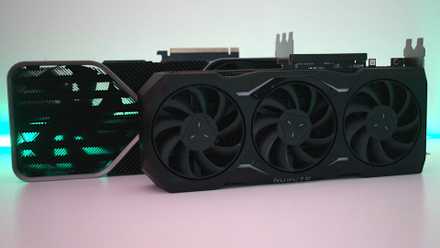
Nvidia and AMD are in their AI era, and gamers can do nothing but watch
The AI wave has turned into a tsunami for gamers, as Nvidia and AMD turn all their energies to data center GPUs
What about 2026?
2025 looks jam-packed with back-to-back launches for Nvidia, Intel, and AMD, but what's next on the horizon? Well, Nvidia is working on Windows on Arm SoCs that could be announced in late 2025, and ready for commercial release in early 2026. Intel is working on the Panther Lake successor, Nova Lake, for a 2026 launch. And while AMD is possibly accelerating Zen 6 to 2025, that could possibly push into 2026 as well.
What happens next year could impact a lot of these plans, so it'll be exciting to see the PC market change in the next few months. Whatever happens, we're on the verge of some truly important events in the PC hardware space — from desktop GPUs and CPUs, to laptop and handheld chips, and even data center products.