
Intel has taken a reputation beating in the last few generations thanks to the Raptor Lake 13th and 14th-gen microcode issues and Arrow Lake's lower gaming performance compared to AMD's X3D CPUs, and the combination of these factors has helped AMD claim up to 40% of the desktop CPU ecosystem.
Despite that, there are good reasons to keep your eye on Team Blue in the desktop space, even if Intel doesn't have the same gaming props as AMD this generation. Intel's Arrow Lake CPUs can perform better with more general tasks and editing workflows, and their focus on power efficiency is a step in the right direction, even if Arrow Lake is still incredibly power hungry in comparison. But there's one key benefit to the Arrow Lake platform that wasn't quite noticeable at launch: platform stability.
4 ways buying an Intel Core Ultra 200 CPU makes sense
Arrow Lake isn't all bad and here are some ways it may make more sense than AMD Ryzen 9000.
Intel vs AMD: the pros and cons
AMD's Ryzen X3D line is great for gaming, but it does have some drawbacks
While Intel's Core Ultra 200S (Arrow Lake) CPUs don't have the gaming performance of AMD's latest generation X3D, these chips do have incredible video editing performance, which makes them a better all-around platform. After all, unless you own multiple computers, your desktop is likely both a gaming battle-station and a work machine, or at least an editing platform for your gaming clips and travel photos.
And while AMD's Ryzen X3D CPUs are fantastic for gaming, AMD's 3D Cache technology doesn't provide an advantage when outside of gaming sessions. So, while you'll be getting 5-10% better frame rates in CPU-bound games with the Ryzen 9 9950X3D or Ryzen 7 9800X3D CPU compared to the Intel Core Ultra 9 285K or Core Ultra 7 265K, the advantage flips when you move to productivity and creative tasks, where Intel has an advantage.
Plus, that 5-10% FPS advantage for Ryzen X3D CPUs is at its peak when gaming at 1080p, which is where you tend to run into a CPU bottleneck on most modern games. At higher resolutions, a game's performance is typically driven by the GPU instead of the CPU, so that 3D cache boost is often less noticeable. That does depend on the individual games and your graphics settings. Some games are more CPU-heavy than others, and graphics settings have a major impact on overall performance at any resolution.
So while you will get better gaming performance with a Ryzen X3D CPU, how much impact the 3D cache has on your day-to-day desktop usage depends entirely on which games you play, what resolution and graphics settings you use, and how much time you spend on non-gaming tasks.

Intel Core Ultra 7 265K review: A slightly disappointing new lick of paint
Intel's all-new Core Ultra 7 is here and it's ... okay.
Intel platform stability
Team Blue's reliability is back
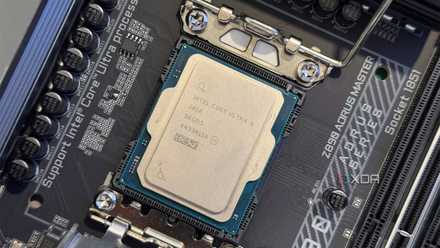
Arrow Lake isn't the most efficient processor, nor is it the best at gaming. It's a solid choice for a multipurpose desktop or workstation, thanks to its stronger editing performance. And that's not even touching Arrow Lake's overall platform stability, which is in direct contrast with the 13th and 14th-gen Raptor Lake systems.
It can be difficult to track or test how stable and reliable a CPU is without sustained usage. While a single CPU can be stress-tested, it's difficult to scale one CPU's stability to the platform level as a whole since platform reliability won't show up in a benchmark. To get a better picture of how Intel's Arrow Lake has held up over its first year of life, I spoke with Falcon Northwest's Kelt Reeves and Maingear's Wallace Santos to see how Arrow Lake has held up on systems built for some of the most demanding customers in the industry compared to the 13th and 14th generations from Intel.
According to Reeves, "an Intel CPU used to be the last thing you would suspect" when diagnosing a customer complaint with a PC. But that's been changing for the last 5–8 years, though Intel's reputation took a major dive after the Microcode issues plaguing the 13th and 14th generations in the last two years. "I have a different view of Raptor Lake instability," Reeves explained. "The first person to tell me about it was Tim Sweeney of Epic Games. I had been sending him some powerful multicore processors for the next version of Unreal Engine," and the old code that helps prop up Epic's Unreal Engine puts additional stress on single CPU threads. "It turns out it was those single-thread codes that were spiking the voltage," and this was a problem stemming from the motherboard as well as the CPU itself. "The 14900KS was really pushing how much power was sensible" on an ATX motherboard, and that led to "too much power from the motherboard jolting the CPU."
However, with Arrow Lake, Reeves says Falcon Northwest now recommends Intel CPUs, "if you need the most mission-critical systems. You won't notice the 10% performance difference [between Intel and AMD] without benchmarking." Reeves confirmed Falcon Northwest hasn't had any RMA issues with Intel's Arrow Lake platform on either desktop or laptop. "Core Ultra has been absolutely amazing," Reeves enthused. Intel is "back to the old days."
Maingear mostly managed to avoid the Raptor Lake microcode issues due to its custom overclocking process. According to Santos, "We caught some aggressive overclocking on motherboards on the 13th gen … we caught that early on," and the company reverted to Intel's recommended speeds for Raptor Lake systems, avoiding a lot of the RMA issues that plagued Intel's 13th and 14th generation CPUs. "With Arrow Lake, I think what Intel did was painful, but the right call."
"We don't have an Arrow Lake problem at all," Santos confirmed. "From an RMA standpoint, it's non-existent" on both desktop and laptop systems. "We’re back to the old Intel, where it's reliable."
Arrow Lake Refresh won't be a game-changer
But it is headed in the right direction
Intel is expected to refresh the Arrow Lake platform in early 2026 for the Intel Core Ultra 300S series of desktop and high-performance laptop CPUs. While we'd love to see some major changes in the platform, it is a refresh of the existing architecture and not a whole new chipset, so we may need to wait until Intel's Nova Lake releases in late 2026 or early 2027 for Team Blue to offer a more powerful gaming CPU.
But Arrow Lake does have reliability going for it. It may not be the flashiest sales point, but having a CPU you don't need to worry about is worth a slight hit to your framerate, especially if you use your desktop for more than just gaming.