
Intel completely revamped its 2024 laptop processor lineup with new Core and Core Ultra branding. The company has dropped the ‘Gen’ and ‘i’ naming scheme with Meteor Lake and Lunar Lake and made a number of improvements to get its offerings ready for AI and complex tasks. The next time you go out to purchase a top laptop, you may notice the new Intel Core branding. So, which Intel CPU is better for you? Let’s simplify the company’s 2024 mobile CPU lineup.
As expected, Intel has a number of SKUs for specific purposes. The lineup is primarily divided into two categories: Core and Core Ultra. The Core branding represents legacy architecture, while the Core Ultra is a premium offering with an NPU, next-generation GPU, better efficiency cores, and the latest architecture (Intel 4 manufacturing node for Core Ultra Series 1 and 3nm process by TSMC for the latest Core Ultra Series 2 CPUs).
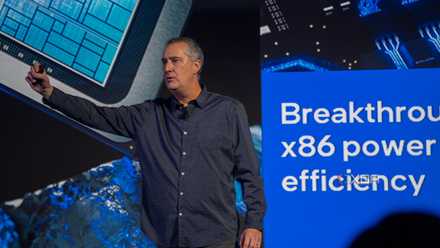
3 ways Intel Lunar Lake can actually beat Arm
I'm not saying it's going to happen, but if it were to happen, here's how Lunar Lake could beat Arm.
Intel Core Ultra Processors
The high-end chips for premium ultrabooks and laptops
Intel Core Ultra is a major overhaul with several new additions. Intel is calling it "the largest architectural shift in 40 years." Laptop manufacturers like Lenovo, Dell, HP, Asus, and Samsung flooded the CES 2024 and IFA 2024 with a number of models featuring Core Ultra processors. Before we break them down, let’s learn more about advancements in the Core Ultra Series 1 lineup that Intel introduced earlier this year.
As the name suggests, the Intel Core Ultra offers Intel's latest advancements and sits above the Core lineup. It features a new P-core architecture with a higher IPC (instructions per cycle) count and the usual E-cores. However, Intel is also packing new low-power (LP) E cores that seamlessly manage the lowest-intensity workloads in the background and extend your laptop's battery life. Overall, Intel is claiming 11% better performance than Apple's M3.
The integrated GPU also received a major boost with hardware-accelerated ray tracing, mesh shading, AV1 encoding and more. Thanks to eight Xe-cores, AI-based XeSS and DirectX Ultimate support, Intel is promising double the GPU performance of its predecessor, and is branding this GPU as Intel Arc, similar to its dedicated GPUs.
The Core Ultra processors come with an Intel AI Boost NPU. It handles AI tasks like background blur, picture framing, and more without consuming significant power. Although the use cases are limited for now, its role may become crucial once Microsoft releases an AI-focused "Windows 12" type of update.
We have U-series and H-series processors in the Core Ultra lineup. U-series CPUs have a base power of 9W and 15W, while the H-series represents 28W and 45W CPUs. Intel has removed the P-series branding that used to offer 28W CPUs. Since the H-series CPUs can reach up to 115W, manufacturers are free to clock it higher if their chassis allows.
It is quite evident that Intel Core Ultra U-series CPUs are aimed at light and thin devices. The H-series processors are more suited for light gaming and creative work on the go.
Intel Core Ultra Series 1 lineup
There are 11 Core Ultra SKUs, with the Core Ultra 9 185H leading the pack in terms of performance. It features 16 cores with six performance cores, eight efficiency cores, and two LP E-cores. It is worth noting that, despite having the same architecture, Intel Arc GPU is only available on Intel Core Ultra H-series processors. The Core Ultra U-series comes with integrated Intel Graphics. The low-powered U-series also has four Xe-cores, which is almost half compared to the H-series. Intel AI Boost NPU remains the same across the board.
It is quite evident that Intel Core Ultra U-series CPUs are aimed at light and thin devices. The H-series processors are more suited for light gaming and creative work on the go.
Intel Core U Processor Series 1
New low-power processors with an old architecture
Intel first announced the Core Ultra processors at the AI Everywhere event in mid-December. The company expanded the lineup with Core U-series and HX-series CPUs at CES 2024. Let’s talk about Intel’s entry-level offering.
The Intel Core U Processor Series 1 is aimed at entry-level light devices. While these processors carry Core branding, they are still Raptor Lake chips (meaning they are based on old architecture). These are low-powered chips targeted towards efficiency with decent capabilities. They have a base TDP of 15W and come in three SKUs.
Intel Core Series 1 lineup
Intel Core 7 150U leads the pack with 10 (2+8) processor cores and a max turbo frequency of 5.4 GHz for performance cores. Core 5 120U has the same number of cores with a slower clock speed of 5.0 GHz. The entry-level Core 3 100U has 6 (2+4) processor cores with a max turbo frequency of 4.7 GHz.
All three chips have a base power of 15W and a max turbo power of 55W. They support 96GB of memory, and the connectivity options include Thunderbolt 4, PCIe 4.0, Bluetooth 5.4, Wi-Fi 6E and Wi-Fi 7.
Intel Core Ultra Series 2
Intel's answer to the Qualcomm X series and AMD Ryzen AI 300 lineup is finally official at IFA 2024. Intel is claiming class-leading on-device AI performance with a capable NPU delivering 48 TOPS, a much better battery life with four LP E-cores (twice from the Ultra Series 1), and a robust gaming experience with a new Intel Arc 140V GPU. During the launch, Intel announced 9 SKUs of the Core Ultra 200V series processors. Core Ultra 5 and Core Ultra 7 have four models each, while the top-of-the-line Core Ultra 9 has one model for laptop manufacturers.
These 200V Lunar Lake CPUs are limited to up to 32GB of RAM only. The company plans to launch more CPUs under the S, U, and H series on different architectures. Let's decode the current Series 2 lineup.
- As you can see from the chart above, the Core Ultra 5 series has a lower max turbo frequency for performance, a less powerful Intel Arc 130V GPU, 40 NPU AI TOPS, and a minimum base power of 8W.
- Core Ultra 7 series takes things further with up to 48 NPU AI TOPS, a better Intel Arc 140V GPU with faster max frequency, and a max turbo frequency of up to 5GHz for performance cores.
- Intel Core Ultra 9 288V tops the list with 30W processor base power, faster GPU, and CPU.
- The first digit (2) indicates that the Lunar Lake is a part of the company's second-gen Core Ultra chips.
- The second digit (2,3,5,6,8) refers to the max turbo frequency of each processor (higher is better).
- With the third digit, 6 represents 16GB of in-built RAM, and 8 means 32GB of capacity.
Major manufacturers like Dell, HP, Lenovo, and Asus have already announced their flagship offerings with Lunar Lake processors at the IFA 2024.
Intel Core 14th Gen HX Processors
Just a refresh of last year's models
Finally, we have the newest 14th Gen HX-series mobile processors focused on gaming and content creation. They are a refresh of 13th Gen Raptor Lake models and use the same manufacturing process as before.
Since the Intel Core 14th Gen HX processors are a refresh of 13th Gen, they don't carry the same advancements as the Core Ultra lineup. These CPUs come with only Intel UHD Graphics, which is expected as manufacturers are bound to offer a discrete GPU from Nvidia. For example, the 2024 Razer Blade 16 OLED packs in Intel Core i9-149000HX and up to Nvidia GeForce RTX 4090 GPU.
14th Gen Intel Core HX-series lineup
The top-of-the-line Intel i9-14900HX has 24 cores divided between 8 performance and 16 efficiency cores. Intel promises 17% more performance than AMD Ryzen 7945X3D. The Core i7 lineup with i7-14700HX has four more efficiency cores compared to the 13th Gen Core i7 CPUs.
All five CPUs have a base power of 55W and a max turbo power of 157W. They support Thunderbolt 5 (with support for up to three displays), which is three times faster than Thunderbolt 4.
Pick up your next Intel-based laptop
Like the 14th Gen HX-series processors, the desktop CPUs are also a refresh of last year’s Raptor Lake and have marginal improvements in clock speeds and power efficiency. Although we are disappointed with the 14th Gen desktop CPUs, we remain optimistic for the next generation. Before you go out to pick your next laptop, make sure to learn the differences first, so that you can pick the most relevant model based on your needs and preferences.