
The Jellyfin versus Plex debate is an ongoing one, but it really boils down to one major factor: Jellyfin is entirely self-hosted, while Plex requires users to log into a third-party server in order to access their media.
While there are considerations to be made regarding how polished the experience is, Jellyfin is capable of everything Plex is, and I don't find myself missing any of the features the latter service offers. Two years ago, it could be argued that Plex had more functionality than Jellyfin, making Plex Pass almost worth paying for.
Now though? There's little that Plex is capable of that Jellyfin doesn't also offer, and often does better.
Core functionality is what counts
Extra features aren't what I'm here for
When I use Plex, Jellyfin, Emby, and other similar streaming apps, I'm looking for one thing: to host my own media server where I can store and access all of my content. Jellyfin does that without a problem, and best of all, it doesn't need the internet — just Wi-Fi. If my internet is down, I can still stream content. There are no third-party servers to rely on, so if Plex suffers an outage, DDOS attack, or some other obstacle, my content is still available.
I can create libraries of all of my content, customize the layout, and access all of it from my TV, laptop, or phone. It's not limited to just TV or movies, either; I can access music and even audiobooks. For consuming content, the only difference between Plex and Jellyfin is that Jellyfin is more reliable.

I finally ditched Plex for Jellyfin, and I’m never going back
I don't see the point in self-hosting Plex anymore
Jellyfin doesn't send off my data
There'sd zero telemetry
Jellyfin is free and open-source. I own all of my data, even when accessing it remotely. That's a far cry from Plex, where authentication servers are just part of everyday life. Plex also requires users to have a Plex Pass subscription to access most of its features (especially remote streaming). While that's only around $2 per month, that's money that could go toward something else. With Jellyfin, I don't have to pay anything to access its best features.
If you're seeking to create your own media server, you're probably trying to get out from under the corporate thumb of streaming services. Plex has been on a steady path towards becoming its own streaming service, complete with ample data collection. In that sense, Jellyfin captures the spirit of a self-hosted server much more than Plex.
Jellyfin isn't likely to pivot into something I hate
It won't go the route of Plex
Plex began as a popular media platform, but over the years, it has removed features or locked them behind paywalls. It started as a fork of XMBC, and while it had a few open-source components, the main application was never truly open-source. Now, after locking core functions behind subscription plans, the majority of Plex users are those who have a lifetime Plex Pass.
Because Jellyfin is a true open-source application, I don't have to worry about it falling to the same corporate pitfalls as Plex. If it begins to introduce features I dislike, I can simply walk away and still have access to all of my content. The community consistently releases free updates and add-ons that improve Jellyfin.
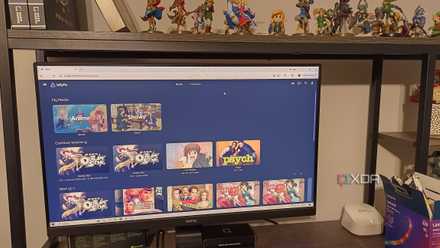
Jellyfin does hardware transcoding for free, and Plex wants $250 to match it
Jellyfin gives you free hardware transcoding, while Plex charges $250 for the same capability. The value gap keeps growing.
Plex has better app support on most major platforms
It's all about the apps
One of Jellyfin's biggest weaknesses is that it doesn't offer quite as smooth of an experience as Plex, especially on platforms like the Apple TV. There isn't a native Jellyfin app for Apple TV; instead, you have to use a third-party application like Swiftfin or Infuse. Plex also offers a slightly more polished interface, and a few additional features that Jellyfin doesn't have yet.
The more polished UI makes Plex a popular choice, and its simpler setup appeals to users who aren't quite as tech-savvy.
Ease of use isn't worth the downsides
I don't want to pay to access content I own
I've dabbled in Plex before, but I never had a fully-operational media server set up with it. If I had, Plex charging for remote access would have been a big issue for me. Jellyfin offers total control, more security, and an overall better experience than Plex, and it doesn't ask me to pay for it. Sure, at one time, Plex might have offered enough benefits to make it a contender — but that gap has narrowed significantly in the past few years, and I can't find any reason to deal with Plex's headaches over the ease of use that Jellyfin offers.
Setting up a Jellyfin media server has given me access to the content I want to watch, without forcing me to spend $15 or more each month to watch a show that will be interrupted with ads. I've canceled the majority of my streaming subscriptions, but I have access to just as much entertainment thanks to Jellyfin.
Jellyfin
- iOS compatible
- Yes
- Android compatible
- Yes
Jellyfin is one of the best Plex alternatives you can get, and that's thanks to its open-source nature and powerful set of features. There are apps for basically every platform and it's completely free to run your very own server.