
One of the longest-running series in gaming history, The Legend of Zelda is a story of heroic adventures, overwhelming odds, and gameplay refinement that finds new ways to reinvent itself with each iteration. With more than 40 games under the Zelda umbrella, we took a look at the main games in the series and have narrowed down the best of the best.
When it comes to ranking all the main games, even the worst of them is still pretty darn good, which makes this task even harder. The top ten games are borderline masterpieces and can almost be put in any order, while the rest are separated from those only by minor criticisms.
We did choose to pair Oracle of Seasons and Oracle of Ages since they were released simultaneously.

6 classic Nintendo accessories that show they just don't make them like they used to
Some of these may be worth digging out of your closet
19 Zelda 2: The Adventure of Link
An attempt at something new
- Release Date: 1987
- Platform: NES
Remember how we said there was no bad main Legend of Zelda game? Well, this is the closest to that, but it’s not necessarily its fault. At the time, there was only one other Zelda game before it, so many of the established qualities of the series that we have come to know and love weren’t there yet.
The Adventure of Link did some revolutionary things, like introducing some RPG elements into the game and bringing Shadow Link into the canon. Zelda 2 is an experiment in a time when game production was still relatively new and Nintendo Entertainment System games were in a period of experimentation, and while it took some risks that didn’t quite pan out, it did lay the groundwork for some other successful entries in the series.
18 Phantom Hourglass
A smaller adventure
- Release Date: 2007
- Platform: Nintendo DS
One of the few direct sequels in The Legend of Zelda series, Phantom Hourglass takes place a little bit after the events of Wind Waker. It takes place in the same world that has been flooded and washed away, though in a different region called the World of the Ocean King.
Phantom Hourglass doesn’t really do anything too different; there are no new items or tools, and the story is fairly straightforward, just shrunk down to fit the Nintendo DS. Because of this, parts of the game were a little uneven and slowed down by long bouts of sailing, even more so than its predecessor.
17 Spirit Tracks
Trade-in your boat for a train
- Release Date: 2009
- Platform: Nintendo DS
The third entry in the Wind Waker saga, Spirit Tracks, takes place quite some time after the events of the previous two games. Zelda is the great-great-granddaughter of Tetra, and Link becomes a Royal Engineer in the service of Zelda. As a sequel to the Phantom Hourglass, Spirit Tracks refines many of the features from the first game, like using the touchscreen to plot your course while keeping the feel of the game almost exactly the same. This game is also one of the first main Zelda games where you can play as the Princess.

7 reasons why a gaming handheld will be a better buy than the Switch 2
The Switch 2 has finally been announced, but don't get ahead of yourself. A gaming handheld might still end up as the better buy for these reasons.
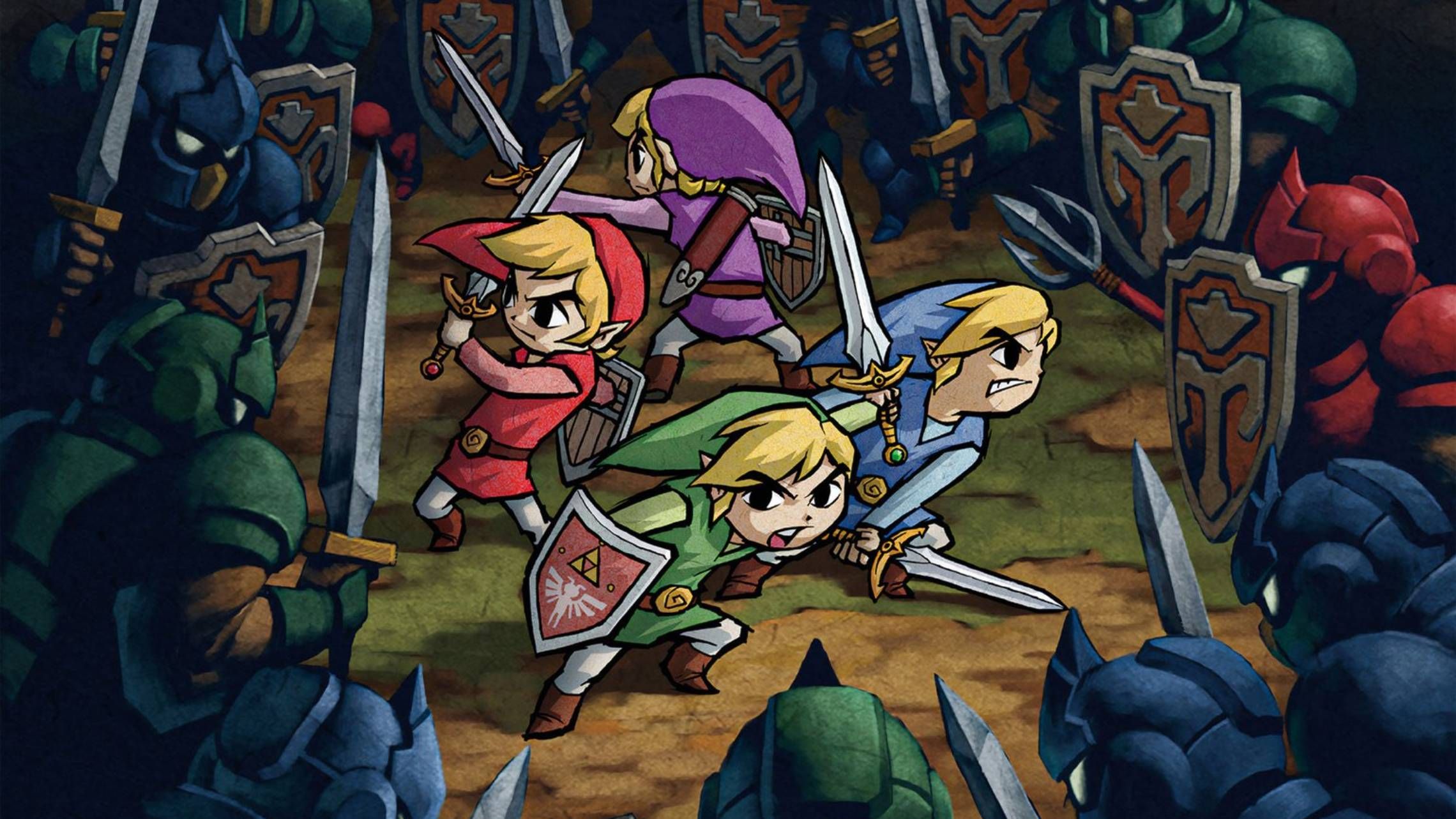
16 Four Swords / Four Swords Adventure
Better with friends👁 Official artwork from The Legend of Zelda: Four Swords Adventure
- Release Date: 2004
- Platform: Nintendo DS & GameCube
There is a certain appeal to being able to play a Zelda game with your friends since, for years, the series has been dedicated to a strictly single-player experience. Four Swords Adventure lets you live out this fantasy by taking three of your friends into Hyrule with you. There is a solo mode, but where’s the fun in that?
Originally, it was released as an extra for the Game Boy Advance port of A Link to the Past, the game was expanded and upgraded for the GameCube version, utilizing the Game Boy Advance link cable so each player has their own screen. It was innovative for the time, but nigh impossible to play now.
15 Tri Force Heroes
Triple the legend
- Release Date: 2015
- Platform: Nintendo 3DS
The last of the coop Zelda titles, Tri Force Heroes is a direct sequel to A Link Between Worlds, featuring the same incarnation of Link off on another adventure. Tri Force Heroes added many features, like Links being able to stack on top of each other to solve puzzles, and worked to give the game some cute gameplay elements with a costume system that gives you items and health bonuses.
Tri Force Heroes suffers from the main drawback that Four Swords Adventure does — it is way more fun to play with friends. The online matchmaking system helped this a bit, since you could find people to play with anywhere, but with the online service taken down for the Nintendo 3DS, you can only play from the cartridge now.

10 co-op games to play with your non-gamer partner
Getting your non-gamer partner into video games might be tough, but these co-op games can grease the wheels
14 Skyward Sword
A valiant attempt at something new
- Release Date: 2011
- Platform: Nintendo Wii & Switch
Everything about Skyward Sword has the potential to be great. From flying around on your Loftwing to creating the origin story of the Master Sword, so much love was clearly put into this game, it just doesn’t quite stick the landing.
Since it was remastered, Skyward Sword nixed the awkward motion controls that not even the Wii Motion Plus could fix. While this helped make the game a bit more playable, it can’t save the rather empty skies you fly through or the repetitive dungeons.

15 older games that are still worth playing
While these games are getting on in years, they're still worth experiencing
13 Oracle of Ages and Oracle of Seasons
Travel through time and weather
- Release Date: 2001
- Platform: Game Boy Color
There are a few Legend of Zelda games that are not made by Nintendo, and while some are infamously bad (looking at you, Zelda CD-i), the two Capcom got its hands on are excellent. The Oracle of Ages and Oracle of Seasons games are closely related but distinct, with one focusing on time-based puzzles and the other dedicated to seasonal puzzles.
These two games take a bit of inspiration from the Pokemon series. They were released simultaneously and encourage players to link up and share data between them. There is a certain amount of charm in these games that other Zelda entries can’t compete with, helping these games truly stand out.
12 Echoes Of Wisdom
Zelda takes center stage
- Release Date: 2024
- Platform: Nintendo Switch
Zelda’s first official stand-alone game, taking the series back to form a bit after Nintendo branched off with the open-world Breath of the Wild and Tears of the Kingdom games. Still, all the core gameplay mechanics are from classic Zelda games, though with a different look.
Instead of classic items like the hookshot, you can access echoes, a system that lets you copy enemies and use them for the same purpose. Combat takes a bit of a backburner in Echoes of Wisdom, as solving puzzles is the game's main focus. Because of that, though, the game can be a bit slow, as the combat is not nearly as thrilling as in other games.
11 The Minish Cap
One sassy hat
- Release Date: 2004
- Platform: Game Boy Advance
Another fantastic Zelda game from the Capcom team, The Minish Cap, takes Link on a much smaller adventure, but one no less grand than any other. After encountering a talking hat named Ezlo, he gains the power to shrink in size, exploring a version of Hyrule that players have never seen before.
The Minish Cap introduces players to a whole new world, one threatened by a dangerous new villain named Vaati. Despite being smaller than your typical Zelda adventure, this game has plenty of charm and is a tightly packed adventure that boils the Zelda formula down to perfection.
10 Twilight Princess
The story of the Twili
- Release Date: 2006
- Platform: Nintendo GameCube & Nintendo Wii
A curious entry in The Legend of Zelda series, Twilight Princess is a notably darker approach to the Zelda formula, with players experiencing defeat in a world that has already fallen to a villain’s evil plan. Most of the game has you exploring a fallen Hyrule as Wolf Link, after the world of Twilight is overlaid over the kingdom.
Twilight Princess introduces the fan-favorite Midna character as the Navi replacement, a snarkier character for sure, and one that adds a fair amount of depth to the game’s notoriously light dialog.