
Summary
- Snapdragon X Elite breathes new life into Windows laptops, but Intel's Lunar Lake needs to step up for true competition.
- Apple's MacBooks lead in battery life with Apple Silicon, but the landscape is changing with Qualcomm's Snapdragon X Elite.
- Intel's ambitious plans for Lunar Lake aim to challenge perceptions and bridge the efficiency gap between x86 and Arm processors.
Snapdragon X Elite has been a fantastic breath of fresh air for Windows laptops, and with AMD's Zen 5 looking to be pretty power efficient as well, it's an exciting time to be a Windows fan. However, there's a piece missing from the equation, and that's Intel. While Meteor Lake has been fine, it didn't exactly manage to achieve anything special. The claims that Intel is making around Lunar Lake and its efficiency when compared to Arm are truly exciting, though.
At the moment, Windows laptops are in an alright position, but I'd argue that Lunar Lake needs to live up to its promises in order for there to be a Windows laptop for everyone.

The Windows 11 2024 Update is now available — here's what's new and why it's not Windows 12
The Windows 11 2024 Update will bring a ton of changes to the operating system, including better support for Arm devices.
The biggest advantage of Mac is the battery life
All-day battery life on Apple Silicon
While Apple's hardware has always been fantastic, the particularly special aspect of MacBooks in recent years has been the impeccable battery life. Thanks to Apple Silicon, it's fairly standard to have a MacBook that can last all day on a single charge and without the fans needing to spin up at all. I've been using an M1 MacBook Pro for nearly two years, and it's still going strong.
In contrast, Windows laptops have been in a position for a long time now where the battery life is nowhere close to what a MacBook can offer, while also requiring active cooling at nearly all times. We're starting to see this change in recent years, but it's an uphill battle to shake off the perception that Windows laptops are clunky and inefficient, especially given how true that was for a long time.
To that end, Snapdragon X Elite laptops have impressive battery life that's more than capable of competing with Apple, but battery life isn't all that you need.
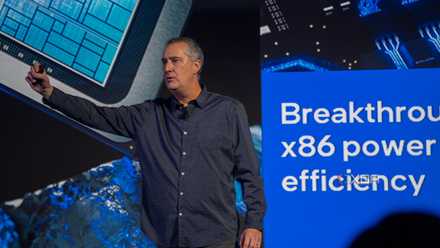
Is Arm actually more efficient than x86?
Intel wants to "bust the myth" that Arm is more efficient than x86, but it's going to be an uphill battle to get there.
Arm isn't as good as x86 for some things
Not all software supports x86
One of the biggest advantages of the x86 architecture is its high performance, but x84_64 has also been an industry standard for just over two decades at this point. A significant amount of software is built for it, which is where Microsoft's Prism comes in. It's just like Apple's Rosetta, which can convert x86 instructions into Arm instructions so that software built for x86 can run on Arm, but it's not perfect. There are several applications that simply won't run in it, and even then, the additional overhead can render those programs slow.
Because of those limitations, and the increased uptake in machines using Arm, companies are starting to build their own applications for Arm machines. Chrome is finally available for Windows on Arm, Adobe's suite of applications is slowly expanding too, and there are a ton of other applications being built for Windows on Arm that make it so end-users can use their favorite applications without needing to worry about whether something will run or not.
However, it's clear that for some people, native x86 will always be important, especially for gamers. Most anti-cheat software won't run on Windows on Arm, and there are several games that can't be played on the Snapdragon X Elite either. While Strix Point APUs are looking like a formidable contender when it comes to efficiency, Zen 5 doesn't look as efficient as Arm. With Intel promising that Lunar Lake will "bust the myth" that Arm is more efficient, it might be possible in the future to get the best of both worlds and have incredible efficiency and performance at the same time.

Intel promises that Lunar Lake will "bust the myth" that Arm is more efficient than x86
Lunar Lake is all about AI and efficiency
Lunar Lake has an uphill battle
But if it succeeds, everyone wins
If Lunar Lake manages to "bust the myth" as Intel puts it, then everyone wins. A truly efficient x86 SoC capable of going toe-to-toe with Arm is something that could breathe new life into a company that consistently seems to be on the back foot over the last couple of years. Intel needs a big win, and I'm incredibly hopeful that the company can prove the naysayers wrong.
On top of that, it manages to plug the gap where efficient x86 hardware is needed. AMD can serve that purpose, but a true competitor can also push both companies to improve and get better. If it's only AMD vs Qualcomm, then it's x86 vs Arm, and it's not a true competition as both sets of chips have a different end-user in a lot of instances. Intel can bridge that gap and compete with everyone, which would push both camps to improve to compete with Intel.
I'm looking forward to what Intel can do with Lunar Lake, but we're quite a while away from getting our first true hands-on with those chips in a consumer laptop. Early figures are promising, but something being promising isn't the same as what it can do in practice. Intel has been ambitious in its goals over the last couple of years, and the fruit of those ambitions might well be right around the corner.

Intel's process roadmap to 2025: Intel 7, 4, 3, 20A, and 18A explained
Intel has outlined its new processes for the next few years, but what does it all mean?