
Pre-owned PC hardware has always been the savior for both budget builders and those who want to maximize value for money even when buying high-end components. In today's GPU market, however, going pre-owned isn't just an optional way to build a PC; it has almost become a necessity. Saving money is just a side effect of buying a used GPU — most people don't even have the luxury of seeing GPUs in stock. And when they find one available, it's usually marked up by several times the MSRP.
These dark times aren't just affecting high-end GPUs; even mid-range cards are selling for high-end prices. Whether it's the RTX 5070 or RX 9070 XT, $1,000 listings aren't uncommon. Buying a used GPU, then, is proving to be the lever needed to kickstart the GPU industry back into high gear.

3 reasons why right now is the worst time to upgrade your GPU
Waiting just a little while longer will pay dividends for your future GPU upgrade
5 Paper launches mean there are no new GPUs
Buying pre-owned is the only option
You might remember the devastating GPU crisis of the pandemic era, where the silicon shortage and supply chain woes gave rise to "luxury GPUs". This was when manufacturers realized customers were ready to pay virtually anything for a new graphics card. If you don't recall it, you can see it happening around you right now. Nvidia's RTX 50 series launch existed only on reviews and benchmarks; the average user wasn't actually buying any new cards. That didn't stop RTX 50 GPUs from cropping up on eBay with scalper prices, though. Whatever the supply, scalping is always in demand. The same thing is happening with AMD's RX 9000 GPUs now.
These paper launches will only get more common as supply remains constrained, demand keeps skyrocketing, and the priorities shift toward producing AI chips for higher profits. What, then, should the average Joe do in the face of overpriced GPUs? Buy a used GPU, I say. Unless you're content with older-gen budget models available to buy new, buying pre-owned is the only option. While the used market is also currently affected by overpriced listings, this won't go on for long. If you can wait, you can find high-end, previous-generation models for the right prices on eBay, Facebook Marketplace, and other platforms.
Nvidia RTX 5070 Founder's Edition
- Brand
- Nvidia
- Cooling Method
- Dual-fan
- Interface
- PCIe 5.0 x16
- Memory
- 12GB GDDR7
- Power
- 250W
- CUDA Cores
- 6,144
The RTX 5070 is the mid-range offering on Nvidia's RTX 50 series, offering around 20% more performance than the RTX 4070. Finding one in stock, however, is the biggest challenge right now.
ASRock Radeon RX 9070 Steel Legend
- Memory Clock Speed
- 2518 MHz
- Architecture
- RDNA 4
- Process
- 5 nm
- Shader Units
- 128
- Ray Accelerators/Cores
- 56
- AI Accelerators/Cores
- 112
AMD's RX 9070 is an affordable 4K graphics card, provided you can find one in stock. It performs faster than the RTX 5070 in many cases, and its ray tracing and FSR performance are more than impressive.
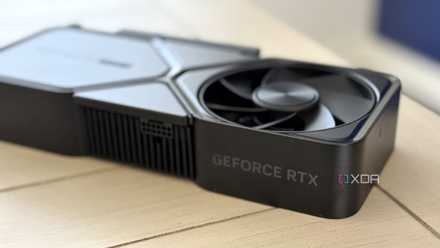
7 older GPUs to buy instead of the RTX 50 series
The latest Nvidia GPUs might be underwhelming, so here are 7 current and previous-gen GPUs you should consider instead
4 FPS per dollar can be incredible for used GPUs
Poor generational gains are only helping
It's not news that value is something in short supply when buying a new graphics card. Prices have been rising rapidly every generation, and the price-to-performance ratio keeps worsening the more expensive GPU you buy. Hoping for prices to come down might be fanciful, so it's better to consider a used GPU. Instead of paying over $1,000 for an RTX 5070, you can definitely make a case for an RTX 3080 for around $200, offering only around 10-15% less performance. The newer RTX 4070 is just as fast as the RTX 3080, but even on the used market, it isn't selling below $600.
If you are patient, you can easily find a high-end GPU from one or two generations ago within warranty that goes head-to-head with a modern mid-range card, and that too for a lot less money. The middling gen-on-gen gains on the latest cards further help the case for buying a used GPU. The FPS per dollar of a decently powerful older-gen card like the RX 6800 XT or RTX 3080 Ti is much more impressive than what you can get with one of the latest models. Of course, this story falls apart the moment you find an RX 9070 in stock at MSRP, but how many of us are going to be that lucky any time soon?
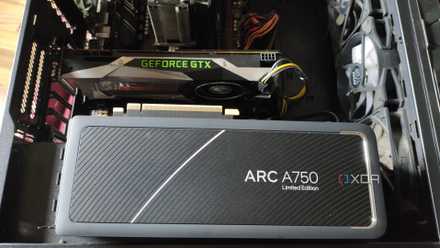
5 reasons why your next GPU should be pre-owned
Buying used is an excellent way to breathe life into your build without breaking the bank
3 You probably don't need the latest and greatest
1440p or 4K, older GPUs can still bring it
Another reason to skip the latest-generation GPUs is to reassess your gaming needs. You'll probably realize you don't need all that performance at all. Let's say you're a 1440p gamer playing a mix of esports and single-player narrative titles. Even if you want all the bells and whistles, such as ray tracing, upscaling, and frame generation, you don't need anything more powerful than the RX 6800 or RTX 4070. For the 4K gamers out there, you can pick a pre-owned RX 7900 XT and call it a day.
It's always fun to benchmark every new product against the older ones, and marvel at how far we've come, but most gamers can still have a great gaming experience with older-gen cards. A new GPU with slightly better performance, 3x or 4x frame generation instead of 2x, and slightly less noticeable artifacts doesn't make everything that came before worthless. Sure, there are benefits to buying a newer model, such as more longevity and a longer warranty period, but you need to put that in perspective when comparing the price against a pre-owned card.
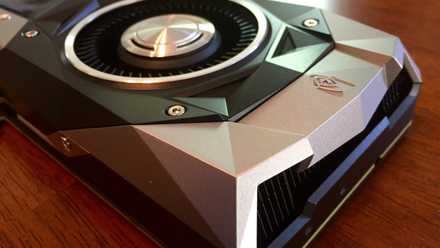
10 older GPUs that are still going strong in 2024
It's a tough world out there for old graphics cards, but these 10 champs are still kicking it
2 More VRAM for less money
Grab the deal while you can
In 2025, spending $500+ and still getting shortchanged on VRAM is unacceptable. This is another reason to stay away from the likes of the RTX 5070, which, as a 12GB VRAM card, is baffling, to say the least. What makes matters worse is that you aren't really paying $549 for the RTX 5070, but a much higher price in reality. While the 16GB RX 9070 or RX 9070 XT are better picks, you can't find them at the right price either. Fortunately, browsing the pre-owned GPU market will reveal many options with sufficient VRAM for 1440p and 4K gaming.
It's unlikely you'll get the RTX 4080 Super or RTX 4080 for a good price any time soon, but they can be great options, considering they feature 16GB of VRAM and are virtually as fast as the RTX 5080 in raw performance. AMD GPUs are more exciting in the VRAM department, since you have the RX 7900 XT and RX 7900 XTX with 20GB and 24GB of VRAM, respectively. Even the mid-range options, such as the RX 7800 XT and RX 6800 XT, have 16GB of VRAM, comfortably beating the RTX 5070. The RX 7800 XT isn't too far from the RTX 5070 in rasterization performance either.

6 reasons to pick Intel or AMD for your next GPU instead of Nvidia's RTX 50 series
Nvidia's RTX 50 series might be hot right now, but there are enough reasons to consider an AMD and Intel GPU
1 Pre-owned doesn't mean pre-abused
Don't be scared of used GPUs
I get it; buying a pre-owned GPU can conjure up scenes of unfathomable workloads like crypto mining, scaring you away from perfectly good deals. While mining GPUs can undergo degradation, the crypto boom has been dead for a long time. You're probably not buying a used GPU that was used for mining. And even if you're after a particularly older unit, you can test it for wear and tear if the seller allows it. Many GPUs that were mined on work perfectly well for gaming and any other workload, so it isn't all doom and gloom as you might believe.
Another concern when buying used might be 24x7-overclocked GPUs. If you're buying something that's in warranty, you can go ahead with overclocked GPUs. Plus, buyer protection policies on sites like eBay and Jawa will protect your purchase if you don't get what's advertised by the seller. Often, pre-owned GPUs are perfectly fine, since they've been used by gamers just like you, often without being overclocked or used for mining or other workloads. You just need to establish trust with the seller, run a few stress tests, and try to get a card that's in warranty.

5 ways to protect yourself before buying used PC parts
Buying used PC products seems scary for a newcomer. But you can minimize your risk by following these tips.
It's time to pay attention to the used GPU market
The pre-owned GPU market isn't just a remedy for the existing woes of PC gamers. It's a sure-shot way of marrying high-end performance with mid-range or even budget pricing. What you lose in features or longevity, you gain back in the FPS per dollar. Many users can consider used GPUs as a stop gap while they wait for the next generation of GPUs to offer real value.