
When we lived in our last apartment, our home network was at various levels of brokenness, even though it still worked overall. Many of the issues were things that a slower ISP plan glossed over, like existing wiring not being able to handle the speeds, and I promised I wouldn't let the same issues crop up in our new home.
I've technically kept that promise now that we're in our first house, but it still feels like a failure on my part because the temporary networking setup that was cobbled together in a hurry when the ISP installer was on the way is still very much in use. It might not be the optimal use of my house's wiring and the equipment I have to hand, but it also hasn't broken, and with both of us working from home, that's important.
Possibly, it's the most important consideration, because having reliable internet and Wi-Fi is essential to how we live, which makes planning any changes to the network trickier. It's time for me to change that, but first, I want to talk about how my home network became the most permanent of temporary fixes.
My home network worked fine until I discovered how broken it was
Out of sight, out of mind (until I upgraded my ISP plan)
The road to (networking) hell is paved with my good intentions
A cautionary tale
Ah, I had so many plans before we moved, so many that fell by the wayside in the chaos of cardboard packing boxes and flat-pack furniture. So many things that were set up temporarily for testing but not installed permanently, because there was always something else to do.
Even the cable drop for the main router comes out in the middle of my office wall, where the builders clearly planned it as a cable TV outlet. When the ISP came to install our internet before we moved into the house, the installer asked if I wanted it anywhere else, but I had plans to relocate things anyway, and here begins the first of the list of temporary fixes.
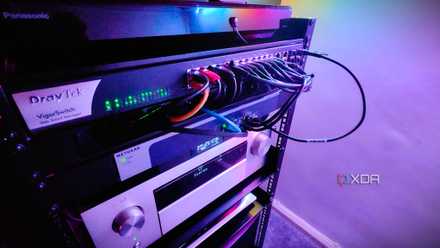
Then, to protect the router from being bumped and bashed, since the office was also a playroom, a shelving unit was placed around the wall jack, further cementing the temporary situation. That shelving unit also holds my home lab equipment, my NAS, and the mini PC running a few self-hosted network services, so all the network gear is close together, and now it's more of a permanent installation that would take significant time to take apart and rebuild.

6 reasons hosting your own DNS server is the best network upgrade you can make
Adding a DNS server to your home network can have a whole host of benefits
There is always something more important to fix
Plus, if it isn't technically broken, I'm not trying to fix it
Being a homeowner, small business owner, and a parent, there are never enough hours in the day to complete everything on the to-do list. Everything gets sorted by priority and impact, and things like relocating the wall jack for the router to the corner of the office to get it out of the way are sadly of low priority.
As are any of my other plans to relocate wire runs to put Wi-Fi access points on the ceiling on each floor, or to replace the Wi-Fi video doorbell with a wired PoE one, and pull some more cable to places like my desk, so I can get rid of the cables currently snaking their way across the floor.
But I haven't stopped working towards those goals. I've been fitting in practice at terminating cables and learning more networking skills, among other tasks, such as measuring cable runs and identifying where the existing conduits go between. And I'm feeling ready to tackle the larger project of replacing the temporary fix that's been in place for 4 years now.
This only works for so long
Temporary fixes come in all shapes and sizes, and the mess of cables left by the builders outside is a prime example. I haven't pulled them through to the garage yet, because the only one of the bundle that's used has already been fed back through the wall by the ISP installer. The only thing I've fixed so far is killing off the climbing vine that was taking over the electricity cabinet and the brickwork, which was pointed out to me as likely poison ivy and needing removal.
Now the foliage is gone, I'll be fixing the cable bundle soon and investigating which room each cable goes to. Then they're all being put on a patch panel and labeled up, ready for use with the incoming network appliances I've got planned. Should I have pulled everything inside when we first moved in? Probably, but with so many other things going on, it got pushed back. It'll be a higher priority the next time we move.

This is the $20 networking upgrade that fixed everything in my house
Don't forget the most important part of your LAN.
My temporary network solution is about to be replaced
Anyway, after four years of living in this house, it's time to stop feeling so transitory. It's clear we're not moving any time soon, so I can finish the improvements to the home network. It's still a little cold outside for terminating twisted-pair, but as soon as the ice thaws a little, I'll be in the garage, finally sorting out the messy cables the builders left, and getting everything ready for a new network stack to be set up.
I'm quite looking forward to the process, but I'm also aware that my network technically works right now, and that most of the improvements I plan will be adding reliability and redundancy, which (if done right) won't necessarily be noticed by the household. But I'll know, and it'll also give me a wider range of devices for home lab experimentation, which will keep me busy and out of trouble.