
Apple’s macOS may be the preferred operating system for many casual and professional users, but the situation was radically different a few decades ago. By the mid-1980s, cheaper IBM clones running the Windows GUI started growing in popularity and began outselling Apple’s Macintosh-based systems. The situation became so dire that Apple was on the brink of declaring bankruptcy in the 1990s.
But what helped Apple rise from the ashes was NeXTSTEP, an OS that, in a weird turn of events, brought Steve Jobs back to Apple. The roots of this development were sown 35 years ago, when Jobs released the NeXT Computer on Oct. 12, 1988.
NeXT, Inc. spent three years working on its first computer👁 NeXT cube computer on display.
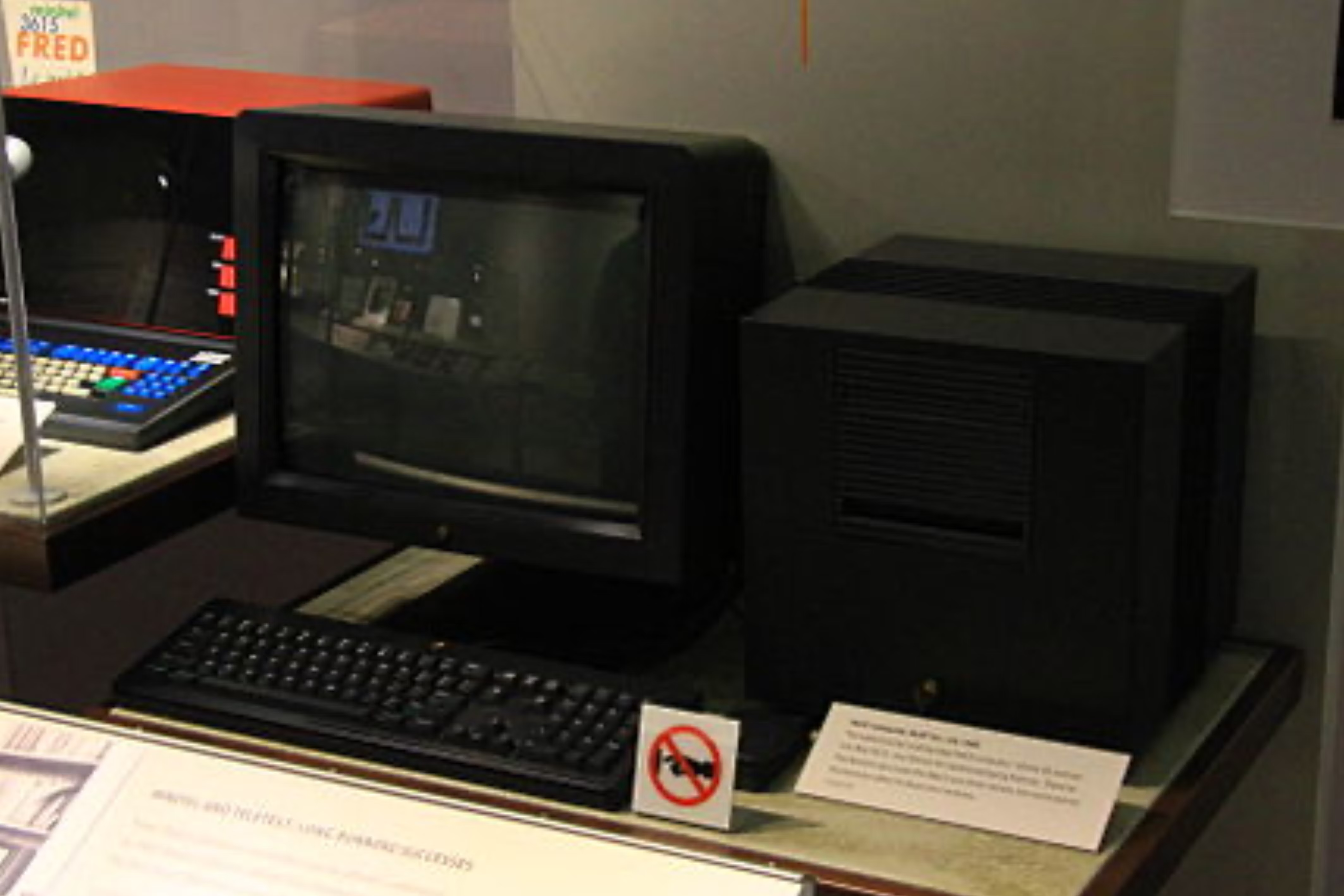
In October 1996, Steve Jobs resigned from Apple after months of a power struggle with the company’s then-CEO, John Sculley. Shortly after his resignation from Apple, Jobs founded a new startup called NeXT, Inc., and many original members of Apple followed him to his new company.
For the next two years, Jobs mostly stayed under the radar, and NeXT, Inc. began developing both hardware and software for its first-ever product. By 1988, it was time for Jobs to make his comeback to the tech industry with the release of his new brainchild.
On Oct. 12, 1988, NeXT, Inc held the invite-only NeXT Introduction event, where Jobs finally unveiled the first iteration of the NeXT Computer, marking his triumphant return to the tech industry.
The NeXT Computer was a spectacle to behold despite its $6,500 price tag 👁 An image of the NEXT Cube
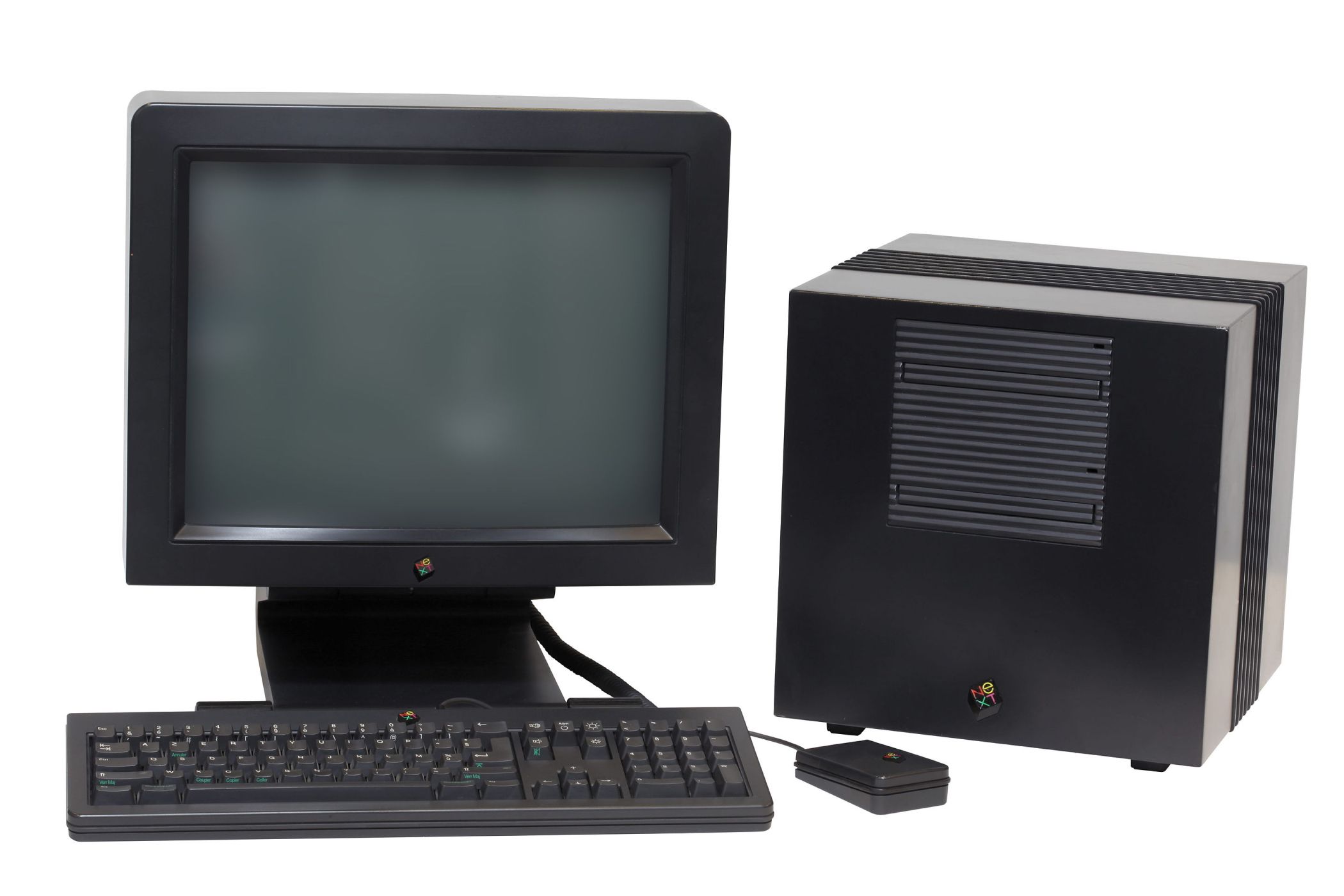
Just like Job’s other innovations, the NeXT Computer pioneered several features that changed personal computing. Meant to serve as a rival to IBM Clones and Apple’s Macintosh, the NeXT Computer was a 30 x 30 x 30cm cube powered by a fast Motorola 68030 processor, though it was priced at a whopping $6,500. It also came with 8MiB of RAM, but what really set it apart from its competitors was the 256MB magneto-optical storage that shipped with the sleek cube.
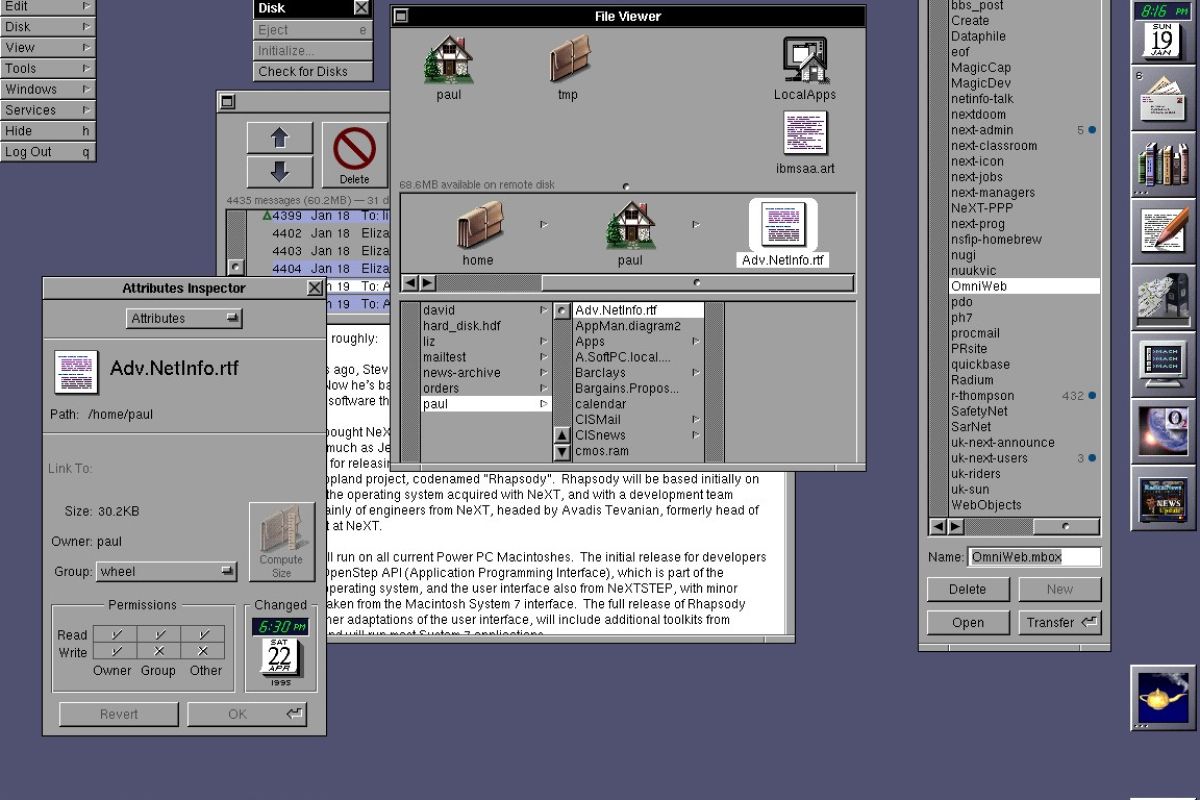
Thanks to its optical drive, the NeXT Computer could handle vast amounts of data in an era when floppy disks were the norm. NeXT’s revolutionary optical drive also laid the groundwork for the future proliferation of CD-ROMs, DVDs, and Blu-ray discs. In addition to its built-in Ethernet port, the desktop was powered by NeXTSTEP, a UNIX-based operating system that ran on the Mach kernel.
NeXT also developed the Display PostScript graphics engine in partnership with Adobe, and this feature improved the resolution of the text and graphics in NeXTSTEP without impacting the CPU. The rich graphical UI on NeXTSTEP acted as a breath of fresh air compared to the aging desktop environment on the Mac.
While most computers in the NeXT lineup turned out to be commercially unsuccessful, NeXT, Inc. continued to build upon the hardware and (more importantly) the OS of the original NeXT Computer in their future desktops. Moreover, the revolutionary object-oriented development environment of the NeXTSTEP operating system made it relatively easy to develop applications for these systems. As a result, several software innovations, including WorldWideWeb, the world’s first web browser, the genre-defining Doom games, and the first-ever app store, Electronic AppWrapper, were created for NeXT desktops.
NeXTSTEP single-handedly brought Steve Jobs back to Apple👁 A screenshot of the NeXTSTEP OS
Meanwhile, Apple was still suffering from poor sales of its Macintosh devices, and in a last-ditch effort, struck a $429M deal to acquire NeXT in December 1996. This takeover brought Steve Jobs back to the company he helped found, where he’d continue to develop new innovations like the iPhone and iPod.
Acquiring NeXT also enabled Apple to incorporate the modern features of NeXTSTEP into macOS, and the company spent the next couple of years overhauling the architecture and design of the dated macOS. By 2001, the first official version of the MAC OS X went live. While it lacked many basic features and apps, the redesigned layout received a positive response from the Apple community. Over time MAC OS X became the base for the macOS that we know and love today.
NeXT Inc. may not have made a lot of money from the NeXT Computer, but the cube-shaped desktop ushered PCs into a new era by pioneering new features that have become an integral part of our daily lives today.