
Over the years, I've bought six Synology NAS boxes and recommended perhaps 60 more to friends and family members. Suffice it to say that I'm a fan. And the biggest reason for that has always been DSM. Synology's NAS operating system is polished, astonishingly stable, and easy to get started with. If someone wants a first NAS, or even a NAS that just works without too much figuring out, a Synology is usually the best bet.
But honestly, I've got to say, DSM is starting to get pretty rusty. It's not about the interface or that performance isn't quite what it used to be. Even though the UI hasn't had a major overhaul, I have no serious complaints about it. It's more to do with the app ecosystem and how it appears to be stuck in time. Some of my favorites have either been replaced or just outright removed, while others haven't been updated in years. It's forced me to look at Docker-based alternatives, and if I'm going down that route anyway, it's definitely got me reconsidering the premium I pay for Synology hardware.
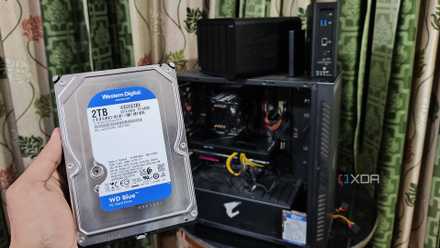
I've stopped recommending Synology to friends, and here's what I tell them to use instead
There are plenty of other options for NAS enthusiasts besides Synology
Synology's built-in ecosystem isn't what it used to be
From a cohesive ecosystem to languishing apps
When I set up my first Synology over a decade ago, the built-in app ecosystem was a big part of the appeal. This is before self-hosting was as prolific as it is today, and Synology offered an array of apps that felt cohesive. Between photo backups, media streaming, notes, file syncing, and more, it was all taken care of and easy to use. That, unfortunately, is no longer the case.
Photo backups have always been a huge incentive to invest in a NAS, and Synology's Photo Station solution used to be the go-to. The app was a core part of the Synology experience, except it's not really a thing anymore. It's been replaced by Synology Photos. Sounds like the same thing? Not quite. Even after years of development, the feature set is just not the same, and workflows too have had to be adapted.
It's a similar story with Video Station. Before Plex was the default, I'd rely on Video Station to get my anime fix. It worked well enough and had a few tricks up its sleeve, guaranteeing compatibility with older, not-so-smart TVs. However, as of 2026, it's been deprecated altogether. If you built your set-up around it, good luck. Sure, Plex or Jellyfin are better, but Video Station offered an excellent backup. Moreover, it's just odd for a NAS not to ship with a default, built-in video streaming solution.
Even the apps that have stuck around aren't doing a very good job. Note Station is a good example of an app that has barely evolved. Sure, it's functional, it syncs, and you can make it your, ahem, note station if you choose, but is it competent? Not at all. Modern note-taking tools have evolved in capabilities, while Note Station hasn't received even a security update in years, last I checked.
What stands out amidst this chaos is the direction, or lack of it. DSM was my go-to recommendation for the complete ecosystem you get with the built-in apps. You could use third-party apps, but there was no real need to. Today, third-party apps are doing the heavy lifting, and they've changed how I use my NAS.
Moving away from Synology's apps
Docker has become the real platform
At some point over the last few years, I stopped relying on Synology's apps altogether. First up, I swapped out Video Station for Plex. It's been my video streaming platform of choice for years. Along the way, I swapped out Photo Station for Immich. Joplin became a good replacement for Note Station. Each app solved the same problems as Synology's apps, but did it better. Now, most of what I run lives in Docker.
And that basically changed the role of DSM for me. It's no longer the center of my user experience. Instead, it just offers a foundational layer on top of which I run Docker. DSM is just the interface by which I manage storage, permissions, and basic system settings. For the most part, I don't even need to log into it all that often. Getting to that point in your software journey reveals a few more limitations of the Synology ecosystem, unfortunately.
Synology's hardware has always been conservative. It made sense when DSM and its apps were the main draw, and you didn't mind the less-than-perfect hardware. The bulk of what you were paying was for the software experience and ease of use. But if you're running Docker containers for everything, the value equation gets a lot more suspect. There's no denying that you can get more hardware for the money.
Switching to Docker also gives you way more flexibility. Apps are updated much more frequently and are designed to integrate well with other services. Moreover, you have options. If a certain note-taking app doesn't fit your workflow, you can try out a different one. You're not stuck waiting for Synology to figure it out. That freedom doesn't just make it harder; it makes it impossible to go back to Synology's built-in apps. And then there's the point of longevity. Given how little Synology's apps get updated, I have very little faith in the long-term support for the apps. Meanwhile, even if one open-source app gets deprecated, almost all of them use open formats and standardized databases, making it easy to export your data.
DSM is still a solid choice, but it's no longer the reason to stay
Look, DSM isn't bad. It has decent performance, looks good, and is stable, which already gives it a leg up over many of the alternatives. If anyone wants a NAS that works out of the box, well, you won't find me complaining about a Synology. What I do find complaint-worthy, though, is Synology's complacency. For lack of updates to the app ecosystem, DSM has become just the base layer of the experience. And in an app and service-forward world, that's not going to be enough of a reason to stick to Synology in the long run.
Synology DS925+
- CPU
- AMD Ryzen V1500B
- Memory
- 4 GB DDR4 ECC SODIMM
- Drive Bays
- 4 x HDD, 2 x NVMe
- Expansion
- 1 x USB Type C
The Synology DS925 Plus is a compact and efficient 4 bay NAS built for home users and small businesses. It delivers excellent performance, runs DSM 7.2 with a polished and feature rich interface, offers great mobile app support, and works well as a media server. However, it is limited by its strict drive compatibility requirements and forced automatic updates on newer models.