
Even if you don't follow tech news, you would have noticed the prices of consumer memory, storage, and graphics cards shooting up by now. The DRAM shortage, thanks to big AI, has affected RAM, SSD, and GPU prices, effectively ending PC building plans for most of us. However, not every PC component is overpriced right now. In fact, some parts have never been more attractive. You might not be able to build a new PC in 2026, but you can surely consider a new CPU, OLED monitor, or cooler for your existing build. These upgrades can make a huge difference in the right system. Whatever money you have saved for a new PC, you can spend a chunk of that on one (or more) of these affordable upgrades without any regrets.

5 annoying upgrade habits I wish PC gamers would ditch in 2026
The best thing about upgrading is you can just choose not to
6-core and 8-core CPUs
That's all most people need
Consumer CPUs can cost upwards of $600 at the high-end, but mainstream chips have never been more enticing. Today, you don't even need to spend $200 for a Ryzen 5 9600X, a 6-core, 12-thread processor. It's perfect for a modern gaming PC, and is all you really need unless you have a top-tier GPU. You can save even more by opting for the previous-gen Ryzen 5 7600X, which retails for around $170, and happens to be cheaper than the Ryzen 5 7600. You'll get virtually the same gaming performance as the Ryzen 5 9600X and Ryzen 7 9700X. For 8-core enthusiasts, the Ryzen 7 7700X for around $250 (cheaper than the Ryzen 7 7700).
Gaming in 2026 still doesn't benefit from more than 6 or so cores, hence you're not losing out on peak performance. AMD's more expensive Ryzen X3D CPUs can push framerates even higher, but these need to be paired with at least a mid-range GPU, else they'll spit out the same FPS as a Ryzen 5 7600X. Serious productivity users can always invest in, say, the Ryzen 9 9950X or Core Ultra 9 285K for around $500–$600, but those are hardly considered "affordable" prices.
AMD Ryzen 5 7600X
- Brand
- AMD
- CPU Model
- 5 7600X
- Cores
- 6
- Threads
- 12
- Architecture
- Zen 4
- Process
- TSMC 5nm
AMD's new entry-level chip is actually its best for gaming with incredible single-core performance and an attractive price tag to boot.
Power supplies (PCIe 5.1 & ATX 3.1)
The newest PSUs aren't expensive anymore
Power supplies with ATX 3.0 and PCIe 5.0 certification were relatively expensive when they first came out, but today, you can find them at great prices. For instance, you can easily find the MSI MAG A850GL, a fully modular ATX 3.1 and PCIe 5.1 PSU for around $110–$120 these days. You can also consider others, such as the Thermaltake Toughpower GT 850W for around $85. These modern PSUs bring the newer 12V-2x6 connector for Nvidia graphics cards, enhanced transient power handling, and better low-load retention.
They aren't that much more expensive than older-gen PSUs, considering the features and protection you're getting in return. These PSUs will also prevent power supply to the GPU until the cable is fully seated, eliminating melting risks. If you're upgrading your PSU to accommodate some power-hungry components, it's worth buying the latest standard to safeguard your investment.
MSI MAG A850GL
The MSI MAG A850GL is one of the latest ATX 3.0 power supplies with 850W of 80+ Gold power efficiency, perfect for future-proofing your gaming PC.

What are PSU Ratings? 80 Plus and Cybenetics explained
When choosing a new PSU for your PC, it is crucial to make sure that it has a proper rating.
CPU air coolers
Who needs liquid cooling?
Liquid coolers might be necessary to tame high-end, power-guzzling chips, but you don't need them for most CPUs. Budget air coolers are fully capable of cooling 6-core and 8-core chips that most consumers actually buy. Coolers like the Thermalright Phantom Spirit can handle loads of up to 200W, meaning you could install even some higher-end CPUs. These coolers cost less than $40, but deliver incredible performance and noise levels, beating many budget AIOs. They can be an excellent replacement for your stock cooler. You can also consider several be quiet! air coolers for around $50–$65. Although air coolers from Noctua with better noise levels can cost even more, most users can do without them. When a $40 cooler is giving you all the performance you need for your mainstream processor, why spend more?
Thermalright Phantom Spirit 120 SE
Thermalright's Phantom Spirit 120 SE is a bigger version of its acclaimed Peerless Assassin 120 cooler. It has seven heatpipes compared to the six on the Peerless Assassin and is a bit bigger, which means better cooling capacity.

Switching from an air cooler to an AIO wasn't the upgrade I expected
The upgrade from an air cooler to an AIO liquid cooler was a hollow one
OLED gaming monitors
It's finally time for OLED to shine
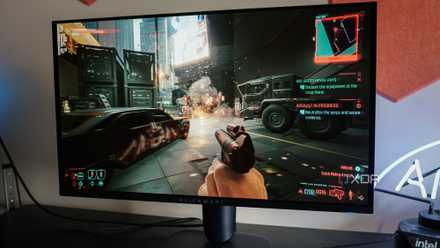
OLED monitors used to be prohibitively expensive, so much so that their superior image quality and motion clarity weren't worth the premium over IPS displays. Since 2025, however, OLED monitors have gone down in price significantly. Even newer models are launching in the sub-$500 price range, sporting advanced 4th-gen WOLED panels. Gigabyte announced the MO27Q28G in 2025 for just $500, making 27" 1440p 280Hz tandem WOLED goodness relatively affordable. Tandem OLED monitors boast enhanced brightness, improved longevity, and better power efficiency than previous-gen OLEDs.
Now, $500 isn't exactly cheap for a gaming monitor, but when you look at the package you're getting, it's hard not to get enthused. If you're not after the latest models, you can even get OLED displays for under $400, such as the Samsung 27" Odyssey OLED G5, a QD-OLED 180Hz monitor, which frequently goes on sale for $380. Even the LG 27GX704A-B, a QHD 240Hz OLED monitor, is frequently available for under $500. OLED monitors are about to get even cheaper with new entrants in the market promising more advanced yet cheaper models.
3 signs OLED monitors will finally be affordable in 2026
The OLED monitor market is about to get exciting
Which component will you upgrade in 2026?
The PC hardware market might not look so hot in 2026 (or 2027), but it's not all doom and gloom. You can still upgrade to a highly immersive OLED monitor at affordable prices, or get a budget air cooler to replace your terrible stock cooler. Even the latest power supplies aren't that expensive, and AMD's 6-core processors are great picks even for budget gaming builds. The market will take some time to correct, so you can spend on meaningful upgrades in the next few years before eventually building yourself a new PC.