
Summary
- PCIe 6.0 SSDs are mainly for data centers, not consumer devices.
- Cooling PCIe 6.0 SSDs will be a challenge due to high temperatures.
- The impact of PCIe 6.0 SSDs on daily tasks and gaming will be limited.
It's 2025, and PCIe 5.0 SSDs still haven't quite lived up to their promises of super speedy storage. While it might be a while before manufacturers get the thermals under control, that hasn't stopped Silicon Motion from starting on a PCIe 6.0 SSD controller, which promises twice the speed of a PCIe 5.0 SSD. They're not the first company working on PCIe 6.0 controllers for SSD use, but neither will they be the last, and the technology will find its way into your PC eventually. Except, it's entirely pointless for consumer devices, and here's why.

PCIe 6.0: Everything you need to know about the upcoming standard
Although PCIe 5.0 GPUs still haven't made their debut, we have plenty of concrete details on the PCIe 6.0 specifications
5 Are you a datacenter?
If not, then no. If yes, probably also no
Data centers love storage. They love slow storage, fast storage, and really speedy storage. They love storage so much that they buy more Terabytes of capacity than any other customer, so it makes sense that the first PCIe 6.0 SSDs will be earmarked for data center use. While the recent news about Silicon Motion working on a new Gen6 controller is exciting, they're not the only SSD maker, and everyone is working on PCIe 6.0 SSDs for the data center's next push for speed.
Micron already has prototype Gen6 SSDs, which could reach 26GB/s of sequential read speeds back in August 2024. It's a fair bet to say those speeds are better now, and with a 64GB/s theoretical maximum for 4 lanes of PCIe 6.0 (32GB/s each way), they have space to go further. But data centers are going to get them first, and it likely won't be this year. Even the most enthusiastic early adopters are going to have to wait several years to stick PCIe 6.0 SSDs in their PC.

4 reasons it's finally worth considering a PCIe 5.0 SSD in 2025
With Crucial's announcement of the P510 Gen 5 SSD, I'm more convinced than ever that 2025 is the year to switch to PCIe 5.0.
4 They're going to be difficult to cool
PCIe 5.0 still has heat issues
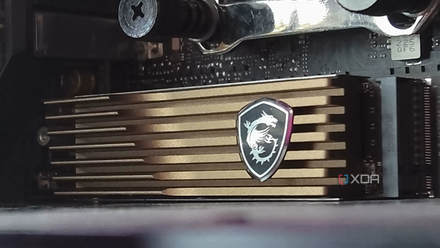
Even the best PCIe 5.0 SSDs available today have issues staying cool under extended use. Manufacturers have devised some pretty comical heat sink solutions to combat this, but they either take up too much space, have annoyingly high-pitched fans, or have other features that make them difficult to use. The early Gen5 drives could even overheat and shut down after less than two minutes of use, which is terrible when you want a reliable SSD to transfer data to.
This heat issue is mostly caused by the controller, which needs to do a lot of work to achieve the peak 14GB/s transfer speeds for which you'd buy a PCIe 5.0 SSD. With PCIe 6.0 SSDs promising over twice that sequential speed, I wonder what that will do for the drive's temperature. Silicon doesn't like to stay that hot for long, so something needs to be done.
Maybe improved cooling solutions or wider SSDs, so the chips can be larger for more surface area or better control algorithms on the controller to limit heat buildup. Whatever the solution, it needs to happen before PCIe 6.0 SSDs are ready for consumer use.
Do I need a heatsink for PCIe 5.0 SSDs?
PCIe 5.0 SSDs require a heatsink for optimal performance, but whether you need to buy a heatsink alongside a PCIe 5.0 drive is something else.
3 Motherboards are still PCIe 5.0
You'll have to wait for PCIe 6.0 to be mainstream
The PC hardware market is mostly using PCIe 5.0 on motherboards from the current generation, with x16 slots and M.2 SSD slots coming with the fast connectivity standard. But not everything on every motherboard is using Gen5, with plenty of boards still using PCIe 4.0 for additional M.2 storage slots. The PCIe 5.0 standard was released in 2019, so it's now six years old, and consumer devices have only just caught up. The first PCIe 5.0 graphics cards were only just released in the Nvidia GeForce RTX 50 series, so expect PCIe 6.0 to take a while to become mainstream.
The first PCIe 5.0 graphics cards were only just released in the Nvidia GeForce RTX 50 series, so expect PCIe 6.0 to take a while to become mainstream.
The PCIe 6.0 standard is almost three years old now, so we've got a few years before motherboard makers start putting it on their devices. And it'll possibly take another year after that before SSDs, GPUs, and other hardware components start being released with PCIe 6.0 speeds.

Best PCIe 5.0 motherboards in 2025
PCIe 5.0 is the latest big standard for computing, and these are the best motherboards that support it.
2 They'll have a limited impact on your daily use
Windows tasks won't get speeded up much by the faster SSD
The promise of more speed for file transfers is always enticing, but the real world usage of these speedy SSDs is less impressive. We've tested multiple Gen5 and Gen4 SSDs and used a bunch more daily in our computers, and the experience between using the two generations isn't much different. The fastest PCIe 4.0 drives are around half the sequential speeds of the fastest PCIe 5.0 drives, but aren't much different when you need random reads.
|
Crucial T705 |
Crucial T700 |
Samsung 990 Pro |
|
|---|---|---|---|
|
SEQ1M, Q8T1 |
|
|
|
|
SEQ1M, Q1T1 |
|
|
|
|
RND4K, Q32T1 |
|
|
|
|
RND4K, Q1T1 |
|
|
|
Most daily computing tasks are heavily reliant on random read and write speeds. If PCIe 6.0 comes with meaningful improvements to random speeds and IOPS, then it will have a noticeable impact on your daily tasks. If not, you will notice the additional speeds when doing single transfers like installing new games or moving large video files, but the rest of the time will feel similar to the computer you use right now.

5 best free software for optimizing your Windows PC performance
While some prefer to optimize their PC manually, there are plenty of free programs that can help you do it much more easily
1 Games won't load that much faster
We need higher random read speeds, not sequential improvements
One of the promised benefits of faster SSDs is faster loading times when playing games and more responsive gameplay once it's loaded in. Except, loading puts assets into RAM and VRAM, so the responsive gameplay comes from the speed of your GPU and CPU more than the storage device. DirectStorage promises to reduce the slowdown even further by letting the GPU talk directly to the SSD, but this is only really implemented in a handful of games and won't be back-ported to existing titles.
PCIe 5.0 SSDs still aren't worth it for gaming, so PCIe 6.0 is likely to be the same story unless games become a lot more data-intensive. And even then, it'll be mostly small files being transferred, like textures and shaders, which any NVMe SSD can handle with ease.

14 highly-rated Steam games you can always get for cheap
Discover 14 highly-rated Steam games that you can get for cheap on other platforms.
It's tempting to get the newest thing, but you won't need PCIe 6.0 SSDs for quite some time
PCIe 6.0 SSDs are an impressive technological achievement, but you won't need them. They're not even really in the data center yet, and widespread adoption in that market will take another couple of years. Plus, prices will be horrendous per TB, and they won't be that much faster in normal use. You can probably stick with relatively inexpensive PCIe 4.0 SSDs for some time.