
Gaming on Linux has taken off in a big way over the last decade, with Microsoft taking its position as the leading member of the market for gaming on PC for granted. A lack of legitimate improvements, as well as the introduction of more and more advertising and bloat to its ubiquitous operating system, have angered many, and calls for a reasonable alternative to gaming on Windows have only grown stronger. Gaming on Linux has historically been a rocky experience, with plenty of debugging and fiddling required to get basic games running in Wine, but has improved hugely in the last few years. While macOS is still an option for gaming, we think it's the inferior one for most people (especially if you've got the technical know-how to get through some of Linux's teething pains.) So here are our top four reasons why Linux is still the best alternative to Windows for gamers.
3 MacOS is terrible for gaming
Apple doesn't want hardcore gamers on macOS
Our first reason why Linux is the best alternative to Windows for gamers might be a bit self-explanatory. MacOS is simply a terrible experience to game on. Macs have great performance, but are prone to heavy throttling (which is difficult to control, and often needs third-party extensions to prevent), whether for thermal or noise reasons. The fullscreen, multi-desktop experience is great for applications, but seems to break constantly for games. All of this is assuming that the game you want even runs. There's an architectural gap to bridge, which to its credit Rosetta does extremely well, but games still need to support macOS or run in emulation like Wine. When this works, it's great, but you're still leaving performance on the table, and it's not the most stable experience. There are other random macOS oddities to contend with, like changing your resolution to a specific value being such a pain (it's possible macOS has improved this recently, it's been a while since I tried it, so your mileage may vary).
MacOS gaming has been neglected by Apple for years, and while they have made some recent strides to improve it, it often feels that they're not targeting the hardcore "gamer" market. Instead, they're looking to make macOS a more friendly place for those people who play a game a couple of times a year, and want something they can boot up on a plane to entertain themselves for a few hours casually.
2 Compatibility layers are thriving
A viable option for gamers
👁 Man gaming at desk with OSBOT Tiny 2 Lite on monitor
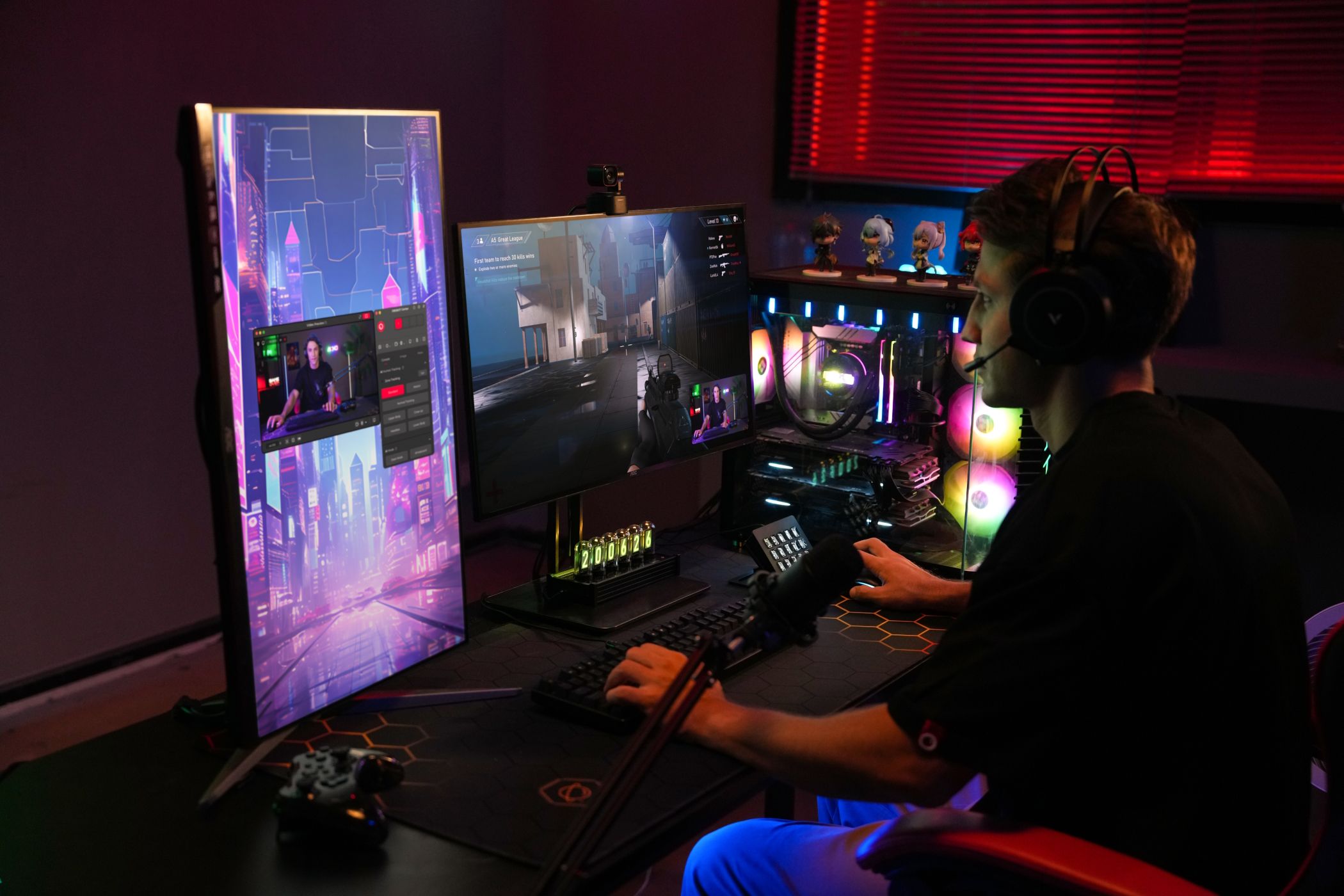
The Steam Deck has proved to be more than just a console for Linux gaming, and has breathed fresh life into gaming on Linux with Proton. Proton is a compatibility layer (built on top of WINE) designed specifically to run games on Linux and features a host of gaming-focused improvements. This has not only made games on Linux more widely available, with thousands of games on Steam now being effectively natively supported, but has also started a rolling ball of momentum around documentation, community support, and fixes. Enough people are now gaming on Linux, especially on the Steam Deck, that finding information on how to get great games running is easier than ever. Steam has a built-in indicator for the Deck, indicating whether the game is likely to run well, and ProtonDB, a long-standing essential resource for Linux gamers, has only gone from strength to strength with a wealth of great information for Linux gamers.
It's not all perfect, unfortunately. The rise of intrusive, kernel-level anti-cheats is one of the serious remaining problems for gaming on Linux, and games which feature this are a lot of the remaining high-profile holdouts from Linux gaming. Some games have also gone backwards, introducing more anti-cheats post-launch (sometimes several years later) which breaks support for Linux. Compatibility layers like Proton work by effectively virtualizing the game, providing it with a proxied set of system APIs which translate the relevant system API calls for one platform or architecture to another in real time. As you might guess, a lot of intrusive anti-cheat software is able to realize that it is running in this kind of environment, and prevents the game from launching. Some anti-cheat software is more intrusive, installing itself at a kernel level to effectively act as a hypervisor for your entire system, giving it total access to everything running beneath it.

How to install and use Moonlight on Steam Deck
Moonlight is a great way to make more games playable on your Steam Deck, and it only takes a few minutes to set up.
1 Linux has great performance
Get rid of endless bloat and adware on Windows
Another great reason for gaming on Linux as an alternative to Windows is the excellent performance of the OS itself. Now obviously, this depends on your Linux distro and setup. You can certainly bring a good Linux install grinding to a halt. But a lot of Linux, especially distros optimized for gaming (see: Steam OS), have great performance out of the box, with minimal bloat, no adware, and minimal pre-installed software. This can introduce a bit more of a learning curve, but it can also help alleviate some of the performance losses you get from needing to run specific games in Proton.
While the direct advantages of gaming here might be more limited, the benefits for your day-to-day usage can be huge, and this seems to be the motivation for a lot of gamers switching to Linux. Windows has become increasingly obnoxious over the last decade with preferred browsers, pre-installed apps, adverts, tracking, and general bloatware. While there are some solutions to this, many are looking to switch from Windows outright. Linux offers an open, fully customizable platform that just happens to also be great for gaming — something appealing for many.
Gaming on Linux is getting better all the time
Gaming on Linux is still far from perfect, and may be a complete non-starter if you're into games that require intrusive anti-cheat. But if you're a single-player gamer, or just play more casually with a focus on work and productivity, then switching to Linux can be a huge improvement. Linux opens up a whole world of customization and control over your operating system that Windows simply doesn't support, nor does Microsoft want to. The Steam Deck in particular has given gaming on Linux a serious revival, and you'll be pleasantly surprised to find that the vast majority of single-player games are now at least playable on Linux, with great performance to boot. MacOS is unfortunately still lagging, but hopefully we'll see improvements there in the future. Microsoft's long-standing monopoly on PC gaming has been detrimental, and has potentially had a hand in empowering Microsoft with some of its more pushy initiatives in recent years, for example, no longer supporting PCs lacking a TPM module.