
The Raspberry Pi is a fantastic tool, especially for general-purpose computing and media projects. But when I’m working on simple or embedded tasks, I often find myself reaching for a microcontroller instead. They’re not just cheaper; they’re more appropriate for many of the things I like to build. Whether I’m tinkering with sensors, automating something small, or creating wearables, microcontrollers get the job done without the extra baggage.

4 reasons your next home automation controller should be an ESP8266 (and not a Pi)
If you already have a ton of smart home devices and you're wondering what to do next, I recommend picking up an ESP8266.
5 Lower power requirements and consumption
I don’t need to worry about powering them constantly
One of the most significant advantages of using microcontrollers is how little power they consume. Most microcontrollers sip power in the milliwatt range, and some can run for months or even years off a single coin cell or a couple of AA batteries. That’s ideal for remote sensors, battery-powered devices, or anything I don’t want to plug into a wall. It also makes them a better fit for solar-powered projects or wearables.
Raspberry Pi boards, especially the 4B or newer models, draw significantly more power even when idle. They’re capable of more, but they also require more careful power supply planning. I’ve had Pis corrupt SD cards after power failures or brownouts, which simply isn’t a problem with most microcontrollers. When stability and low power are essential, a Pi just isn’t worth the extra overhead.
I’ve also used deep sleep modes on RP2040 and similar chips to stretch battery life even further. Combined with power-efficient sensors, this lets me build long-lasting projects that don’t require maintenance every week. That’s a huge win when the device ends up living behind a wall panel or on a rooftop.
4 Instant-on behavior is a huge benefit
No boot time means no waiting around
Microcontrollers are ready to go as soon as they get power. There’s no waiting for an operating system to load, no bootloader screen, and no delays. That’s incredibly useful when I need immediate responsiveness, like turning on a light, responding to a button press, or triggering an alert.
With a Raspberry Pi, even a minimal OS like Raspberry Pi OS Lite still takes time to boot. I’ve had projects where the delay between power-up and actual function was just too long to be acceptable. If something should react instantly, a Pi just feels too slow to start. Microcontrollers feel more like appliances in that way because they just work when you give them power.

7 superpowers of a Raspberry Pi Pico that beat the regular Pi
The Raspberry Pi Pico might be a lot smaller than the standard SBC, but it's better-suited for a number of projects than the larger board
This behavior also gives me more confidence in deploying them in places where I don’t want to manage startup behavior. If something resets, I know it’ll resume instantly without needing to reinitialize a full operating system. That peace of mind makes it easier to scale simple projects or deploy them in less accessible places.
3 They’re physically much smaller
Easier to embed or fit in enclosures
Even the smallest Raspberry Pi boards, like the Zero 2 W, are still relatively large compared to most microcontrollers. When I’m designing a compact enclosure or working on something wearable, every millimeter matters. Chips like the ATtiny85 or RP2040 in a minimal breakout form factor are just easier to fit where I need them.
The smaller size also means I can design slimmer or cleaner enclosures. With fewer components and connectors on the board, I have more flexibility over layout and cable routing. In tight spaces, especially when hiding devices in walls or mounting them in odd locations, that makes a real difference. It also reduces the need for bulky power supplies or heat dissipation features.
Additionally, many microcontrollers come in breadboard-friendly or castellated packages, which helps with prototyping and custom PCBs. It’s simple to start on a dev board like an ESP8266 and then move to a tiny module once the design is finalized. That path just isn’t as straightforward with Raspberry Pi boards.
2 Simpler and more predictable behavior
Less overhead makes for cleaner development
When I use a microcontroller, I’m working closer to the hardware. That means fewer surprises, less resource contention, and fewer services running in the background. I know exactly what my code is doing and when. For many small or time-critical projects, that predictability is more valuable than all the extras that come with Linux.
On the Raspberry Pi, I’ve run into problems where other background services interfere with GPIO performance. Even with real-time kernels and stripped-down installs, the OS still adds complexity I don’t always want. I’d rather write a simple Arduino sketch or run MicroPython and be sure everything behaves exactly as expected. Especially for things like PWM control or sensor timing, that precision matters.
Debugging is also more focused with microcontrollers. The ecosystem is often centered around specific development tools that keep things simple. I’m not worrying about system logs, services, or package managers. I’m just writing firmware and flashing it.
1 Cost is much lower per project
Perfect for one-off or disposable projects
I don’t like spending more than I need to on a project that doesn’t require full Linux capabilities. Microcontrollers can be incredibly cheap, sometimes under five dollars. That makes it easy to build multiple versions, experiment with different configurations, or even leave devices installed permanently in places I may not revisit.
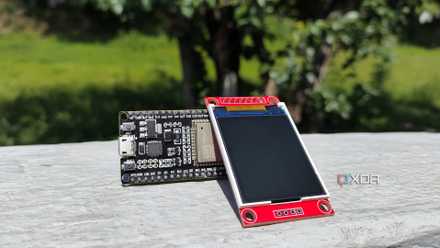
I added an open‑source ESP32 dashboard to my Home Assistant setup, and I'm glad I did
It's a customizable display that can fit practically anywhere in my smart home
A Raspberry Pi is still reasonably priced, but not so much that I’d want to put one into a project that might get lost, damaged, or stolen. Microcontrollers lower that barrier and give me the freedom to prototype without hesitation. If one fails or gets fried, replacing it doesn’t hurt nearly as much.
This lower cost also means I can buy a dozen at a time and keep them around for spontaneous builds. Whether I’m testing a new sensor, trying out a different control scheme, or teaching someone else how to code, microcontrollers are easy to work with and easy to replace.
Microcontrollers check all the right boxes for simple solutions with significant capabilities
For the kind of projects I build most often, microcontrollers just make more sense. They use less power, turn on instantly, take up less space, and cost a fraction of what a Raspberry Pi does. Don’t get me wrong, I’ll still reach for a Pi when I need a full OS, networking stack, or advanced processing power. For most of my IoT and automation projects, though, a microcontroller is more appropriate.