
Home labs are perfect for computing enthusiasts looking to bring their tinkering fantasies to life, whether it's experimenting with different operating systems or self-hosting myriads of useful services. But if you keep collecting a ton of server hardware and deploying VMs for every distro imaginable, you might end up at a point where your home lab starts to take over your life. So, if you don’t wish to turn into a home lab fanatic like me, here's a list of early signs that indicate it’s time to reassess your server equipment.
Should you use Proxmox, Hyper-V, or ESXi in your home lab?
A three-way battle between popular virtualization platforms
5 Your energy bills have hit the danger zone
Blaming the refrigerator won’t cut it anymore
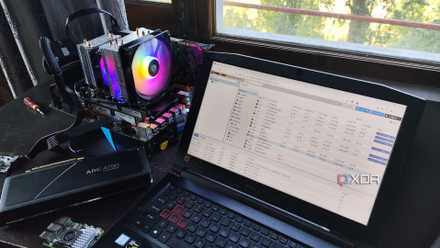
On paper, outdated server equipment and repurposed PC hardware let you save quite a bit when expanding your home lab. However, ancient components, especially enterprise-tier systems, are infamous for their poor power efficiency – to the point where these behemoths can guzzle kilowatts of energy right under your nose.
If you’ve got a dual-CPU Xeon build like I do, you’d want to think twice about subjecting it under heavy load. After all, it’s only a matter of time before your family realizes the refrigerator isn’t the one to blame for the sky-high energy bills.
4 You spend more time maintaining the home lab
And less time tinkering with it
The DIY nature of home labs serves as a double-edged sword. While you’re free to use your workstation(s) as a guinea pig for your unhinged projects, you’ll need to perform regular maintenance tasks to ensure your server remains in tip-top form. But if you spend hours keeping up with the backup, update, and disk scrubbing tasks, you might not find enough time to tinker with your computing setup.
Having suffered from this issue in the past, I recommend checking out the different ways you can automate your computing lab. Ansible, Cron jobs, and n8n nodes can take a lot of tedium away from the job, while Uptime Kuma or Grafana + Prometheus-based monitoring setups are ideal for ensuring everything works as expected.
3 You’ve got more equipment than you’ll ever need
That includes VMs and self-hosted services
Let’s face it: few things are more tantalizing than hoarding old servers for your home lab. Whether you want to deploy a high-availability cluster for your virtualization platform, create an extra NAS to ensure your data never gets lost, or create a distributed AI deep-learning workstation, there's a truckload of cool things you can pull off with extra systems.
But if you’ve got a fleet of routers, switches, and SBCs just running for the sake of it, it might be high time to cut down on the armada of devices. Trust me, parting with your precious servers can be distressing, but it’s a lot more painful to have skyrocketing electric bills. That’s before you include the lower noise levels generated by a smaller home lab…
2 Your server room sounds like a jet engine
On top of heating up like a furnace
If you thought laptops and gaming PCs become excessively loud under heavy load, you’d want to stay away from hardcore computing servers. From its custom-built dual-CPU systems and their larger-than-life heatsinks to rack-mounted pre-built rigs, servers are infamous for producing ungodly amounts of noise.
Then there’s the excessive heat generated by these systems. Enterprise-level PCs and switches, in particular, require adequate cooling provisions to prevent overheating. If your basement constantly produces whirring sounds loud enough to disturb the non-technically minded denizens of your house, it’s a surefire sign that your home lab needs to be whittled down a notch.
1 Working with your home lab seems like a chore
At that stage, it’s just an unpaid job
When you’re pursuing a career in the sysadmin or DevOps fields, a home lab is easily the best companion and mentor you could ask for. But once you break into your first couple of jobs, you’re bound to be surrounded by server PCs throughout the day. That’s when the home lab fatigue may start to sink in.
After all, if you spend office hours fixing hardware issues and troubleshooting the most cryptic software errors, you probably won’t be inclined to do the same in your free time. Home lab burnout may also set in if you spend a lot of time working on your server. Trust me, Arch Linux VMs, self-hosted email servers, and VoIP gateways are the last thing you’d want to see after returning from your 9 to 5.
So, what’s the best way to solve your home lab woes?
Having gone through most of these issues myself, I’ve come up with two solutions: downsize your home lab and work on projects that bring you joy. The overheating, noise, and energy consumption problems can be solved by getting rid of your power-hungry components and switching to newer, more efficient devices. For instance, if you’re only using your dual-CPU workstation to host a couple of services, you can try replacing it with an ARM-powered mini-PC or SBC.
Meanwhile, home lab burnout from excessive maintenance tasks or working with VMs is a little harder to treat. Personally, I get fired up every time I try working on an unhinged idea, like experimenting with nested virtualization or running macOS inside VMs and containers. Alternatively, stepping aside from your workstation and touching some grass can also work, assuming you’re not a basement-dwelling imp like yours truly.

4 game server management tools you can host on a NAS to play with your friends
Bringing a storage server to your LAN party is a lot more practical than it sounds