
I fondly look back to a time in hardware history when memory upgrades were simple. You bought a machine, popped open the bottom panel a few years later, installed more RAM, and added a few years to its life without much fuss or expenditure. This upgrade path, however, seems to be waning for modern devices.
An alarming number of new laptops and devices now ship with soldered RAM, where memory is permanently attached to the motherboard, or in some designs, integrated directly into the processor package itself. The manufacturing giants claim it's for sleeker designs, better power efficiency, and tighter tuning, which is all true. But what's also true is that when software grows more demanding, and your workload eventually outpaces memory, there's no upgrade headroom left inside your chassis. If you're disappointed with this emerging trend, you're not alone.
Why are manufacturers leaning into soldered RAM?
Dutiful optimization or planned obsolescence?
From an OEM perspective, soldered RAM isn't inherently anti-consumer, but rather a design choice that solves several hardware problems. LPDDR memory performs most optimally when it sits closer to the CPU, which allows for higher speeds and greater efficiency. Removing SO-DIMM slots also frees up some space to accommodate larger batteries, cooling solutions, and a thinner, lighter chassis design.
This isn't a new idea at all. In 2010, Apple's MacBook Air popularized soldered RAM as a way to achieve ultra-thin profiles without any compromises to performance or battery life. By 2020, the approach spread to almost all "Ultrabook" Windows laptops, giving rise to an era in which thinness and efficiency became almost prerequisites for the form factor.
That said, it would be an error not note the underlying business incentive for RAM soldering as well. Fixed configurations simplify manufacturing and reduce the number of variants in a lineup that companies need to build, stock, and support. More importantly, it allows upgrade decisions to be moved to the checkout page, where buyers are nudged to spend more upfront on devices with better memory. This allows manufacturers to effectively lock in higher margins and reduce the risk that post-sale upgrades will get in the way of future sales.
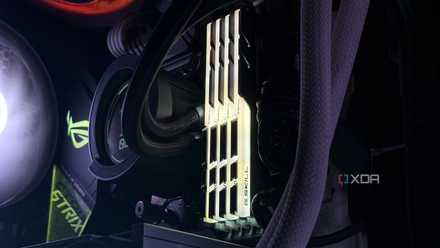
The RAM crisis derailed my PC upgrade plans, so here's what I'm doing instead
Built in the Covid era, and upgrading in the AI era
Why is it a problem for consumers?
"Low on memory? Buy new!"—OEMs
While it helps manufacturers optimize performance, soldered RAM also reduces flexibility and upgradability for consumers. This presents a challenge for consumers focused on longevity, since memory utilization can grow over the years, but their hardware effectively remains frozen in time. In a system that allows for modularity, this problem is solved with a quick upgrade. However, with soldered RAM, it becomes a permanent limitation that requires a new device to overcome.
The financial impact of this development on consumer wallets is tough to ignore. Buyers are left between having to overpay upfront for a higher memory configuration (with a neat little intermediary tax paid to OEMs) or purchasing a device that isn't very future-proof against the rising tide of software demands.
Once the performance dips, there are no midlife upgrades to extend usability, pushing consumers towards earlier replacement, and also worsening the depreciation on secondary markets. This pressure is only intensifying as the industry finds itself in the middle of the worst DRAM inflation in recorded history. In a period when memory itself has become more expensive than ever before, and is continually being strategically rationed across consumer devices, the trend certainly feels unwelcome.
It's also complicating repairs
And creating more e-waste in the process
If you thought soldering was just hurting your upgrade headroom and costing you more at checkout, unfortunately, there's more to it. A permanently affixed memory kit changes circumstances on the off chance your device fails, too, and how reparable it is when things go south.
RAM chips are susceptible to phenomena like solder fatigue and tin whiskers, which are both direct consequences of thermal cycling as your system heats up and cools down under normal use. Both of these are fairly common phenomena that can lead to RAM failure and are quite complicated to repair. It is possible for a trained professional to desolder and replace a memory chip. However, since modern devices are densely layered with unforgiving tolerances, attempting this repair can risk the damage of surrounding components or internal PCB layers.
This is why most manufacturers don't really attempt it. The standard practice is to fully swap the motherboard, even if the fault is isolated to memory. It's far from ideal, expensive, and yields more electronic waste than is necessary.
In a market that's increasingly characterized by soaring hardware prices, locking down the motherboard may feel less like 'optimization' and more like a forced exit from the circular economy — if not today, then certainly in the future.
Has modularity become a distant memory?
Soldered memory may have streamlined modern hardware design, but it has also cost consumers modularity and, well, money. And as the demand for niche tools like local LLMs and system memory requirements balloon, a fixed memory cap imposes an uncomfortable limitation on consumer devices, their flexibility, and their repairability. In a market that's increasingly characterized by soaring hardware prices, locking down the motherboard may feel less like 'optimization' and more like a forced exit from the circular economy — if not today, then certainly in the future.