
Valve recently sent a shockwave through the games industry with the sudden reality that overnight the Steam Deck OLED transformed from a value king recommendation into an elite luxury purchase. The 512GB model jumped to $789, and the 1TB model skyrocketed to $949. Upon announcing this news, Valve kept its public statement brief, pinning the blame on rising component costs and global logistical challenges after stock issues.
However, while handheld buyers are hurting, the real victim of this price shift isn't just the Steam Deck; it's also the unreleased Steam Machine console hybrid. For years, consumer hardware got cheaper as it aged, but this massive price hike proves that the pattern has flipped. If Valve cannot afford to subsidize its four-year-old mobile architecture, its upcoming living room Steam Machine is structurally doomed to arrive with an astronomical multi-thousand-dollar price tag that completely alienates the console audience it was meant to capture.
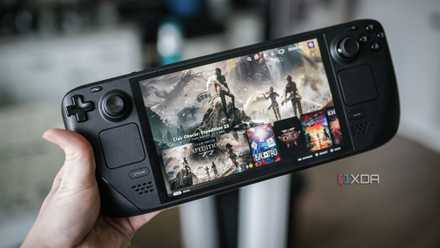
I just don't care about the Steam Deck 2 anymore
The Steam Deck's sequel won't revolutionize the industry in the same way the original did.
The death of the loss leader
Valve can no longer foot the bill
The root cause behind the 2026 component crisis is the AI tax. RAM and storage have absolutely skyrocketed to a point where it's become unaffordable for many general consumers. This is because artificial intelligence data centers are buying up HBM, DDR5, and enterprise NAND storage at an unprecedented, seemingly infinite bulk. This makes the components significantly harder to find, and when you can find them, they are double, if not triple, the price that they were prior to the shortages.
Alongside this, because memory manufacturers are prioritizing high-margin AI silicon, consumer-grade LPDDR5 and NVMe storage supply lines have completely dried up, which has tripled component prices in a matter of months. Valve isn't alone in this issue, either, with other brands like Sony, Nintendo, and Microsoft having all been forced into historical hardware price bumps over the past year. However, Valve's aggressive loss-leader model leaves them the most exposed as a result of these price hikes. While the Xbox Series X and S, Nintendo Switch, and PS5 have all seen price hikes, these weren't loss-leaders to begin with. They didn't need to have such aggressively priced devices in order to capture their audience.
Valve can no longer absorb the industry-wide AI tax on memory and shortages. If a 2022-era mobile APU platform like the Steam Deck now requires a near-$1,000 price tag just to maintain structural margins, makes the future for Valve's upcoming Steam Machine — which has already been delayed — look bleak.
The boutique trap
A $1,200 console cannot exist
If the Steam Machine comes in at a whopping $1,000+ price point, then it's practically dead on arrival. When Valve first announced the Steam Machine, it stated some goals for its new console. They wanted to offer a seamless, console-like midway point between the open PC ecosystem and the television couch experience. They did clarify that it'd be priced in line with the current PC market, which means we can already expect a pretty high price point.
This means there'll be a significant structural pricing problem when it finally lands. If the Steam Deck's low-power mobile parts require a $789 to $949 footprint, a proper desktop Steam Machine running high-wattage desktop processors and dedicated graphics chips simply cannot exist under $1000.
At $1,200, plus the Steam Machine stops being a console killer. It turns right back into a boutique niche, a pre-built gaming PC, completely defeating the purpose of its existence. It can no longer compete with the mass market scale of PlayStation or Xbox. Despite both of these consoles seeing significant price hikes recently, they are still cheaper than the new pricing of the Steam Deck, let alone the Steam Machine, which will likely be more expensive upon release.
The fragmented ecosystem
This price hike is an economic reality check
Valve currently has a seemingly fragmented ecosystem thanks to its delayed portfolio. When first announcing the Steam Machine, Valve also announced other hardware like the VR-focused Steam Frame and the brand new Steam Controller. These were released alongside one another but have already faced rolling release window slippages due to these exact storage constraints. As a result, the Steam Machine still doesn't have a confirmed release date. Valve updated its developer review logs, officially downgrading the Steam Machine's launch from a guaranteed early-2026 drop to a hopeful late-year window. This still isn't guaranteed that the Steam Machine will be dropping this year.
Grab Gaming Gear Deals: Save on Controllers & Headsets
Later down the line, Valve may be forced to unbundle the ecosystem, launching the controller standalone while quietly shelving or scaling back the actual Steam Machine console production into a limited enthusiast-only wave. With Valve ceasing to absorb the component loss on its flagship product line, the Steam Deck, and executing an overnight 40% retail price hike on the Steam Deck OLED range to safeguard its corporate margins, this is a clear sign that the Steam Machine will likely suffer the same fate before it is even released.

4 reasons a Steam Deck shouldn’t replace your dedicated gaming PC
We're evaluating why Valve's Steam Deck isn't a worthwhile replacement for a dedicated gaming PC
With the handheld floor reset to $949, the pricing foundation for the upcoming desktop Steam Machine shatters, forcing a minimum projected base launch cost of $1,200. Valve clearly aren't willing to subsidize the cost of their hardware anymore, which leaves the Steam Machine in a very precarious situation.
The Steam Machine dream is dead
Back to my desktop, I guess
The dream of a cheap, mainstream, Linux-powered console invading the living room required a stable, normal component market, so maybe it could have been a reality five years ago. However, the recent AI boom has broken that market completely, with no clear end in sight as to when the market might stabilize. Don't look at the Steam Deck price hike as a temporary retail hiccup. Look at it as a definitive white flag. Valve's hardware philosophy has always been calculated and pragmatic. If they're pricing their mobile handheld out of the mainstream market, it's the clearest sign yet that the living room Steam Machine is dead before it's even had a chance to launch.