
After using Windows all my life, Linux always seemed like something of a scary beast. It didn't help that when I tried Ubuntu a few years ago, I didn't like the default UI whatsoever, and I found myself wanting to stay on Windows for the familiarity. Many years later, though, the popularity of the Steam Deck finally got me to try converting a Windows gaming handheld into a Linux one, and that's when I learned that Linux desktop can actually be good. And eventually, I ended up switching to Linux on my main PC.
SteamOS eases you into Linux
The desktop is secondary
I say SteamOS, but the experience that finally got me to take Linux seriously was actually Bazzite, which is an attempt at making a version of SteamOS that works on all handhelds. It has some differences here and there, but the core of the experience is the same, and it's wonderful.
It's almost like a sneak attack, because when you go into SteamOS, you're not really doing it for the desktop experience. You want the gaming handheld UI, which is far better than anything you could find on the Windows side when the Steam Deck came out. And that works wonderfully, with intuitive console controls and support for touchscreens.

I turned my gaming handheld into a Steam Deck and I love it
You don't need a Steam Deck... do you?
But then there are small things that might require you to switch to the desktop, like setting up an emulation platform, or adding non-Steam games. And that's when it hits you that the Linux desktop can actually be good. KDE Plasma is one of the closest experiences you can get to the Windows desktop, but it actually feels a bit more responsive, so maybe switching to Linux wouldn't be so bad. For me, that's how it started.
Giving Linux another shot
I was ready
Using Bazzite on a handheld didn't immediately make me want to switch to Linux, but it planted the seed of doubt about Windows 11. After seeing the Linux desktop and gaming mode, every time I used Windows, I couldn't help but think of all the ways Bazzite was better. So eventually, I decided to bite the bullet and dive right into Arch Linux with the KDE Plasma desktop. Not the wisest choice for a beginner, but it made for an interesting crash course.
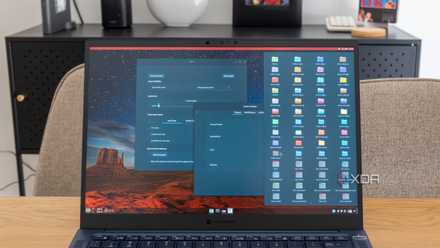
From there, I spent some time with Linux Mint, which also has a desktop more similar to Windows (called Cinnamon), and I found that I started spending a lot more time using it, despite installing it on a lower-tier laptop I had lying around. Linux Mint may feel familiar to Windows in many ways, but it offered a degree of customization I had forgotten was possible in an operating system.
Theming options let me change the colors of icons and folders, I could adjust the way checkboxes and buttons look, and I could completely swap out icon sets so apps have a consistent look that I like. Not to mention I could customize the taskbar with all kinds of widgets that are far more useful than Windows 11's, and even create additional "taskbars" and move elements around. It was a level of freedom I had stopped thinking was possible. This made me fall in love with Linux, even if I thought Linux Mint felt a little old-school in terms of its overall appearance.
I tried Linux Mint as a lifelong Windows user, and the customization blew me away
Linux Mint is on a whole different level
Despite its shortcomings, Linux Mint did let me do the basics of what I needed. I could browse the web with my favorite web browser, edit documents, make calls on Discord, and so on. I didn't feel like I was missing out on much, and I was in love with the possibilities on Linux. So eventually, I wanted to use a higher-end laptop with it.
Linux became my home
Though I did go back to Arch
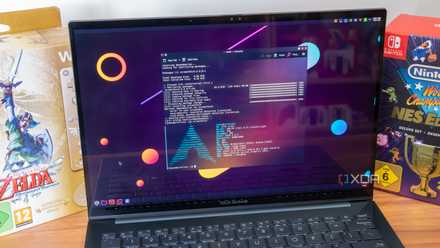
After Linux Mint fully convinced me of the potential, I decided it was finally time to switch to the Arch Linux and KDE Plasma duo, and ever since then, I've only loved Linux more and more. KDE Plasma offers the best balance of familiarity with Windows, modernity, and customization all its own. It has a lot of concepts that are similar to that of Cinnamon, but everything is cranked up here.
Much like Cinnamon, I was able to create multiple "panels" (like the taskbar) and move elements around, so the bottom of my screen has my apps, but all the typical system tray icons are at the top of the screen. I could install custom themes with more unique icons, colors, and UI elements. I could even enable transparency for some UI elements to make things really pop. Some of this did take work, but I was more accustomed to it at this point, and it was totally worth it.
I also learned to find alternatives to some things I loved on Windows and macOS. OnlyOffice became the easy choice for editing documents after LibreOffice failed to impress me, Vicinae provided the features I loved in Raycast, and I eventually learned that KDE Plasma has a far better tiling system than Windows, making multitasking that much easier.
It seems scary, but Arch is my favorite Linux distro coming from Windows
Intimidating? Maybe, but it's worth the adjustment period
But perhaps the best part of any Linux desktop is how much quieter it is. Some things can be harder to set up when you're doing it for the first time, but Linux respects your time. When you're installing the OS, there's no need to connect to the internet or sign in with an online account. You don't need to skip through five or more pages of ads for features you don't want. You don't randomly get notifications asking you to describe your experience with an app you just used or something, or reminding you about some feature you probably already used anyway. You just do what you want to do, and when you're done, you're done.
Score Gaming Gear Deals: Discounts on Handhelds & PC Accessories
Learning Linux can be hard for a beginner, and it's not like there aren't legitimate downsides with things like app support and all the different distribution methods for them. But once you learn the flow of things, it feels far less intrusive and frustrating.
SteamOS did so much for Linux
It didn't fully register for me until writing this article, but SteamOS has done more for Linux than you might think. Sure, Valve's work on Proton and integration with SteamOS made gaming viable for so many more people, and it showed the potential for gaming handhelds. But it also did, in a sneakier way, show us that Linux desktops aren't nearly as scary or complicated as you might assume, and it planted the seeds for people like me, who had never considered moving to Linux. It actually became my preferred platform to be on, and that's not easy to achieve.