
The first few months with a 3D printer make it very easy to lose your sense of judgment. I printed dragons, articulated sharks, tiny castles, cable toys, and at least three objects whose only purpose was proving the printer could make objects. It was fun, but it also made my printer feel more decorative than useful. I’d spent real money on a machine that mostly produced things I admired for five minutes and then had to dust.
The magic wasn’t in printing cooler objects, but in printing exactly the dull thing I needed before I had to buy it.
That changed when I stopped treating 3D printing as a novelty machine and started treating it as a small household manufacturing tool. The boring prints turned out to be the ones that mattered most. Brackets, clips, adapters, organizers, shims, spacers, and replacement bits made the printer feel less like a hobby purchase and more like a quiet money-saver. The magic wasn’t in printing cooler objects, but in printing exactly the dull thing I needed before I had to buy it.
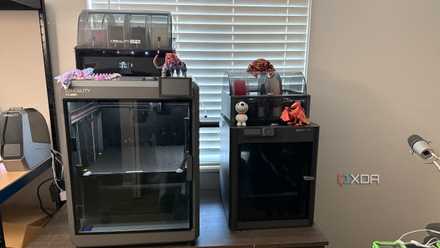
3D printing saved me money, but only after I stopped printing “solutions”
I had to stop printing novelty “solutions” and focus instead on durable replacements.
Boring prints solve problems hiding in plain sight
The useful prints usually start with small daily annoyances
The first print that changed my mind wasn’t exciting at all. It was a little spacer for a wobbly shelf support that had been annoying me for weeks. The part took less than an hour to print, used a tiny amount of filament, and fixed something I’d been walking past every day. That was the moment the printer stopped being a gadget I used when I felt inspired and became a tool I could reach for when something was wrong.
This is where 3D printing becomes practical in a way glossy showcase prints often don’t. Most homes are full of small mismatches that standard products don’t solve neatly. A hook is too wide, a cable slips off a desk, a remote needs a wall mount, or a drawer divider wastes half the space it’s supposed to organize. A printer is at its best when it fills those gaps with something measured, specific, and just good enough to disappear into the room.
The best part is that these prints don’t need to be beautiful. They need to fit, hold, separate, support, cover, or guide. That lowers the pressure and makes the printer more approachable, especially if you’re still learning design software. A slightly ugly bracket that fixes a real problem has more value than a flawless trinket that ends up in a box.
Practical printing turns filament into avoided purchases
Small replacement parts make the savings feel real
It’s easy to underestimate how expensive small plastic things can be when you need them one at a time. A replacement knob, a cable grommet, a drawer stop, or a missing foot for a device often costs more in shipping than in material. Sometimes the exact part isn’t available at all, which means replacing a larger item just because one small piece failed. That’s where a 3D printer starts clawing back its cost in quiet, satisfying increments.
The boring prints are where a 3D printer quietly earns its keep. A 20-cent spacer, clip, bracket, or adapter won’t feel exciting, but enough of those little fixes can make the machine far more useful than another shelf full of display models. This is especially true when the alternative is buying a whole pack of parts, paying more for shipping than the item itself, or replacing something that only needed one tiny plastic piece. The value adds up in small, practical wins rather than one dramatic moment where the printer suddenly pays for itself.
The numbers won’t always look dramatic on a single print. A clip that saves a $9 purchase doesn’t make the printer profitable overnight. But those moments stack up, especially when the alternative is buying a pack of ten parts, waiting three days, or replacing something that still works. The savings aren’t only financial; not having to stop a project and order a minor part has its own value.
This is also where learning basic CAD pays off. Downloading models is useful, but designing a part around your exact measurements is what makes the printer feel personal. You don’t need to become a professional designer to make a spacer, a bracket, or a holder. Once you can sketch a rectangle, add holes, set tolerances, and adjust dimensions, the printer becomes much more useful than any library of novelty files.
Cool prints still have a place in the hobby
Fun projects keep the machine from becoming homework
The obvious counterpoint is that boring prints can drain the fun out of 3D printing. Plenty of people buy printers because they want helmets, props, figures, miniatures, decorations, and strange little desk creatures. There’s nothing wrong with that, and it would be dishonest to pretend practical parts offer the same thrill as pulling a complex, detailed model off the bed. The hobby side matters because it keeps people experimenting.
Cool prints also teach skills that boring prints may not. A decorative model can force you to learn supports, orientation, seam placement, sanding, painting, material choice, and multi-part assembly. Those skills can later make practical prints stronger and cleaner. Even failed showcase prints can teach you more about the machine than another cable clip ever will.
There’s also a personal value that doesn’t fit neatly into a savings calculation. Printing something because it makes your desk more fun or because it gives you a weekend project is still a valid use of the machine. Hobbies don’t need to justify every gram of filament with a receipt. A printer that only makes replacement pegs and storage bins might pay for itself faster, but it can also start feeling less inviting.
The boring stuff is what keeps the printer relevant
Practical prints give the hobby a longer shelf life
The problem with relying only on fun prints is that the excitement can fade. Once you’ve printed the popular models, filled a shelf, and shown your friends the articulated creature of the week, the printer can start sitting idle. That’s when people begin to wonder whether the machine was worth it. Practical printing prevents that slowdown because useful problems keep appearing without needing a burst of inspiration.
Boring prints also make the hobby easier to defend to yourself. When a printer fixes a cabinet, organizes a drawer, rescues an old appliance, or saves a trip to the store, it earns space on the desk. It becomes part of the household toolkit rather than a machine waiting for a special project. That changes how often you use it and how comfortable you feel investing time into learning it.
The funny thing is that practical printing can make the fun prints better, too. Once you stop chasing only impressive models, you begin to care more about fit, function, tolerances, and material behavior. Those skills improve everything you print, including the cool stuff. The boring projects build the habits that make the flashy projects less frustrating.
A 3D printer earns its keep through ordinary jobs
A 3D printer doesn’t have to become a tiny factory to justify its place in your home. It just needs to solve enough real problems that you start seeing it as useful before you see it as entertaining. The shift from “What cool thing can I print?” to “What annoying thing can I fix?” is small, but it changes the machine’s overall value. That’s when filament stops feeling like craft material and starts feeling like a supply you keep around because life keeps creating little jobs for it.
I still print fun things, and I don’t think anyone should give that up. But the prints that made my printer feel worth owning were the plain ones with boring file names and immediate jobs to do. They don’t get shown off, and they rarely look impressive. They just work, which is exactly why they’re the prints that finally made the machine pay for itself.
Bambu Lab X2D
- Build Volume
- 256 x 256 x 256 mm
- Printing Speed
- 1000 mm/s
- Materials Used
- PLA, PETG, ABS, ASA, TPU, Support for PLA, Support for PLA/PETG, Support for ABS, Support for PA/PET, PET, PA, PC, PVA; Carbon/Glass Fiber Reinforced PLA, PETG, ABS, ASA, PA6, PAHT, PPA, PET
- Brand
- Bambu Lab
- Extruder Quantity
- 2
- Extruder
- Direct Drive (Primary), Bowden (Auxiliary)
Yes, the Bambu Lab X2D can print amazing articulated creatures, but the real magic shows when the boring prints start letting the 3D printer pay for itself.