
For nearly 20 years, Notepad++ has been a staple in my workflow—one of the first programs I install on every new computer, yet I never gave much thought to its origins. I admittedly never paid much attention to the release notes, and when I did, I never really noticed anything unusual. Recently, I found myself wondering about its backstory. As a widely used open-source tool with no commercial ambitions, there had to be a deeper story behind it—and there was.
Not only is Notepad++ shaped by open-source principles and a passionate community, but its creator, Don Ho, has used it as an unexpected platform for activism—embedding political messages in release notes to advocate for human rights and denounce censorship.
Over the years, Notepad++ has endured attacks from Islamic extremists, DDoS assaults from the Chinese government, and boycotts from France’s far-right. Yet, it remains one of the most downloaded text editors in the world, consistently updated, and a favorite at XDA.
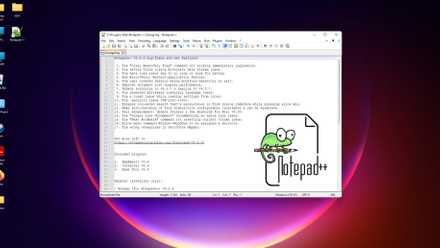
How to download Notepad++ in Windows
Notepad++ is one of our favorite source-code editors; here's how to install it on your Windows computer.
From rejection to revolution
Why Don Ho built the text editor he needed
Notepad++ was born out of frustration—Don Ho’s frustration, to be exact. In the early 2000s, he was working as a software engineer, stuck using a Java-based text editor that felt sluggish and inefficient. Hoping for a better solution, he pitched the idea of a C++-based editor using Scintilla, but his company turned it down. So, with a shrug, he built it himself.
When Notepad++ first launched, open-source software was trending upward but wasn’t as widespread as it is today. Now, open-source principles extend beyond software, influencing open data initiatives and the rise of open-weight AI models. Inspired by the Free Software Foundation (FSF) and Linux, Don believed in software that was free, efficient, and accessible to all—principles that set Notepad++ apart early on.
More than two decades later and he’s still coding Notepad++ with Notepad++.
In 2017, when Don was asked about his development environment, he responded: "Visual Studio 2013 under Windows 10 and Notepad++." More than two decades later, he’s still coding Notepad++ with Notepad++, proving that sometimes, the best tools are the ones you make yourself.
Moving on from SourceForge
Breaking away from a troubled platform
In the early 2000s, SourceForge was a premier platform for hosting open-source projects. Notepad++ utilized this service from 2003 to 2015. However, in January 2010, SourceForge began blocking access to users from countries like Cuba, Iran, North Korea, Sudan, and Syria, in compliance with U.S. government regulations. Don Ho viewed this as a violation of open-source principles.
Initially, Notepad++ continued distributing binaries via SourceForge to accommodate users, while also distributing though TuxFamily, a France-based hosting service. However, by 2015, SourceForge had started taking control of inactive project pages and replacing original downloads with installers bundled with adware. Notably, projects like GIMP and VLC experienced such takeovers after they had left the platform due to earlier concerns. In response to these actions, Don Ho decided to sever all ties with SourceForge to protect Notepad++'s integrity.
The project transitioned its repository to GitHub. While GitHub is subject to U.S. export laws, it has actively sought licenses to provide services in sanctioned regions, aligning more closely with FOSS principles. To further safeguard accessibility and align with open-source values, Notepad++ moved its website hosting to Hostinger, a Lithuania-based provider, in 2019.
When software becomes activism
Updates that make a statement
Most software release notes list bug fixes and new features. Notepad++'s often come with a political statement.
Don Ho has long used Notepad++ updates to advocate for human rights and free expression. He has spoken out against U.S. internet censorship laws like the Export Administration Regulations (EAR) and the Stop Online Piracy Act (SOPA). But his activism extends far beyond online regulations. He called for a boycott of the 2008 Beijing Olympics, citing China’s repression in Tibet and its restrictions on press freedom. In 2014, he released the Tiananmen June Fourth Incident Edition, dedicated to the victims of the 1989 massacre.
Notepad++ isn't just an open-source text editor—it’s a tool that reflects the values of its creator. Over the years, Don Ho has continued using software updates as a way to take a stand. While many of his statements drew reactions, some led to significant backlash, including direct opposition from political groups, activist organizations, and even governments. The following examples illustrate how certain Notepad++ updates resulted in cyberattacks, boycotts, and state-sponsored retaliation.
Targeted by Islamic extremists for supporting free speech
In January 2015, Don Ho released the Je suis Charlie edition of Notepad++ in response to the Al-Qaeda terrorist attack on the offices of Charlie Hebdo, a French satirical magazine. The attack killed 12 people, including journalists and cartoonists known for publishing controversial depictions of religious figures. Je suis Charlie ("I am Charlie") became a global slogan in support of free speech, and Don Ho used this Notepad++ release to stand in solidarity with the victims.
Just days later, the Notepad++ website was hacked and defaced. The attackers replaced the homepage with Islamist propaganda, including a message declaring that the hack was revenge for insulting the Prophet Muhammad. Don Ho quickly restored the site and addressed the attack directly:

Notepad-plus-plus.org could be hacked over and over again, but I will always find a way to distribute Notepad++ ‘Je suis Charlie’ edition - that’s my freedom of expression which I claim as my right.
Despite the attack, the Je suis Charlie edition remained available, and Don Ho continued to use Notepad++ as a platform for political statements.
Clashing with France’s far-right
In the early 2010s, France saw a resurgence of far-right politics, driven largely by the National Front (FN), a party founded in 1972 with roots in nationalism and xenophobia. Under Marine Le Pen’s leadership, the FN surged in popularity, with a surprising turnout for the 2012 presidential election and later securing major victories in the 2014 European Parliament elections. At the time, the party ran on an extreme anti-immigration platform, calling for a 95% reduction in legal immigration and advocating for “remigration”—a policy aimed at deporting immigrants back to their home countries.
As an immigrant to France himself, Don Ho condemned the party and its supporters, saying that those who voted for the FN should not use Notepad++. The backlash was swift, with FN supporters calling for a boycott of the software. Reflecting on the incident, Don later admitted that while he was not proud of the way he expressed his message, he did not regret taking a stand. However, he also acknowledged that restricting access to Notepad++ would contradict his open-source philosophy, which promotes software freedom for all users, regardless of their political beliefs.
Voting FN is the negation of the French values I have learned and appreciated since I arrived in France.
Facing cyberattacks from China
In October 2019, Notepad++ once again became a political battleground when Don Ho released the Free Uyghur edition. The update called attention to the mass detention of Uyghurs in China’s Xinjiang region, where an estimated one million people were held in so-called “re-education camps.” Reports from human rights organizations and the United Nations detailed forced labor, torture, and efforts to erase Uyghur cultural identity, sparking international condemnation.
Soon after the release, Notepad++ was hit by a wave of cyberattacks, including DDoS assaults that disrupted its website. The project’s GitHub repository was flooded with nationalist spam, with pro-China accounts overwhelming discussions and attempting to bury the Free Uyghur message. The attacks grew so intense that Notepad++ migrated to Cloudflare’s anti-DDoS service to stay online.
Despite the backlash, Don stood by his message. The Free Uyghur edition remained for two more releases, followed by Stand with Hong Kong and Boycott Beijing 2022. Each release drew further attacks, but Don remained firm in his belief that software should be a platform for free expression, no matter the consequences.
Backing Ukraine in the fight for freedom
In response to Russia's invasion of Ukraine in February 2022, Don Ho released the Declare Variables, Not War edition of Notepad++, followed by Make Apps, Not War. These versions expressed solidarity with Ukraine and directed users to donation pages supporting humanitarian relief. Since then, Notepad++ updates have consistently reinforced this stance, keeping Ukraine’s fight for sovereignty visible to its global user base.
In early 2025, during Donald Trump’s second inauguration, Elon Musk made a gesture widely interpreted as a Nazi salute. In response, Don Ho used Notepad++'s release notes to make a statement, naming the update In a World of Elon, Be a Zelensky. The title drew a direct contrast between Musk—who had been accused of embracing far-right extremism—and Ukrainian President Volodymyr Zelensky, who had become a global symbol of resistance and leadership.
Shortly after this release, Don announced that he was leaving Twitter for Bluesky, joining a growing number of users abandoning Musk’s platform. Before he could delete his account and download his data, he was locked out—a fate shared by many critics of Musk and his platform. Given Musk's self-proclaimed commitment to free speech, the move was widely criticized as hypocritical.
Defying China's threats to Taiwan
On June 4, 2024, Don Ho released the Support Taiwan's Sovereignty edition, advocating for Taiwan's inclusion in international organizations like the United Nations and the World Health Organization. The release date was symbolic, coinciding with the anniversary of the Tiananmen Square massacre, underscoring a commitment to human rights and resistance against oppression.
Shortly after this release, China enacted laws imposing severe penalties, including death sentences, for individuals advocating Taiwan's "independence", even in absentia. In a move blending irony and defiance, Don Ho responded by releasing the Support Taiwan's Independence edition on July 14, 2024. This title shift from "Sovereignty" to "Independence" was a direct challenge to China's attempts to intimidate and silence pro-Taiwan sentiments.
As with previous politically charged releases, this action attracted backlash, including nationalist spam and criticism from pro-China individuals.
6 alternatives to Notepad++ on Mac
Switching from Windows to Mac? Check out these programming text editors to write and edit all types of code.
Freedom for the software—freedom for the people
The lasting impact of Notepad++
The story of Notepad++ is really the story of Don Ho. What started as a one-man project to build a better editor has grown into a global open-source tool, supported by a community of contributors Don actively encourages. When he calls Notepad++ “free software,” he doesn’t just mean that it doesn’t cost anything—he means that it belongs to the people, giving them the legal right and freedom to modify the code.
More than two decades later, Notepad++ remains free, supporting 78 coding languages and downloaded over 28 million times. It stands alongside open-source staples like VLC, GIMP, and Audacity—proof that independent software can thrive without corporate control. While many companies push users toward restrictive subscription models, Notepad++ continues to offer a powerful alternative.
When asked what keeps him involved in the project, Don said, “Fun—not only when I’m coding it, but also when I’m doing the release notes.” His passion for human rights and free expression is woven into those release notes just as much as his open-source philosophy. Because to Don Ho, software freedom and human freedom are inseparable.
Let the people be as free as the software.